Gold Drops to $4,285 Amid Selling Pressure
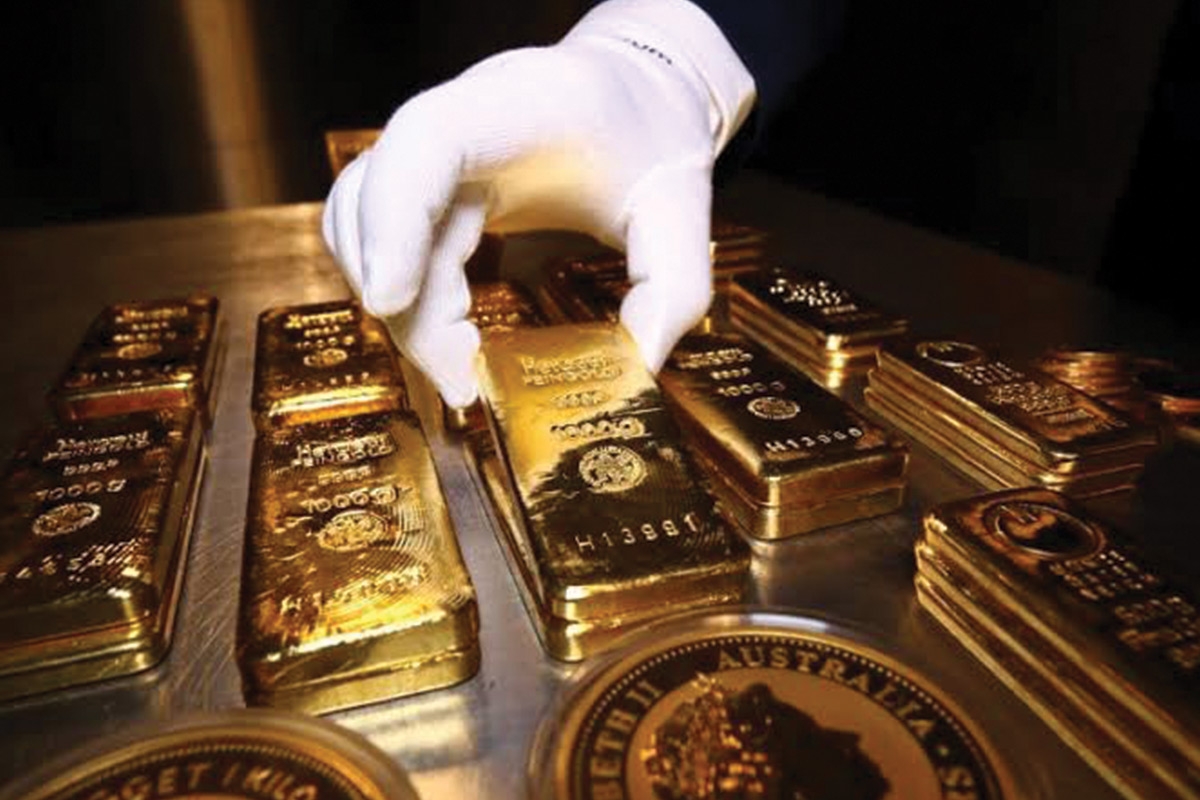
Gold closes lower at $4,285 amid anticipation of Federal Reserve policies and inflation data
Translated by Qiyas from الجريدة — Original source
Gold prices ended last week’s trading session on a decline, closing at $4,285 per ounce, amid anticipation regarding the US Federal Reserve’s (the central bank) policies on interest rates and upcoming inflation data.
According to a report issued today by Kuwait’s Dar Al Sabaik company, gold experienced clear fluctuations during the week, facing selling pressure as the US dollar and US yields rose, before attempting to recoup some losses toward the end of the week.
The report clarified that prices reached levels near $4,245 per ounce during the week before regaining some balance, yet remaining below the $4,300 mark. Market data showed gold was on track to record a weekly loss of approximately 2 percent.
It added that this performance comes amid the continued impact of the Federal Reserve’s recent decision to raise interest rates by 25 basis points to a range of 3.75 to 4 percent, alongside signals from several Fed officials that kept the possibility of another rate hike this year alive.
The report noted that updated Federal Reserve projections showed that 16 out of 18 officials expect at least one increase during the current year.
It pointed out that these expectations exert pressure on gold as a non-yielding asset, as rising yields on dollar-denominated assets increase the opportunity cost of holding the precious metal.
It further stated that rising yields on US Treasury bonds, particularly the 10-year yield, kept markets on edge regarding the future path of interest rates.
The Dar Al Sabaik report indicated that the dollar’s performance remains a key factor influencing gold, as the strength of the US currency typically increases the cost of the metal for holders of other currencies.
It noted that oil prices have become an important factor in shaping market expectations regarding inflation and US monetary policy, as rising energy prices can reignite inflationary pressures and reinforce expectations that interest rates will remain high for longer.
It clarified that geopolitical developments in the Middle East remained a persistent factor in market movements, as rising levels of uncertainty could support demand for gold as investors seek safe-haven assets to hedge against risks. However, the impact of this factor during the week remained intertwined with the effects of the strong dollar and rising bond yields.
It reported that market attention this week is focused on a set of important US economic data, including the Personal Consumption Expenditures (PCE) price index, which is one of the key inflation indicators monitored by the Federal Reserve, along with personal income and spending data.
It continued that these data points are particularly significant at this stage, as they could directly influence market expectations regarding the Federal Reserve’s upcoming decisions.
It explained that if the data show continued strength in the US economy and rising inflationary pressures, it could support the dollar and yields, thereby increasing pressure on gold.
From a technical perspective, the report stated that gold ended the week at $4,285 per ounce, with the $4,300 level currently forming a key technical resistance area, accompanied by several moving averages near the $4,300 and $4,354 ranges.
It viewed that if gold manages to break above the $4,300 level and sustain it, attention may shift to the $4,350 and $4,354 areas, followed by the $4,400 level, which represents a significant technical barrier at the current stage.
He added that the $4,245 level remains a nearby support level, which prices touched last week, followed by the $4,230–$4,200 range as a key support zone.
He noted that a break below this zone could pave the way for testing lower levels, with the $4,000 mark remaining a relatively distant technical level watched by markets.
He stated that technical analyses published over the past week show gold continues to trade below several key daily moving averages, reflecting ongoing short-term pressures, while the dollar’s movement and bond yields remain the most important factors in determining price direction in the coming period.
He pointed out that the price of 24-karat gold per gram reached around 42.7 dinars (approximately $139), while 22-karat gold recorded about 39.32 dinars (approximately $127), and the price of a kilogram of silver stood at around 696 dinars (approximately $2,261).
