Al-Ghanim: Banking sector is a key partner for development projects and supporting the economic vision
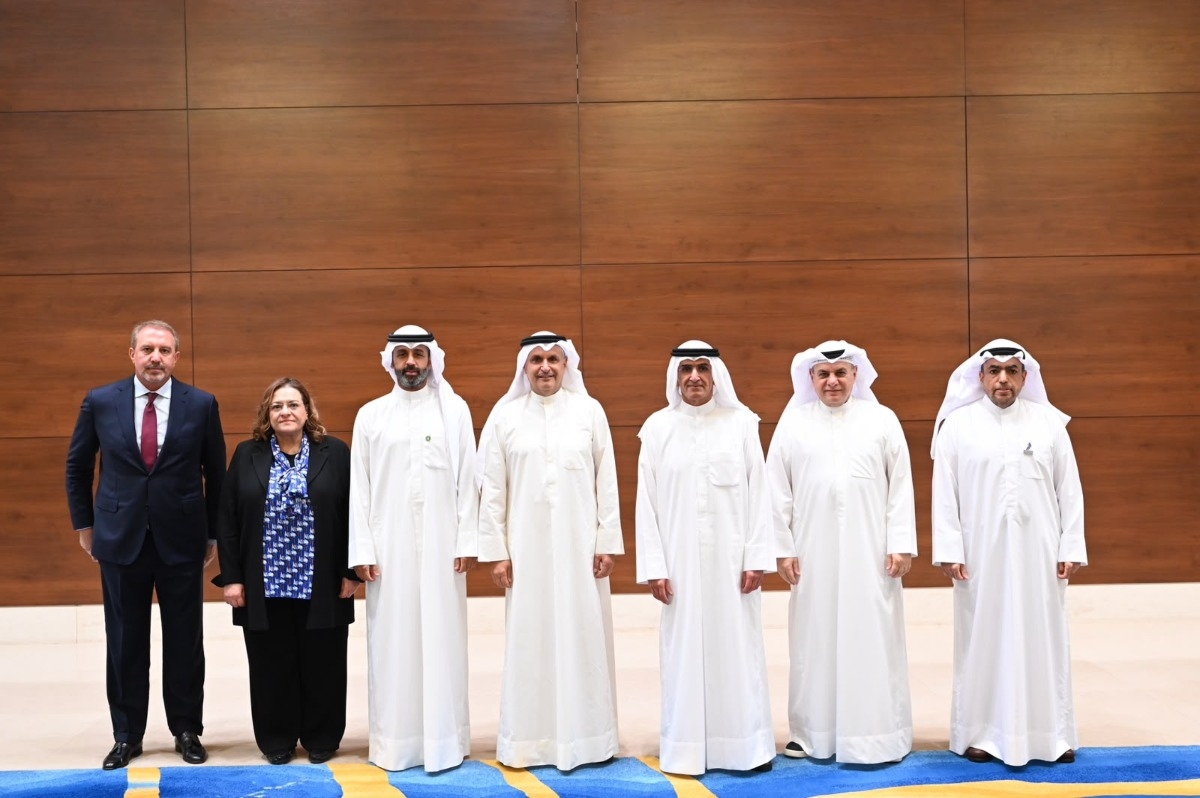
Shahin Hamad Al-Ghanem emphasizes the importance of flexibility, artificial intelligence, and sustainable finance to strengthen the Kuwaiti banking sector.
Translated by Qiyas from الجريدة — Original source
Kuwait National Bank CEO Shahin Hamad Al-Ghanim affirmed that recent geopolitical developments have demonstrated that resilience is no longer an option for the banking sector, but has become a fundamental component of banking strategy. He emphasized the importance of maintaining strong capital and liquidity levels, diversifying revenue sources, and continuously investing in technology and infrastructure, thereby enhancing banks’ ability to respond swiftly and effectively to economic and geopolitical changes.
This statement came during Al-Ghanim’s participation in a dialogue session organized by the Central Bank of Kuwait in collaboration with Global Finance. The session addressed several key issues related to the future of the Kuwaiti banking sector, ranging from the implications of geopolitical developments, through digital transformation and artificial intelligence, and the development of capital markets, to sustainable finance and ESG standards.
Al-Ghanim clarified that crises should not be viewed solely as risks; they can also represent opportunities to rethink business models and accelerate economic diversification. He highlighted the role banks can play in directing financing toward productive sectors and projects that support long-term growth and enhance the Kuwaiti economy’s capacity to withstand changes.
Al-Ghanim pointed out that the Kuwaiti banking sector faces four main areas of focus for the coming period, with digital transformation and artificial intelligence taking precedence. This is not merely to provide faster banking services, but to redesign the customer experience and improve operational efficiency.
He added that the second priority is risk management and enhancing operational resilience, particularly in light of growing cyber risks and ongoing economic and geopolitical uncertainty. The third priority is strengthening financing for the private sector and development projects, as well as supporting small and medium-sized enterprises (SMEs) and projects and sectors linked to economic diversification.
He stressed that these priorities are built on a strong foundation enjoyed by the Kuwaiti banking sector, characterized by robust balance sheets, high liquidity levels, and strong capital ratios, providing a solid basis for the next phase of growth and development.
Regarding the financing and liquidity law that allows for the issuance of up to $98 billion in sovereign bonds and sukuk, Al-Ghanim viewed the law as a crucial strategic step for Kuwait. He noted that it serves not only as an additional tool for the government to meet its financing needs, but also as an opportunity to build a deeper and more efficient domestic bond market.
He explained that the regular and transparent issuance of sovereign bonds and sukuk can help establish a clear sovereign yield curve, providing a benchmark for pricing corporate and financial institution issuances and supporting price discovery mechanisms in the market.
Al-Ghanim emphasized the particular importance of sukuk for Kuwait, given the strength of the Islamic finance sector locally and regionally. He confirmed that issuance volume is not the only factor; rather, a clear and regular issuance schedule and an active secondary market are essential to transforming the law from merely a government financing mechanism into a genuine catalyst for developing the Kuwaiti capital market.
On the topic of technology and artificial intelligence, Al-Ghanim affirmed that the question is no longer whether the banking sector will use AI, but how it will be used responsibly and securely.
He stated that NBK views artificial intelligence as a tool capable of redefining the customer experience and enhancing operational efficiency, but emphasized that its implementation must occur within a clear framework for governance, risk management, data protection, and cybersecurity.
Al-Ghanim revealed that the bank has already begun implementing AI in its banking services, citing the launch of Bdr AI, which enables customers to carry out various banking transactions through text or voice interactions in both Arabic and English.
He stressed that the next phase requires a national regulatory environment that fosters innovation, with clear standards established for data governance, privacy, cybersecurity, model testing, and monitoring, alongside transparency and accountability. He affirmed that true innovation in the banking sector is innovation that earns trust.
Regarding sustainability and sustainable finance, Al-Ghanim clarified that for NBK, sustainability is no longer merely a response to global trends or disclosure requirements, but has become an integral part of the bank’s approach to growth, risk management, and long-term value creation.
He noted that the bank is integrating ESG principles into its strategy, operations, investment and financing decisions, with a focus on financing projects and activities that deliver sustainable economic, social, and environmental impacts.
He pointed out that the bank has taken practical steps in this direction, including developing a sustainable finance framework, enhancing the integration of ESG criteria into investment decisions, and issuing Kuwait’s first sustainability sukuk.
Al-Ghanim added that the next phase requires shifting from viewing “sustainability as a commitment” to treating it as an opportunity, by leveraging sustainable finance to empower new companies and projects, support economic transformation, and create long-term investment opportunities.
He concluded by emphasizing that the banking sector plays a crucial role in building a more diversified, resilient, and sustainable Kuwaiti economy by directing financing toward sectors and projects capable of supporting growth and strengthening the national economy in the long term.
