Al-Saqer: Sustainability, operational resilience, and cybersecurity are pillars driving future growth in the banking sector
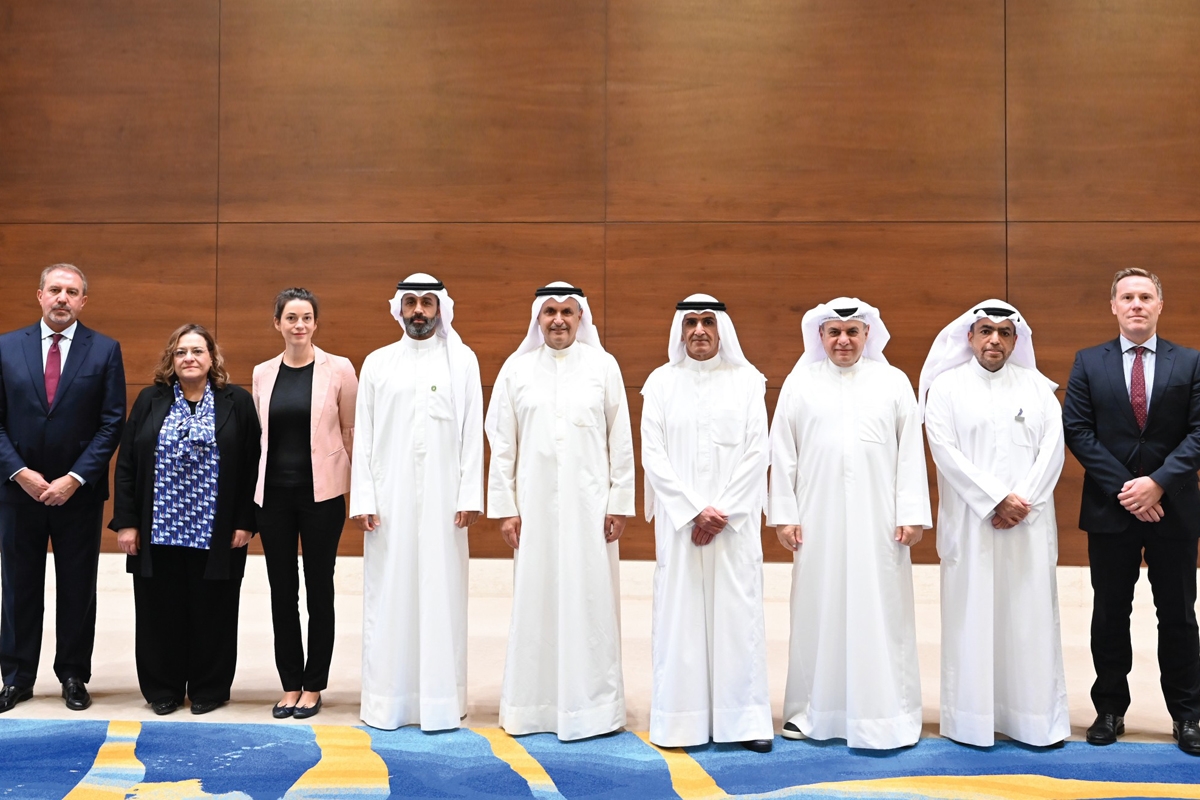
Esam Al-Saqer, Vice Chairman and Chief Executive Officer of NBK Group, participated in a panel discussion on the future of Kuwait’s banking and financial services sector, outlining his perspective on the key challenges and opportunities facing the industry. He emphasized the importance of building institutional resilience before crises, accelerating digital transformation, and strengthening sustainability practices to ensure long-term growth and financial stability.
The event, organized by Global Finance, was attended by Bassel Al-Haroun, Governor of the Central Bank of Kuwait, and chief executives of Kuwaiti banks, and focused on the major challenges and transformations confronting the banking industry both locally and globally.
Al-Saqer stated that the most important lesson from recent geopolitical and economic volatility is the need to build resilience in advance of crises by maintaining strong capital and liquidity levels, implementing effective risk management systems, and enhancing operational adaptability.
He noted that risks are no longer isolated but have become interconnected and overlapping; geopolitical tensions can trigger market volatility, disrupt supply chains, increase cyber threats, and create financing pressures. This interdependence requires the ability to assess the indirect impacts of global developments.
He pointed out that financial growth and stability are not mutually exclusive but complementary. Strong financial institutions capable of absorbing shocks can continue to finance economic activities and support development even during difficult periods.
Al-Saqer stressed that resilience-building measures should not come at the expense of the banking sector’s developmental role, advocating for balanced risk management policies rather than withdrawing from or significantly reducing financing activities.
He added that the bank has developed and implemented global best practices in crisis management and business continuity, conducting regular tests that have enabled it to maintain operational efficiency and service continuity under various conditions and crises.
Regarding the banking sector’s priorities over the next three to five years, Al-Saqer highlighted the strategic importance of upgrading banking infrastructure, including modernizing core banking systems, enhancing data management capabilities, and strategically expanding the use of cloud computing to support business needs and improve operational efficiency.
He emphasized the need to diversify and strengthen growth sources by expanding into transaction banking, capital markets, Islamic finance, and advisory services, thereby ensuring sustainable growth and reducing reliance on traditional revenue streams.
He further noted that the success of these transformations fundamentally depends on developing human capital, identifying it as one of the most critical strategic resources requiring collaboration among financial institutions, educational bodies, and regulators to prepare a generation capable of leading future transformation.
On digital transformation, Al-Saqer stressed that the greatest opportunity lies in integrating artificial intelligence into core banking processes, rather than limiting its use to isolated or narrow applications.
He explained that AI can bring tangible changes in customer service, creditworthiness assessment, fraud detection, and risk analysis, contributing to higher efficiency and improved quality of banking services.
He noted that data quality and availability are factors no less important than the technology itself, emphasizing that artificial intelligence should support the quality and speed of decision-making, while keeping the pivotal role of human elements at the core of banking operations.
He also stressed the need to advance innovation in parallel with implementing governance and control measures, including data protection, strengthening cybersecurity, validating technical models, and managing third-party risks.
He clarified that the bank’s strategy rests on two parallel tracks: the first involves continuing to develop core businesses and operations, while the second focuses on building digital business models that leverage artificial intelligence, data, and financial technology systems, thereby enhancing customer experience and raising institutional performance levels.
Al-Saqer explained that the bank focuses on integrating technology, data, human expertise, and customer insights across various organizational units, supporting customer experience, boosting operational efficiency, and achieving better business results. He pointed out that digital transformation success does not rely on technology alone, but on the integration of these elements within a unified business model capable of keeping pace with changes and seizing future opportunities.
He noted that sustainability has become an integral part of credit assessment, risk management, capital allocation, product development, and strengthening customer relationships. He added that the most promising sustainable financing opportunities in Kuwait are linked to national priorities, including energy efficiency, renewable energy, water security, and low-emission transport projects.
Al-Saqer highlighted significant potential to support sustainable transformation in key economic sectors, including oil and gas, petrochemicals, construction, real estate development, and industry.
He added that the bank fully integrates sustainability into its decision-making process through a corporate governance framework that starts at the board level. It applies sustainability standards in risk assessment, customer financing, and capital allocation, and strives to build close partnerships with its clients to understand their needs and challenges and support their journey toward more sustainable and efficient business models.
Al-Saqer noted that “Al-Watani” issued $500 million in green bonds in 2024, with all proceeds fully allocated to targeted projects. Meanwhile, sustainable assets reached approximately $6 billion, representing 60 percent of the bank’s 2030 target.
He pointed out that these achievements contributed to notable progress in the bank’s Environmental, Social, and Governance (ESG) ratings, enhancing its position among leading financial institutions in the region. He reaffirmed the bank’s continued efforts to support the sustainable transformation journey and deliver long-term added value to the economy and society.
