Trump Rejects Iran's "Seven Days" Proposal
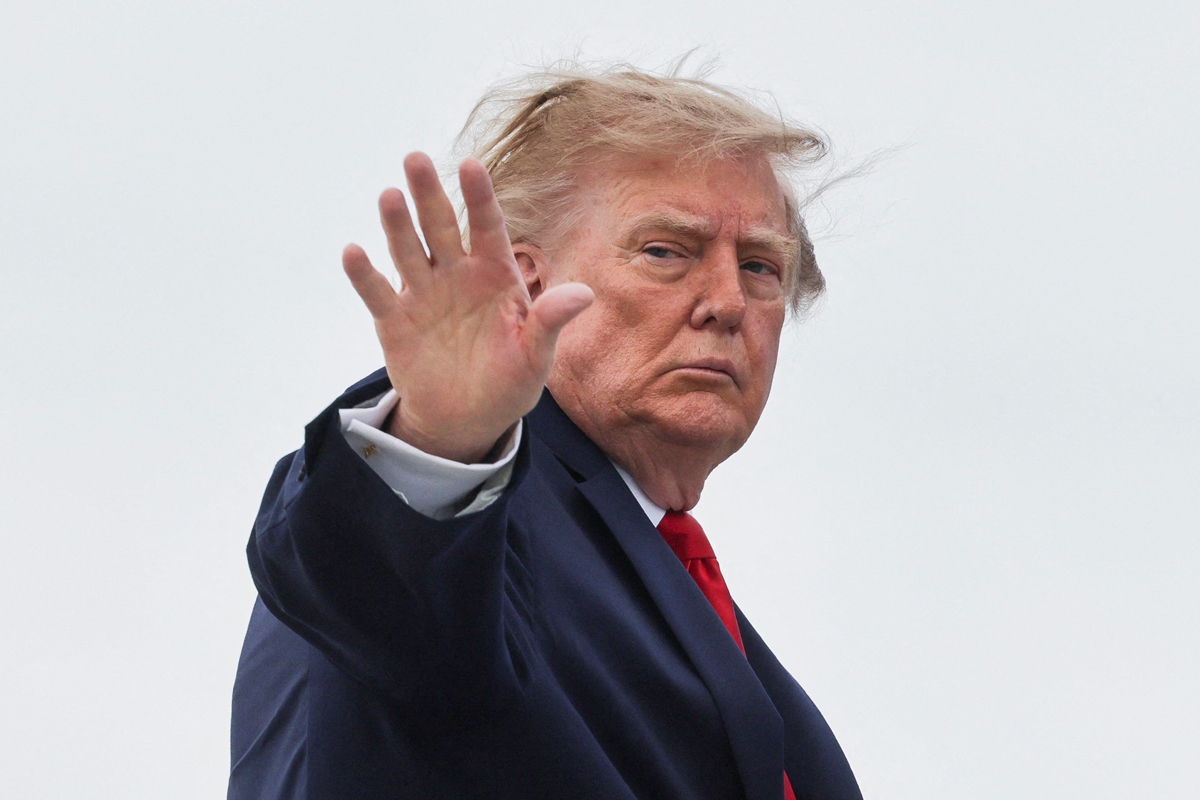
The seven-day proposal, which Iran announced it had presented to the United States, was met with a firm rejection by U.S. President Donald Trump.
Trump stated, “Iran wants an agreement, and I want an agreement, but the proposal is unacceptable,” emphasizing that the sanctions on Iran are successful, that massive quantities of goods are passing through the Strait of Hormuz, and that the United States has complete control over it.
He added, “I reject an agreement that would allow Iran to immediately reopen trade, as it is incurring significant losses.” *The Wall Street Journal* had noted that Trump believes lifting restrictions on Iran would give it room to maneuver, stressing that there would be no agreement without prior Iranian action.
Earlier, *The Wall Street Journal* reported that Trump rejected the proposal and told his aides he expects a return to bombing Tehran after the midterm elections in November.
According to Araghchi, Washington would implement the “required measures” during the first five days. On the sixth day, the Strait of Hormuz would be reopened, and on the seventh day, negotiations on the final agreement would begin.
Araghchi said the required measures are not new but are linked to previous understandings between the two sides, referring to the Islamabad memorandum signed by both parties last June.
Sources indicated that Araghchi and his accompanying negotiation team are likely to remain in New York until next Wednesday. Reports suggested that technical experts from Iran joined the negotiations following the initial meeting between Araghchi and U.S. envoy Steve Witkoff. However, the Tasnim News Agency denied that any technical negotiators had traveled to New York.
For his part, President Masoud Pezeshkian confirmed that the proposal had been coordinated with the Supreme Leader’s son, Mojtaba Khamenei. He stressed that his country would adhere to all its commitments and begin implementing them immediately, and that military forces, referring to the Islamic Revolutionary Guard Corps, would also comply, provided Washington accepts the proposal.
The Iranian president revealed the formation of a six-member team “including representatives from various organizations and bodies, including the military, parliament, and government,” stating that it has the authority to make decisions.
Meanwhile, *The Wall Street Journal* reported that the Trump administration has contacted more than 50 countries to tighten the economic noose around Iran, noting that Washington conveyed a message to those countries: “With us or against us regarding the Tehran file.”
It added that the U.S. requested that Britain not renew the license of Bank Melli in London.
The U.S. move came as Washington escalated efforts to strangle Iran’s aviation sector. U.S. pressure succeeded in halting Iranian flights to Iraq, Azerbaijan, Georgia, and the UAE, with disruptions to other services to Muscat and additional regional destinations.
Amid growing domestic Iranian fears of indefinite air isolation, Iran’s National Security Council retracted General Secretary Mohsen Rezaei’s threat to disrupt neighboring countries’ airports, denying plans for military retaliation in response to the recent air restrictions. The Council claimed there are several non-military options to respond to the aviation ban.
Mohsen Rezaei, Secretary-General of Iran’s Supreme National Security Council, had said days earlier: “The Americans are asking to stop Iranian flights. I am asking neighboring countries not to embark on this adventure, as it is doomed to fail. If any country cooperates with Washington in this adventure, their planes will not fly either.”
Meanwhile, Mojtaba Zonnour, a senior advisor to the Supreme Leader, wrote on X: “If Iran cannot operate flights and access aviation services, no country in the region will be able to do so either.”
Meanwhile, a statement from the White House and a similar one from China’s Foreign Ministry clarified that US President Donald Trump and Chinese President Xi Jinping agreed on the necessity for Iran to adhere to its commitment not to develop nuclear weapons, and that no country or entity should impose transit fees on international waterways, as part of an eight-point consensus reached between the two countries during Xi’s visit to the United States.
In a related development, Qatari Prime Minister and Foreign Minister Mohammed bin Abdulrahman al-Thani warned against the transformation of waterways into instruments of coercion, stressing that the situation in the Strait of Hormuz is unacceptable, placing pressure on Tehran and regional states, and affecting the entire world.
In this context, the Iranian Foreign Ministry reported that Iranian Foreign Minister Amir-Abdollahian briefed his Saudi counterpart, Prince Faisal bin Farhan, on an alleged understanding between Iran and the Sultanate of Oman regarding safe navigation routes in the Strait of Hormuz.
Yesterday, Omani Foreign Minister Badr al-Booqati met his Iranian counterpart in New York, where they discussed “efforts aimed at mending rifts in several regional relations and developments in the Middle East and Gulf regions.”
