US Congressman Calls for Release of Barghouti; Israeli and US Criticisms of His Stance
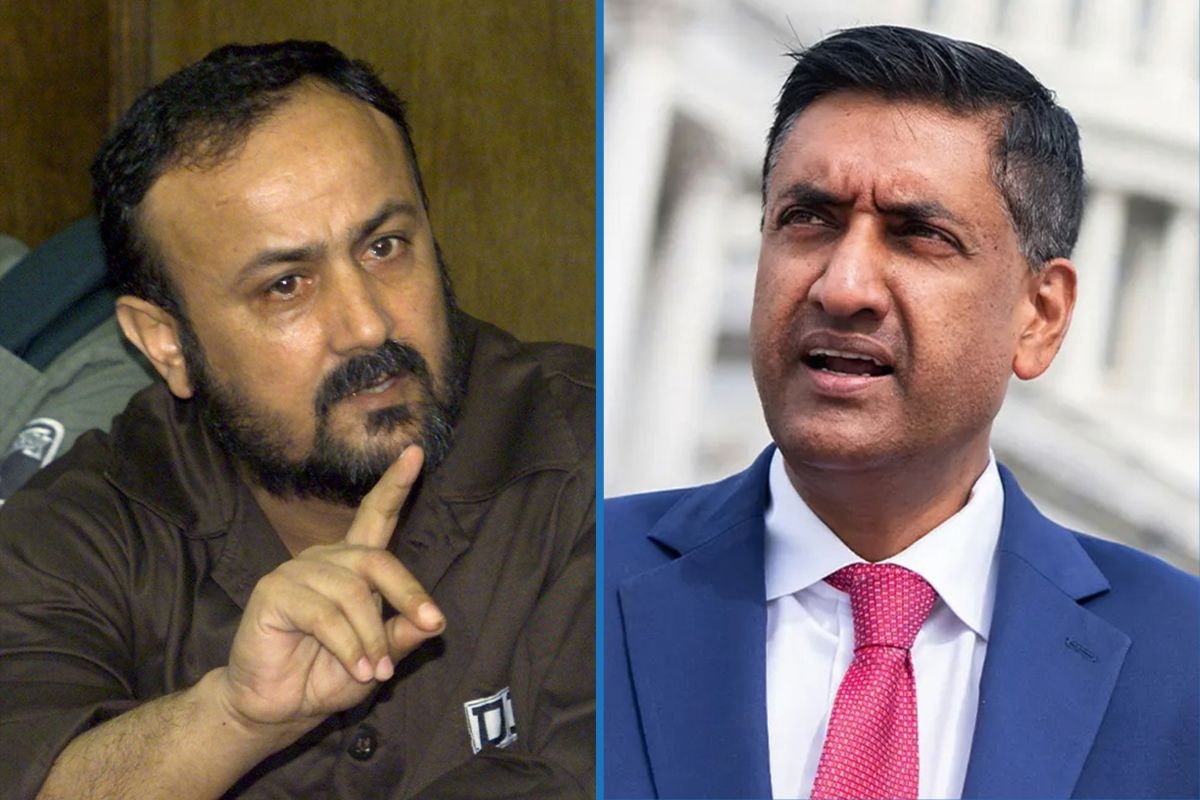
US Democratic Congressman Ro Khana called on Israel to release Palestinian leader Marwan Barghouti, stating that “Palestinians should choose their own leaders,” a move that has reignited debate over the future of Palesti
Translated by Qiyas from الجريدة — Original source
US Democratic Congressman Ro Khana called on Israel to release Palestinian leader Marwan Barghouti, stating that “Palestinians should choose their own leaders,” a move that has reignited debate over the future of Palestinian leadership and Barghouti’s role in any future political process.
In a video posted on the platform X, Khana expressed support for Barghouti’s release, describing the Palestinian figure as holding a unique position among Palestinian factions. He characterized Barghouti as a strong, honest, and secular leader, suggesting that his freedom could enable him to play a role in any future political path leading to the establishment of a Palestinian state living in peace alongside Israel.
Khana added that releasing Barghouti “does not grant him amnesty or moral exoneration” for crimes he may have committed, but argued that his presence outside prison could allow Palestinians to choose their leadership through a political process.
He pointed out that human rights organizations have raised questions about the fairness of Barghouti’s trial, citing previous conflict resolution experiences involving figures who were parties to armed conflicts, including the late Palestinian President Yasser Arafat and former Israeli Prime Minister Yitzhak Rabin, as well as the peace process in Northern Ireland.
Khana’s call received support from several American figures, including journalist and political commentator Nicholas Kristof, who described Barghouti’s release as a logical step if the goal is to achieve peace in the Middle East, noting that former Israeli security officials have also called for his release.
Journalist and political analyst Peter Beinart stated that potential Democratic presidential candidates should adopt this stance.
In a similar vein, foreign policy expert and US advisor Matt Duss said that those who label Barghouti as a “terrorist” should also consider the experiences of figures who participated in past conflicts and later became part of political processes, citing Menachem Begin and Yitzhak Shamir.
US activist Cameron Caskey said that American leaders speaking about peace between Israelis and Palestinians should demand Barghouti’s release, arguing that the issue is about opening a future political path, not just judging his past.
Conversely, Khana’s position faced criticism from Israeli and American activists and analysts, focusing on Barghouti’s conviction for murder during the Second Intifada and arguing that calls for his release ignore what they view as his responsibility for attacks that resulted in Israeli deaths.
Israeli researcher and analyst Nadav Pollak said that Khana’s description of Barghouti as someone who may have committed “crimes” ignores, in his view, the reality of his conviction for murder, adding that interest in Palestinian democracy could be accompanied by calls for Palestinian elections.
Israeli activist Elon Levi described Khana’s position as bordering on support for terrorism, while Israeli-American activist Aviva Klompas said the congressman was calling for the release of a person convicted of killing five people in terrorist attacks.
Criticism continued from Israeli figures; activist Lisa Keshet said any potential Democratic presidential candidate who supports Barghouti’s release should be condemned, while Israeli activists mocked the call, pointing to the sentences handed down against him.
Israeli activist Emily Schrieder described Barghouti as a “convicted killer” and accused Khana of supporting terrorism, while Israeli activist Arsen Ostrovsky criticized Khana’s description of Barghouti as “honest, a strong leader, and secular,” noting his convictions and multiple life sentences.
Israeli activist Ya’el Bar also questioned the motives behind a US Congress member’s call for the release of Barghouti. Meanwhile, American writer and Israel-Palestine conflict specialist Abe Zilbershtein said that support for Barghouti’s release had long been a position held within segments of liberal Zionism, adding that the broadening of the debate around him could reshape the stances of some parties. Barghouti was first arrested in 1976, then detained multiple times, deported from Palestine, and returned in 1994. He was later elected to the Fatah Revolutionary Council, then became the Fatah secretary in the West Bank, and was elected to the Palestinian Legislative Council in 1996. After his arrest on April 15, 2002, he endured prolonged interrogation, torture, and solitary confinement, and in 2004, an Israeli court sentenced him to life imprisonment.
