Inflation and economic strength boost bets on US rate hike
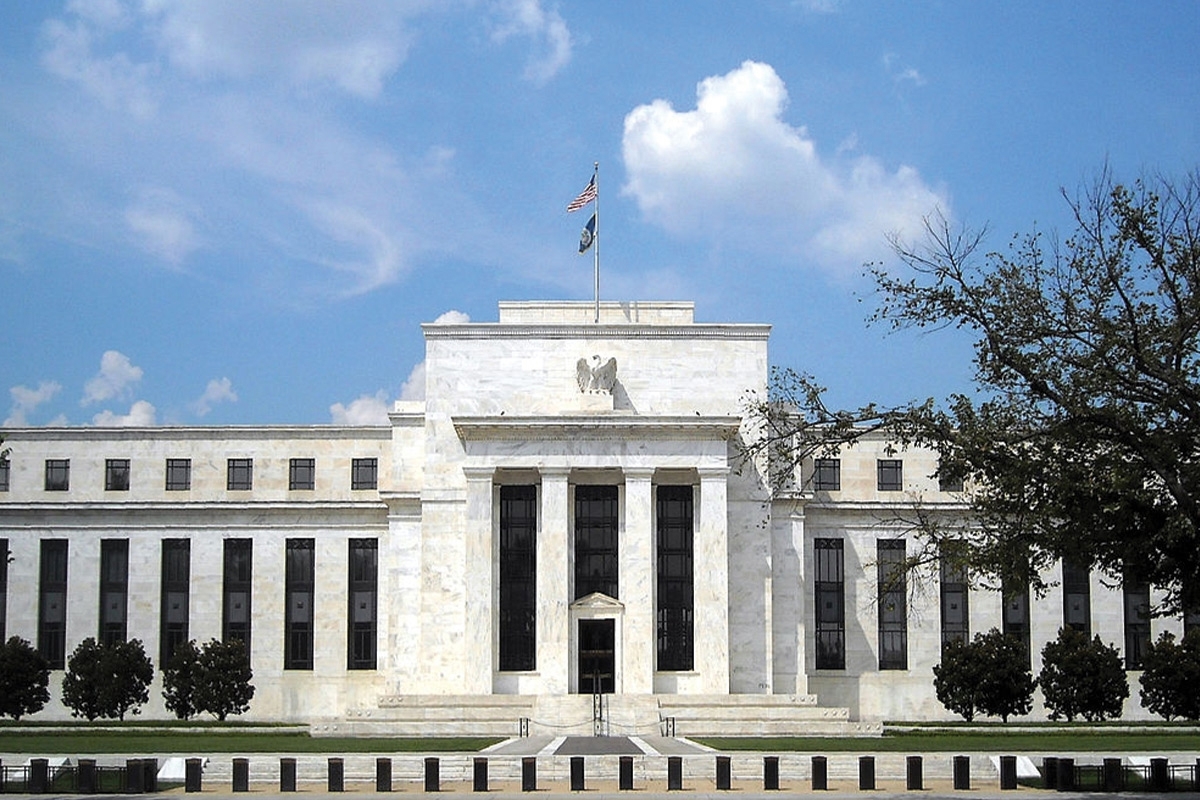
Rising inflation pressures and a strengthening economy may push the Federal Reserve (the U.S. central bank) to raise interest rates ahead of a critical national election, as investors yesterday expected a second consecutive tightening of monetary policy to be announced in late October.
S&P Global reported yesterday that its preliminary U.S. Composite Purchasing Managers’ Index (PMI), a closely watched gauge of business activity, jumped this month to its highest level since July 2021.
The index for prices paid by companies for inputs also rose, reaching its highest level in nearly four years.
Days before the Federal Reserve’s expected decision in October, Republicans loyal to President Donald Trump will defend their slim majority in both chambers of Congress during the elections scheduled for November 3.
John Williams, President of the New York Federal Reserve, said today that it is reasonable to believe the central bank may need to raise interest rates again before the end of the year to help curb inflation risks.
Williams, speaking at a conference in London organized by the National Institute of Economic and Social Research (a research institution), noted that market participants’ expectations suggest investors believe “a final rate hike is likely appropriate by year-end,” adding: “It seems to me that is a logical way to think about it.”
Williams added: “But we have to wait and see; we will continue to gather data and do what we did between July and September.”
Last week, the U.S. central bank, under the leadership of its new Chair Kevin Warsh, raised the key interest rate to a range of 3.75 percent to 4.00 percent. Additionally, 16 of 18 policymakers indicated that the Fed would likely need at least one more rate hike before the end of 2026.
Williams’ remarks deepened losses in U.S. futures during the session, while U.S. Treasury yields continued to climb. The 10-year yield reached approximately 5.13 percent, and the 30-year yield hit around 5.44 percent, its highest level since 2004.
Last week, the Federal Reserve hinted at further monetary tightening, and its Chair, Kevin Warsh, reaffirmed the central bank’s independence despite repeated calls from President Trump to cut rates.
This hawkish stance allayed concerns that the Warsh-led central bank might adopt a more dovish approach to inflation, a scenario that would have pressured the dollar and other U.S. assets.
Federal Reserve Governor Michael Barr stated that the U.S. economy has faced a series of shocks over the past year and a half, including tariffs, the conflict in the Middle East, the ongoing repercussions of Russia’s war in Ukraine, and a wave of investment demand linked to the expansion of artificial intelligence.
Barr explained that these shocks have contributed to increased price pressures, noting that economic growth remains strong and the labor market is solid, but inflation remains above the Fed’s 2 percent target and is not clearly trending toward that level within an appropriate timeframe.
He added that risks to achieving the inflation target have increased, while risks to the labor market have declined, necessitating a reassessment of monetary policy to reflect the balance between the Fed’s dual mandates.
Barr suggested that further adjustments to monetary policy may be needed to ensure inflation returns to the target level in a timely manner.
