UNCTAD: Gaza war destroyed 92% of economic facilities
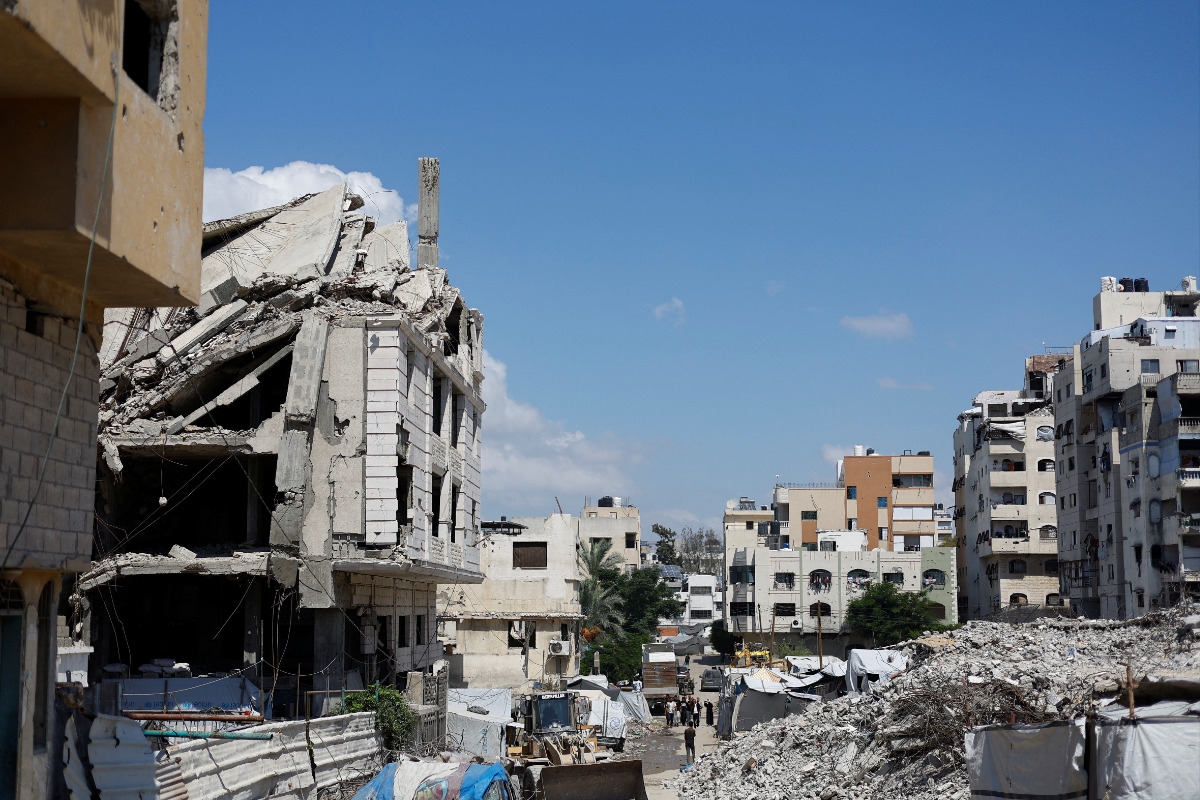
A UNCTAD report revealed the destruction of 92% of economic facilities in Gaza, with recovery costs estimated at $71.5 billion.
Translated by Qiyas from الجريدة — Original source
The United Nations Conference on Trade and Development (UNCTAD) revealed on Thursday that Israel’s ongoing occupation war on Gaza since October 2023 has destroyed 92 percent of the Strip’s economic infrastructure, announcing estimates that the cost of recovery and reconstruction amounts to approximately $71.5 billion.
Pedro Moreno, Acting Secretary-General of UNCTAD, stated during a press conference in Geneva to launch the organization’s annual report dedicated to assisting the Palestinian people, that “the collapse of Gaza’s economy represents the most severe economic crisis recorded in the world,” noting that the war has wiped out decades of development and created a severe economic crisis for the Strip’s residents.
He added that damages to Gaza’s physical infrastructure reached $35.2 billion, while economic and social losses amounted to $22.7 billion by early 2026, limiting Gaza’s contribution to the Palestinian Gross Domestic Product (GDP) from 17.4 percent in October 2023 to less than four percent in 2025.
The report also revealed that per capita GDP reached $212 in 2025, equivalent to approximately $0.58 per person per day, while more than 90 percent of working-age individuals suffer from unemployment.
It further highlighted declines across all productive sectors in Gaza, with both the agriculture and industry sectors recording a 94 percent drop, and the construction sector declining by 99 percent compared to 2022. Additionally, the general price level rose by 274 percent in 2025 compared to its level in 2022.
The report stated that the housing sector suffered the largest volume of damages and reconstruction needs, with widespread damage to educational and health facilities, and more than half of hospitals and primary health clinics rendered out of service.
The report indicated that less than 1.5 percent of Gaza’s agricultural land remained undamaged, exacerbating reliance on humanitarian food aid.
It concluded that 59 years of occupation have constrained the Palestinian economy overall, particularly amid the sharp rise in economic costs since October 2023, the occupation’s tightening of restrictions on economic activity in the West Bank, and increased pressure on public finances and the Palestinian banking sector.
The report noted that the Palestinian GDP grew by 4.3 percent in 2025 following a sharp contraction in 2024, but remained 20 percent below its 2022 level. Hundreds of thousands of jobs have been lost since October 2023, resulting in the erasure of approximately $2.8 billion in revenues.
The report also documented the declining access to land and natural resources in the West Bank due to settlement expansion, alongside rising displacement. The number of displacements recorded in the first quarter of this year totaled the entire number registered for all of 2025, particularly following the eviction of Palestinians from 38 residential communities since 2023.
The report stated that the Palestinian government’s financial situation has deteriorated sharply, as the occupation government has withheld the full transfer of tax revenues due to the Palestinian government since May 2025 until mid-2026.
It clarified that the occupation government collects more than two-thirds of Palestinian financial revenues on behalf of the Palestinian government under the Paris Protocol, noting that transfers have been irregular and subject to deductions.
The report noted that accumulated deductions and revenues withheld by the occupation between January 2019 and March 2026 amount to approximately $3.67 billion, based on the exchange rates prevailing at the time payments were due, equivalent to 83 percent of total Palestinian net revenues in 2025.
The report estimated that Palestine’s budget deficit for 2025 reached 13 percent of GDP if unpaid tax revenues are excluded, compared to 6 percent when these revenues are included as due to the government.
The report highlighted that escalating financial pressures are increasingly constraining the Palestinian Authority’s ability to provide essential services, with the health sector’s deficit rising by more than $1 billion, the education sector adversely affected, and public debt increasing to $4.8 billion.
In this context, the report identified three urgent priorities for recovery and reconstruction across all occupied Palestinian territories: releasing withheld Palestinian revenues, safeguarding the banking system, and linking reconstruction assistance to documented levels of damage and economic losses, while emphasizing the urgent need for international financial and technical support.
