Saudi Arabia receives widespread support on National Day
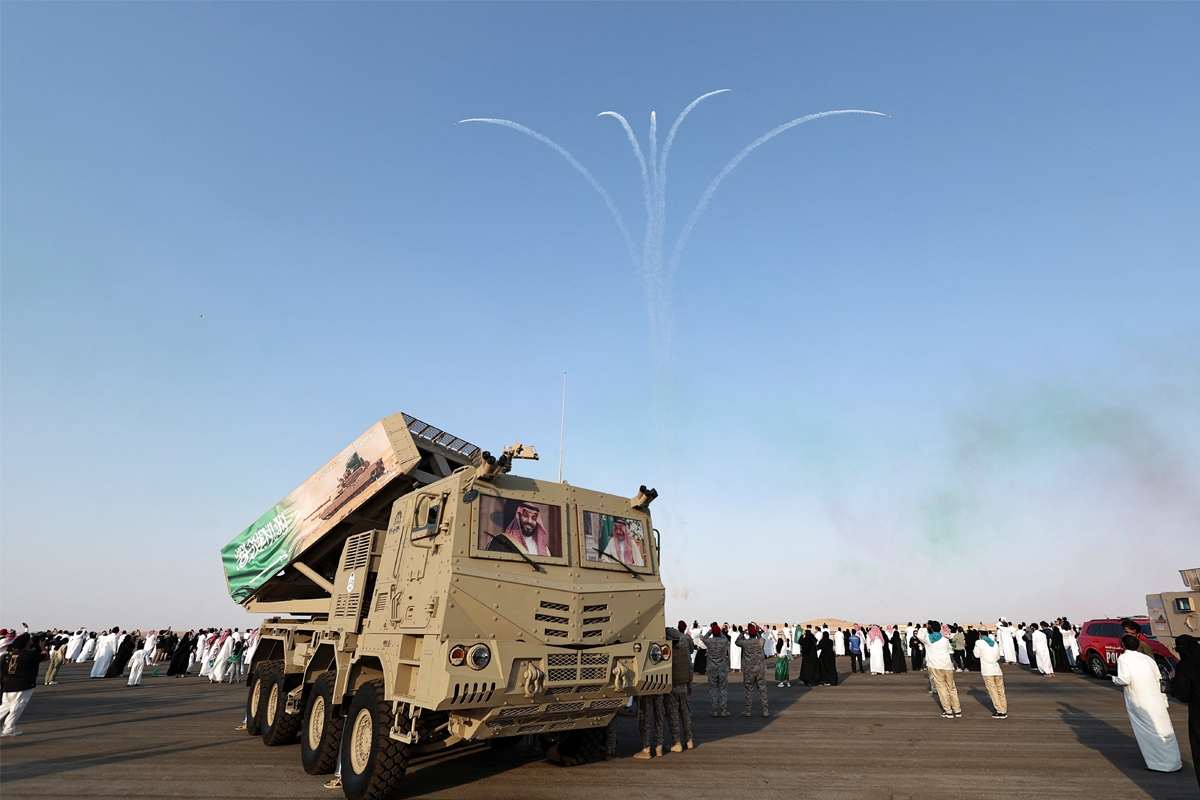
Saudi Arabia marked its 96th National Day today, commemorating the unification of the Kingdom under the late King Abdulaziz Al Saud in 1932 and the political, economic, and developmental transformations it has undergone over the past decades, which have strengthened its regional and international presence.
The occasion comes as the Kingdom continues to implement the objectives of "Vision 2030," launched in 2016 to diversify revenue sources, reduce reliance on oil, develop non-oil sectors, and increase the private sector's contribution to the national economy, while also enhancing quality of life and expanding investment opportunities.
The celebrations also take place amid political and security challenges and developments in the region, growing pressures resulting from the interventions of certain regional powers, and ongoing tensions linked to the Houthi group in Yemen.
The Qatari Cabinet renewed today its condemnation and strongest denunciation of the Houthi group's targeting of Makkah Al-Mukarramah with a drone, affirming that any attempt to violate its sanctity or the sanctity of the Holy House, the qibla of Muslims and the purest place on earth, constitutes a shameful act of aggression, a blatant provocation of the sentiments of more than a billion Muslims worldwide, and a grave violation of all religious, moral, and humanitarian red lines.
In turn, Pakistani Prime Minister Shehbaz Sharif expressed today his strong condemnation of the Houthi attacks on Saudi Arabia, emphasizing that Pakistan stands firmly alongside the Kingdom to protect its sovereignty, security, and the sanctity of the holiest Islamic sites.
In his message for Saudi National Day, Sharif stated that any threat to the sanctity and security of the Two Holy Mosques deeply wounds the feelings of Muslims around the world, referring to the Houthi drone attack attempt on the city of Makkah Al-Mukarramah.
In contrast, Houthi leader Aabid Al-Thur acknowledged that his rebel group in Yemen coordinates its regional battles with Iran and Hezbollah in Lebanon. He said, "We are one alliance and one body; what befalls Iran will befall us, and what befalls us will befall Iran," adding, "There is coordination and cooperation between us, Iran, and Lebanon. We are an axis of resistance with a unified command of the battle, and each side provides the other with information that benefits them." He stated that the Houthis support Iran and "will not allow our airspace, waters, the Red Sea, the Gulf of Aden, or the Arabian Sea to be used to strike Iran; whoever attempts this will be struck."
Al-Thur added, "If the United States risks striking us, we will consider any of its interests in our vicinity a target. We will exclude nothing, whether in Saudi Arabia, the Red Sea, the Gulf of Aden, the Arabian Sea, or the Indian Ocean. We will strike with an iron fist."
Abdulaziz Al-Majidi, Chief of Staff of the Taiz Axis, stated that government forces, supported by the popular resistance, have tightened their control over Mount Qarfan following battles with the Houthis, who had been positioned at the site.
