Oil set to record longest losing streak in over a year
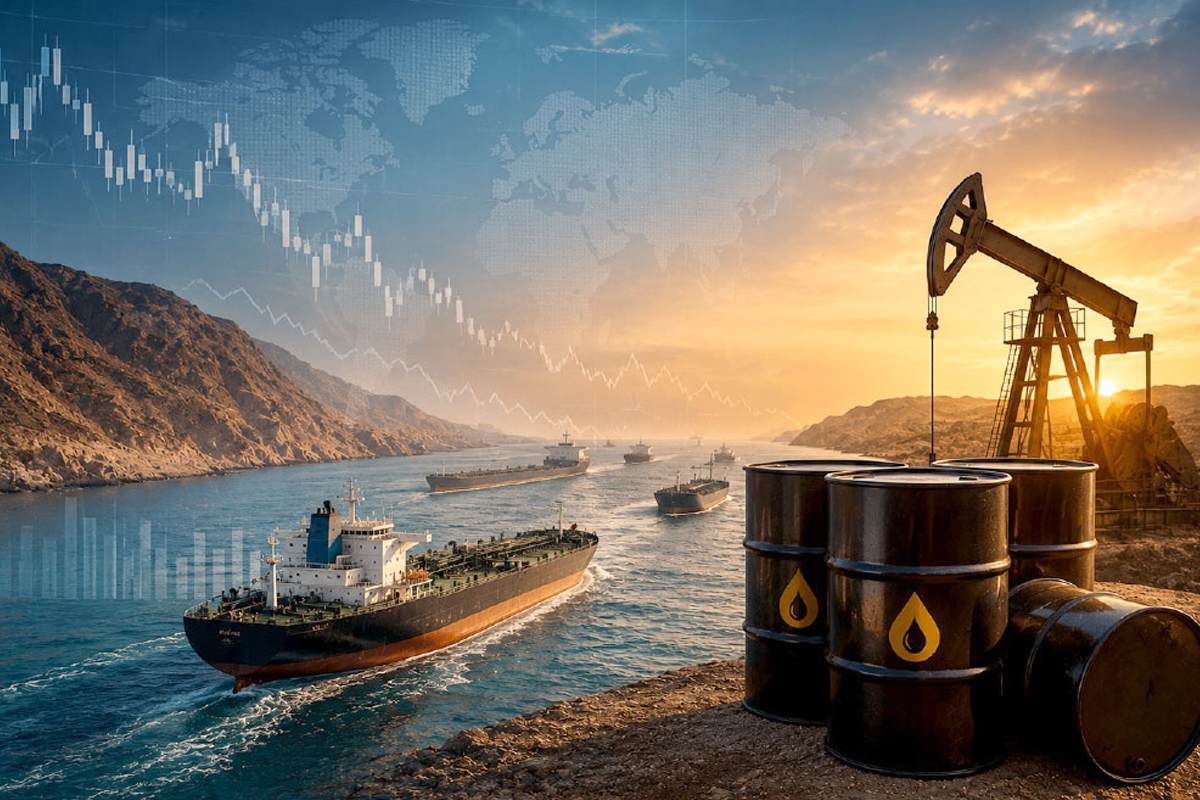
Oil prices are set to record their longest losing streak in over a year, continuing their decline in today’s session as Saudi Arabia resumed crude supplies through a vital pipeline to the Red Sea, amid growing hopes for a diplomatic resolution to the US-Iran war through talks at the United Nations in New York.
Futures for both benchmarks fell for a sixth consecutive session, hitting their lowest level in about two weeks.
The Kuwaitian Oil Index dropped $2.34 to $106.96 per barrel in today’s trading, down from $109.30 on Monday, according to the Kuwait Petroleum Corporation.
US President Donald Trump warned on Tuesday that he might “annihilate” Iran, but also stated that envoys Steve Witkoff and Jared Kushner held productive talks with intermediaries for Iran aimed at ending the war.
Optimism over improved supplies and efforts to end the nearly seven-month conflict pushed Brent crude below $100 per barrel at Tuesday’s settlement for the first time since September 8.
Tim Waterer, chief analyst at KCM Trade, said, “The market is currently viewing global oil supply prospects more positively than it did a few weeks ago.”
He added, “The meeting between the US and Iranian delegations in New York gave traders a glimmer of hope... Despite continued harsh rhetoric, including genocide threats, the market is betting on the possibility of talks.”
Three informed sources said Saudi Arabia resumed operations on the East-West pipeline extending to the Red Sea on Tuesday, amid increasing signs of rising oil flows from the Middle East.
Saudi Arabia was forced to close the pipeline on September 11 following drone attacks that the kingdom blamed on Iraqi armed factions, halting oil loading operations at the port of Yanbu.
Since the US-Israeli war on Iran disrupted oil flows from Saudi Arabia and neighboring Gulf states through the Strait of Hormuz, the kingdom has used the pipeline to divert approximately four million barrels per day—about four percent of global supplies—to Yanbu.
On Tuesday, Saudi Arabia also offered additional oil barrels to Asian refineries for loading from sites outside the Strait of Hormuz.
Iraqi Oil Minister Basim Muhammad announced on Tuesday an increase in the country’s oil exports. He said Iraq is currently exporting more than three million barrels per day, with exports via Turkey expected to rise to over 600,000 barrels per day.
Data showed US crude oil inventories rose by 1.8 million barrels in the week ending September 18, adding downward pressure on oil prices. Analysts surveyed by Reuters had expected a decline.
President Donald Trump said on Tuesday that he supports imposing a ban on diesel exports, after Republican candidates in some states with competitive races in the upcoming November midterms called for the measure as a way to curb record fuel prices.
Diesel prices surged to record levels in the United States and Europe, after the Iran and Ukraine wars sharply reduced exports from major producers such as Russia, Saudi Arabia, and the UAE.
Trump told reporters before a meeting with Ukrainian President Volodymyr Zelensky, “I said we shouldn’t export diesel. We produce a lot of it... I’ve called for that, and I’ve spoken about it with my team.”
Rising fuel prices pose a vulnerability for Trump ahead of the midterm elections on November 3, in which Republicans are seeking to maintain their majorities in both chambers of Congress.
US Treasury Secretary Scott Bessent said during the meeting that the US administration is examining the feasibility of implementing the ban and whether it would be more appropriate to impose a full or partial embargo.
Several Republican candidates in the most competitive congressional races nationwide, including US Senator Dan Sullivan of Alaska, Representative Ashley Hinson of Iowa, and Mike Rogers of Michigan, have called on the Trump administration to implement the ban.
Sullivan said in a statement on Tuesday, “US fuel should remain within the United States to serve Americans... Diesel costs are extremely high. I call for a temporary halt on US diesel exports so we can rebuild our reserves before winter and put American families and Alaskans first.”
Rogers and Hinson also called on Monday for a swift end to the war in Iran, a stance that diverges from Trump’s approach.
Trump said he would discuss Ukrainian attacks on Russian oil refineries with Zelensky.
Trump added, “It’s a strong blow to the Russians, but it’s also a strong blow to diesel prices,” noting that the two leaders would also discuss ways to reach a solution to end the Russian war in Ukraine. He said, “I think that will happen.”
Market sources cited US Energy Information Administration data on Tuesday, stating that US crude oil inventories rose last week, while gasoline and distillate product inventories fell.
Sources, who requested anonymity, indicated that crude oil inventories increased by 1.8 million barrels in the week ending September 18.
The semi-official Fars News Agency reported today, citing Iranian Oil Minister Assistant Ahmad Zarbakkar, that Iran has recovered about 50 percent of the production capacity damaged in the South Pars gas field, and that all planned repair work will be completed before winter.
Zarbakkar had stated in late August that about 40 percent of the damaged capacity had returned to production.
The document specified that the 2-million-barrel shipment is offered on a delivered-on-board basis for loading between September 27 and 30.
South Korea’s Ministry of Industry said Seoul is seeking to reduce its dependence on crude oil from the Middle East to 50 percent by 2035, as part of efforts by Asia’s fourth-largest economy to diversify energy sources following disruptions caused by the Iran war.
The ministry, in its ten-year natural resource security plan, stated that South Korea needs a “radical shift” in supply chains, citing lessons learned from the Iran war that disrupted global energy flows.
South Korea relies heavily on oil imports, and the ministry said it obtained 70 percent of its supplies from the Middle East in 2025, with most arriving via the Strait of Hormuz.
As for natural gas, the government aims to limit its dependence on Middle East imports to less than 30 percent by 2035, after reducing it to 20 percent in 2025.
