Will Trump extinguish the price fire or ignite a global crisis?
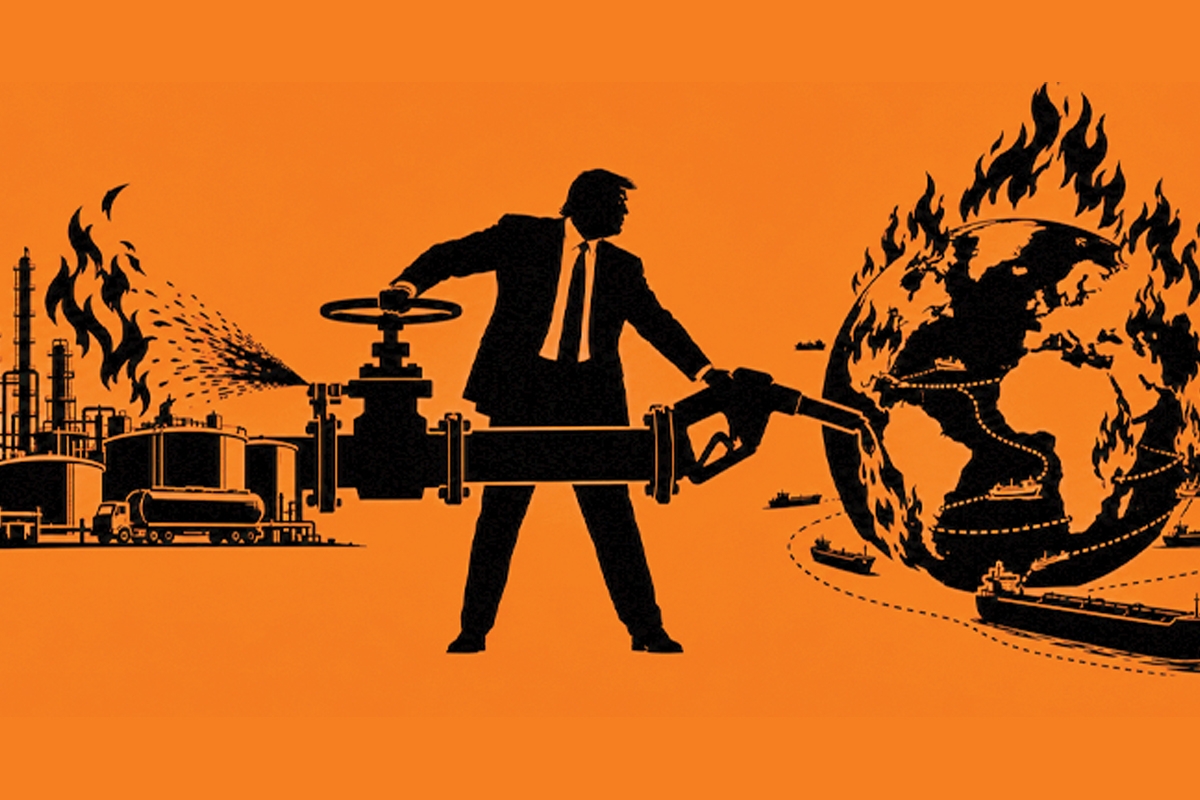
As the U.S. administration races against time to quell public anger ahead of the November midterm elections, Washington finds itself facing a complex economic dilemma.
Despite political promises to reduce costs, economic circles and analysts warn that this decision could backfire on U.S. and global markets. Is Trump falling into the trap of a "quick fix"?
The national average price of diesel reached $6.5276 per gallon on September 22, marking an all-time high.
U.S. inventories have fallen to their lowest quarterly levels in four decades, down 13% from last year’s levels.
U.S. refineries produced approximately 5 million barrels of diesel per day last year, compared to domestic consumption of 3.9 million barrels. The United States currently exports about 1.3 million barrels of diesel per day.
Energy Secretary Chris Wright warned that the ban would cause a surplus to build up in the Gulf Coast, forcing refineries to cut back on refining operations.
Interior Secretary Doug Burgum confirmed that the ban would not lower prices and could provoke retaliatory measures from other countries.
Reducing production would lead to widespread disruptions in secondary refined products and a decline in supply in the domestic market.
European and Asian countries rely heavily on U.S. fuel to compensate for the absence of Russian and Middle Eastern supplies.
The ban is pushing allies to seek alternatives in other markets, increasing their financial and inflationary pressures.
Some experts believe that granting waivers under the Jones Act would allow foreign vessels to transport fuel between U.S. ports.
Ceasing the targeting of Russian oil refineries would help restore balance to supply chains.
Washington banned crude oil exports for four decades following the 1973 crisis, before lifting the ban to enhance market flexibility.
The U.S. diesel crisis reveals that the problem is not simply that the United States exports fuel that could be returned to the domestic market, but rather that it is part of an interconnected global network of refineries, inventories, and trade routes.
In any case, the impact may vary geographically. Regions close to refining and export hubs along the Gulf Coast could benefit from increased local supply, while the East and West Coasts would face sharp price increases due to their reliance on imports and weak domestic supply lines.
Caught between political maneuvering and complex economic calculations, Washington stands at a critical crossroads. The question remains on the White House table: Will Trump risk imposing the ban to soothe domestic voter concerns, even if it ignites a new global energy crisis and unsettles Washington’s allies?
