Al-Obeid: Heritage Institutions Responsible for Highlighting Folk Arts
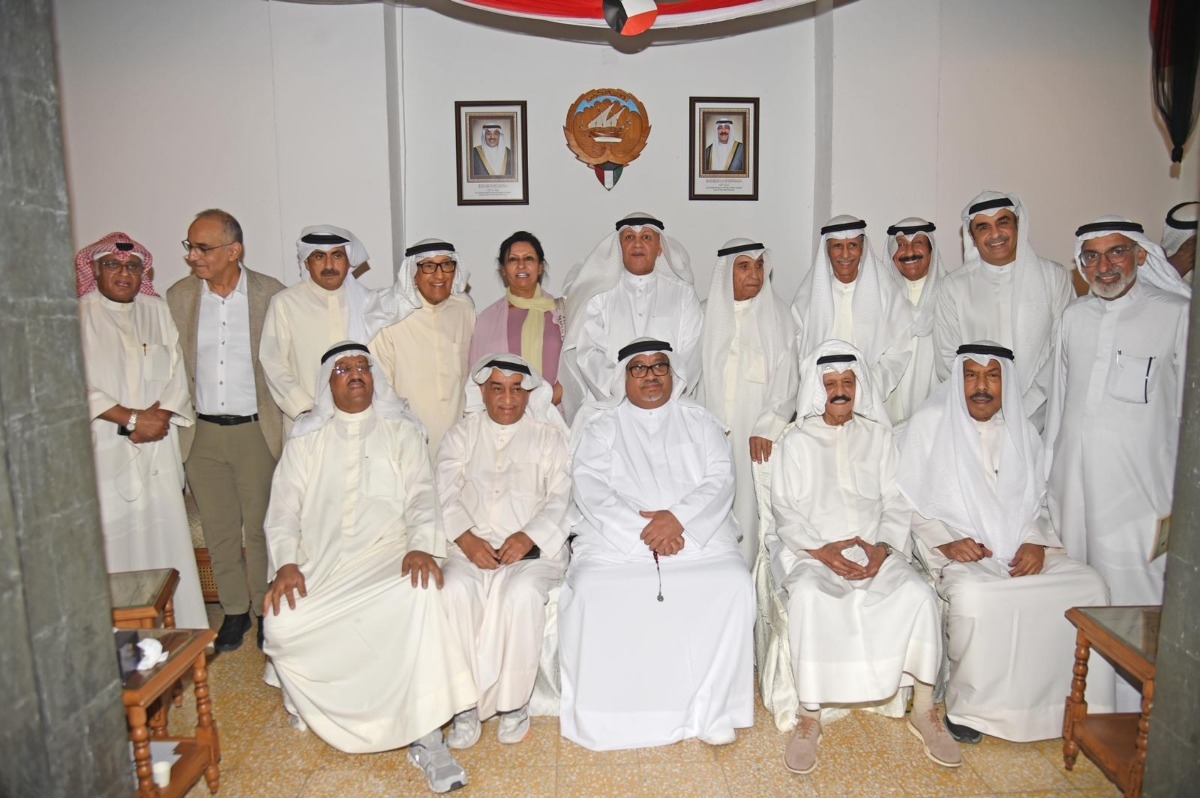
The Kuwait Heritage Society organizes a dialogue session on the Zuhairi art and the role of Muhammad bin Laboun in its development.
Translated by Qiyas from الجريدة — Original source
The Kuwaiti Heritage Association opened its cultural season with a dialogue session titled “Echoes of Heritage in Poetry and Al-Zuhairi,” presented by poet Nader Al-Obeid and moderated by heritage and Arabic linguistics researcher Hanan Al-Jassar. The event was attended by a number of cultural and artistic figures, including Dr. Mohammed Al-Jassar, Secretary-General of the National Council for Culture, Arts and Letters, musician Ghannam Al-Diqain, M. Sabah Al-Rais, along with several enthusiasts of Kuwaiti folk heritage.
The session focused on a specific poetic genre, “Al-Zuhairi,” describing it as a poetic form deserving greater attention.
Al-Obeid explained that the choice of the session’s topic stemmed from its significance as part of Kuwaiti heritage. He noted that while poems have previously received media coverage and television programs, Al-Zuhairi has not enjoyed the same level of attention. This disparity prompted the decision to dedicate the session to examining, introducing, and commemorating this art form.
Al-Obeid pointed out that Al-Zuhairi is historically linked to the poet Mohammed bin Laboun, who played a prominent role in establishing and popularizing this genre. It was then passed down from generation to generation by poets, including Abdullah Al-Faraj, Fahd Burasli, Fahd Al-Khashram, and Hamoud Nasser Al-Badr, leading to contemporary figures such as poet Abdulrahman Al-Duwaihi and poet Abdulrahman Al-Najjar, for whom he prayed for recovery and well-being.
He clarified that the lack of media focus on Al-Zuhairi is partly due to the public’s unclear understanding of the art form. He explained that Al-Zuhairi is a poetic structure consisting of seven hemistichs. The first three hemistichs end with the same word, though each carries a different meaning. This is followed by three other hemistichs ending with a different word, which itself carries three distinct meanings. The seventh hemistich ends with the same word as the first three, granting Al-Zuhairi its unique artistic and linguistic character.
Al-Obeid noted that similar poetic forms exist in some Arab environments, such as “Al-Abudiya” in Iraq, which differs in structure regarding the number of hemistichs, and “Al-Darmi,” which relies on a single hemistich. He emphasized that each form has its own distinctiveness and artistic structure.
He added that Al-Zuhairi flourished in the Gulf region, particularly in Kuwait, Bahrain, and Qatar, with Mohammed bin Laboun playing a pivotal role in its spread. Bin Laboun died in 1831 during a plague year, making the revival of his biography and his role in the emergence of Al-Zuhairi an important endeavor.
He stressed that the importance of this session extends beyond introducing Al-Zuhairi as a poetic form; it also involves tracing its origins, documenting its trajectory, and highlighting the poets who championed it over nearly two centuries. He considered it the responsibility of heritage-focused institutions to highlight these folk arts, protect them from oblivion, and present them to future generations.
During the session, Al-Obeid discussed specific Al-Zuhairi pieces by Kuwaiti poets, followed by the recitation of some of his own Al-Zuhairi compositions and poems.
Al-Obeid praised the efforts of the Kuwaiti Heritage Association, affirming its belief that folk heritage is not merely a memory of the past, but a vital component of cultural identity.
