Oil falls after Iranian 'maneuver' to open 'Hormuz'
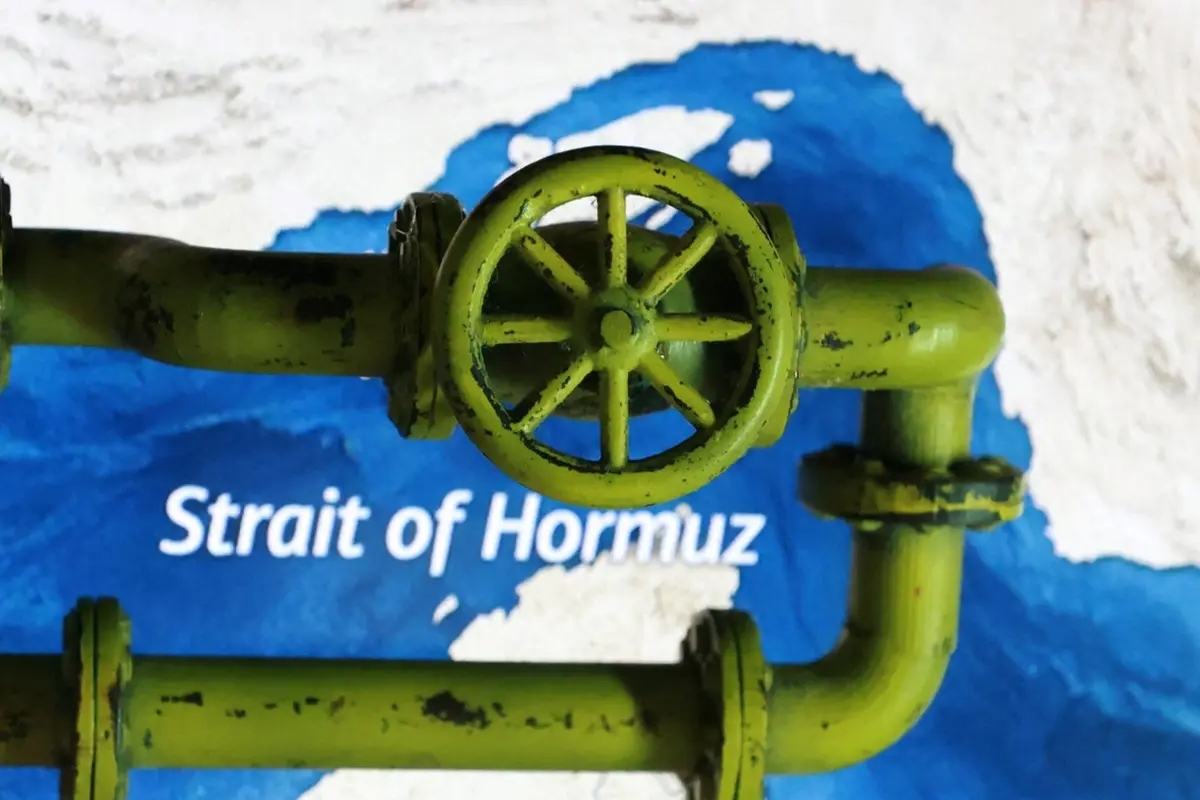
Oil prices fell today after reports circulated that Iran could reopen the Strait of Hormuz within seven days if the United States took initial steps to ease military pressure, and following Reuters reports citing trade sources that Saudi Arabia is preparing to resume crude oil exports from the port of Yanbu.
November Brent crude futures fell 89 cents, or 0.89 percent, to $99.45 a barrel, while U.S. West Texas Intermediate crude futures for October delivery, which ended trading today, dropped $1.09, or 1.14 percent, to $94.69 a barrel.
The price of a barrel of Kuwaiti crude fell $5.64 to $109.30 in trading yesterday, compared with $114.94 on Friday, according to the price announced by the Kuwait Petroleum Corporation.
Regarding the morning gains in oil prices, Tim Waterer, chief market analyst at KCM Trade, said, “The rise in West Texas Intermediate and the strong opening of Brent crude appear to be a typical rebound resulting from short covering after the recent decline, rather than a shift in market fundamentals.”
He added that traders who had bet on further declines are reducing some risks as diplomatic developments unfold.
Waterer noted that prices are likely to remain within a narrow range and stay highly sensitive to news headlines until there is clear progress or a setback in diplomatic efforts between the United States and Iran.
The agency cited three informed sources stating that oil flows had resumed through the pipeline, while two sources indicated that pumping operations are currently being conducted at low rates. Saudi Aramco had not yet responded to a request for comment.
The resumption of operations on the pipeline and the return of exports from Yanbu represent a significant step toward restoring normal Saudi crude flows to global markets, as the pipeline serves as a strategic artery transporting oil from the Eastern Province to the Red Sea coast.
The pipeline’s maximum capacity is approximately 7 million barrels per day, after its throughput was increased by leveraging existing infrastructure, compared with a base nominal capacity of around 5 million barrels per day.
Shipping data showed that Saudi Aramco loaded 14 million barrels of oil onto seven tankers from terminals near Ras Tanura port last Sunday.
Bloomberg reported that Saudi oil loading operations observed from within the Arabian Gulf surged on Sunday, providing the clearest indication yet that the kingdom is redirecting its exports toward the Hormuz Strait following the shutdown of the East-West pipeline.
Giant tankers capable of loading 14 million barrels of oil were spotted at Saudi export facilities on the Gulf, marking the highest number since at least June last year.
The number of goods vessels transiting the Hormuz Strait fell to just two yesterday, down from ten the previous day, according to preliminary shipping movement data, as navigation disruptions through the strait continued.
The data, cited by Reuters, does not include ships that may have transited the strait after disabling their automatic identification systems to avoid detection.
Before the outbreak of conflict with Iran in late February, the strait typically saw the passage of around 125 large commercial vessels daily, including oil and gas tankers, bulk carriers, and container ships, accounting for approximately 20 percent of the world’s daily supply of crude oil and liquefied natural gas.
A senior Iranian government official told Japan’s Kyodo News agency yesterday that his country had offered to reopen the strait within seven days if the United States took initial steps to ease military pressure, as part of Tehran’s intensified efforts to revive negotiations with Washington.
Hamad Hussein, a senior commodities expert at Capital Economics, noted that oil prices appeared to be falling in light of media reports suggesting Iran might be willing to reopen the strait within seven days, adding that this could be a positive sign of the success of diplomatic efforts.
Before the US-Israeli attacks on Iran in late February, the Hormuz strait carried about one-fifth of global oil and liquefied natural gas supplies.
Hussein said: “There may be other obstacles, such as the issue of toll collection, which must be overcome before a permanent solution is reached.”
Market focus is also on US President Donald Trump’s meetings with world leaders at the UN General Assembly this week, amid instability in the Middle East and the ongoing four-and-a-half-year war in Ukraine, which shows no signs of stopping.
Iran and the United States have exchanged threats, but Trump said he is open to meeting his Iranian counterpart Masoud Pezeshkian, who is expected to be in New York this week for the UN General Assembly meetings.
News reports quoted Mohsen Rezaei, secretary of Iran’s Supreme National Security Council, as saying in an interview last Saturday that Iran had communicated its conditions to mediators for resuming negotiations aimed at ending the war with the United States.
Saudi Aramco increased exports through Hormuz after attacks on its East-West pipeline forced it to halt some shipments via the Yanbu port. Data from tanker tracking showed loading of about 14 million barrels of crude oil onto seven supertankers in the Gulf last Sunday.
On the other hand, Libya’s National Oil Corporation said a militant group closed valve number seven on the crude oil pipeline from the Sharara field to the port of Zawiyah the day before yesterday, causing a significant drop in the field’s production.
Two engineers working at the field told Reuters that production had fallen by about 200,000 barrels per day, bringing current output to between 100,000 and 105,000 barrels per day.
Ole Hansen, head of commodities research at Saxo Bank, said he does not expect oil prices to fall much further before supply increases through Hormuz, particularly refined products, where the real crisis lies.
Diesel prices in Europe and the United States have reached record levels, and the wars in Iran and Ukraine have led to a sharp decline in exports from several major producers, including Russia, Saudi Arabia, and the UAE.
