Record Debt Threatens the Global Economy
Kristalina Georgieva, Managing Director of the International Monetary Fund (IMF), said yesterday at the Qatar Economic Forum in New York: “We have consistently warned about the need for fiscal consolidation. Although we see considerable understanding of this issue, the measures taken so far remain insufficient.”
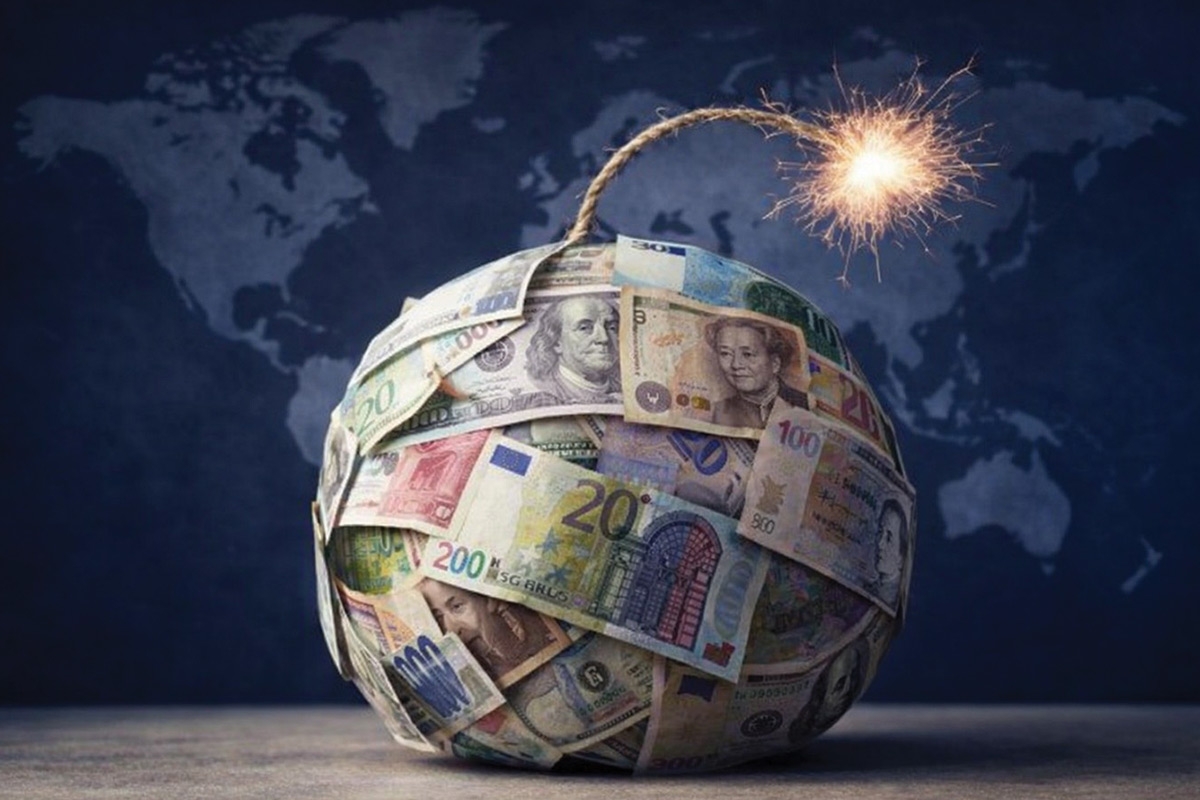
She noted that global public debt is projected to exceed 100% of global GDP by 2029, driven primarily by the United States and China. She emphasized that the U.S. fiscal trajectory is unsustainable and requires a gradual reduction in deficits and debt.
Georgieva also warned that persistent high inflation could prompt more central banks to raise interest rates, increasing borrowing costs and making debt servicing more difficult.
The Washington-based IMF’s forecasts indicate that global public debt will surpass the 100% of GDP threshold by 2029, two years earlier than previously expected, largely due to significant debt increases in both the United States and China.
“We have been urging the United States to pay greater attention to its fiscal position,” she added. “Through discussions with Treasury Secretary Scott Bessent, there is an acknowledgment that this situation is unsustainable and that the United States needs to gradually reduce its deficit and debt,” according to Bloomberg.
The IMF Managing Director has repeatedly warned about the risks associated with rising debt levels, calling on member countries to take action to address the issue. Last month, she confirmed that debt trajectories in most advanced economies, including the United States, require “policy-level attention.”
Georgieva stated that inflation remains “stubborn” and that it “may be necessary” for central banks worldwide to follow the lead of the U.S. Federal Reserve and the European Central Bank in raising interest rates, noting that higher borrowing costs will make debt servicing more challenging.
She added that disruptions in the energy and transport sectors are affecting commodity-producing countries such as Qatar, Kuwait, and Iraq, making their economies vulnerable to “sharp contractions.”
However, she clarified that Qatar, which was the world’s second-largest exporter of liquefied natural gas (LNG) before the outbreak of war with Iran this year, has built up reserves and financial buffers that are currently shielding its economy.
“Emerging markets today have monetary policies that are comparable to, or perhaps even superior to, those in advanced economies where debt levels have surged significantly,” she said.
The IMF, which will update its global economic and inflation forecasts next month, expects the Qatari economy to contract by 8.6% in 2026.
The Fund also pointed out that prolonged uncertainty in the LNG market poses a risk to Qatar’s growth prospects. Before the outbreak of war in Iran, the IMF had projected that the Qatari economy would grow by 6.1% this year.
