Egyptian Minister of Irrigation: All legitimate options are open to us to protect our water security
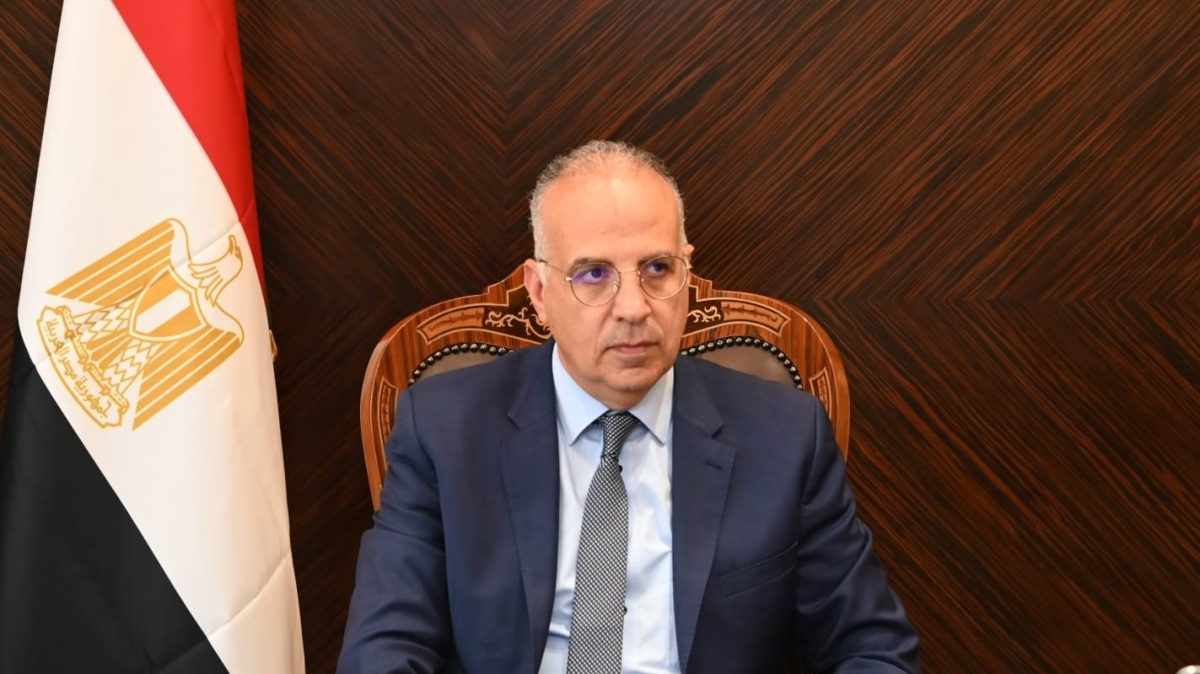
Egypt confirmed today, Sunday, that it retains all measures and safeguards provided by international law to protect its water security and the rights and interests of its people, emphasizing that “all legitimate options remain open to the Egyptian state.”
Egyptian Minister of Water Resources and Irrigation, Dr. Hani Suleiman, stated in a meeting with correspondents from foreign media outlets accredited in Egypt, attended by the head of the Egyptian Information Authority, Ambassador Alaa Youssef, that Egypt’s signing of the Declaration of Principles with Ethiopia in 2015 did not constitute authorization for Ethiopia to act unilaterally. Rather, it established specific obligations regarding cooperation, the prevention of significant harm, agreement on rules for initial filling and annual operation, and the creation of a mechanism for coordination and the exchange of data and information.
Regarding the characterization of the Grand Ethiopian Renaissance Dam (GERD) as “illegal,” Suleiman clarified that this is a deliberate political description based on a clear legal stance against a dam that was constructed, filled, and operated unilaterally. He stressed that the completion of construction or the passage of time does not mean Egypt accepts the imposed reality, nor does it waive its position or rights, thereby granting Egypt the right to act in what it deems its best interest through the most appropriate option.
He added that Egypt considers proceeding with filling and operation without agreeing on these rules constitutes a breach of the commitments Ethiopia itself accepted upon signing the Declaration of Principles.
In this context, he stressed that “uncoordinated unilateral operation” has demonstrated the dam’s capacity to cause sudden fluctuations in flow rates, which Egypt described as “industrial flooding” or reductions in flow that could lead to “industrial drought,” thereby disrupting the operation of dams and water facilities in downstream countries.
Suleiman addressed recent Ethiopian statements that included more explicit references to controlling water, considering that “this language exposes the contradiction in the narrative that portrayed the dam for years merely as a project for electricity and development, and confirms, from the Egyptian perspective, the core concerns that led Cairo from the outset to insist on a legally binding agreement.”
He affirmed that constructing a facility within the borders of one state does not transform an international watercourse into a purely national resource, nor does it grant an upstream state the right to unilaterally manage a resource relied upon by other peoples and countries.
The Minister of Water Resources outlined that the Egyptian position is based on a clear equation with no contradictions: “full cooperation and genuine support for the development of Nile Basin countries when projects adhere to the rules of international law, and firm resolve in protecting Egypt’s water security and rejecting the imposition of fait accompli or the repetition of unilateral approaches.”
