Gold closed last week's trading at $4,378
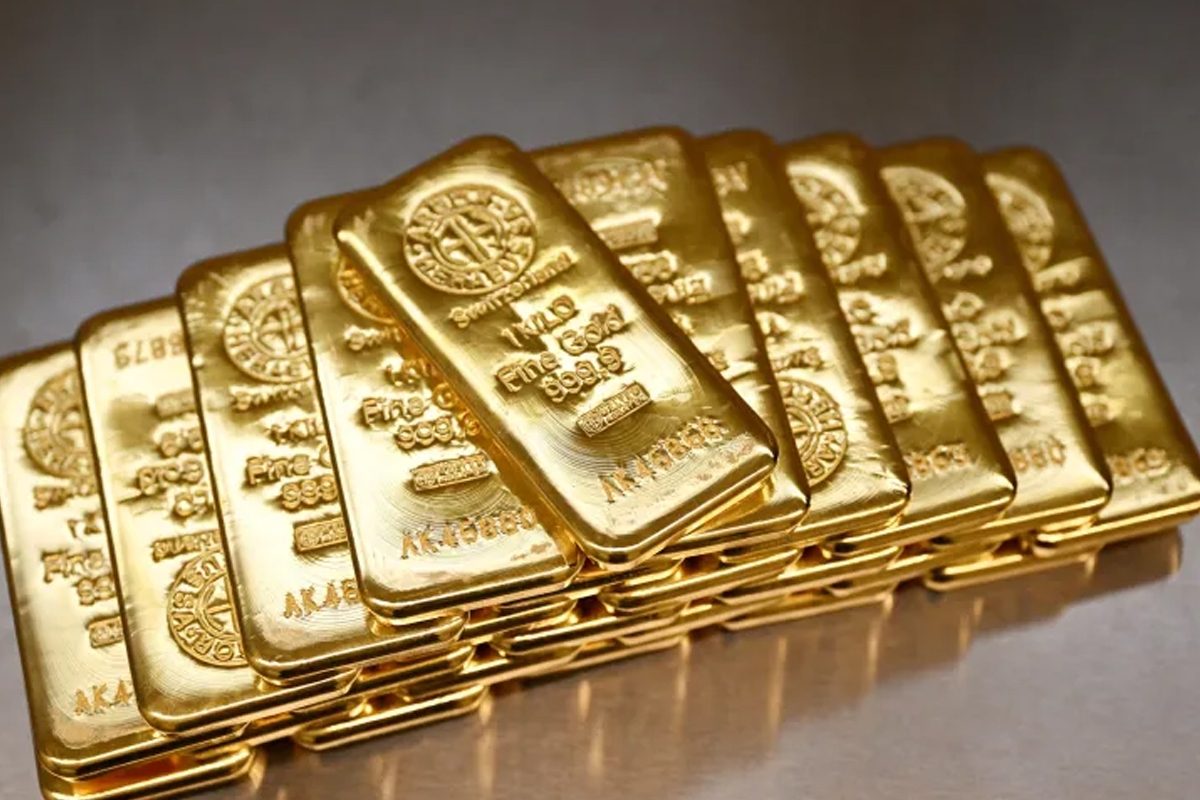
Gold prices ended last week higher, closing at $4,378 per ounce, marking its first weekly gain in four weeks. This was supported by falling oil prices and easing concerns over persistent inflationary pressures, as markets awaited U.S. economic data.
It was noted that gold experienced notable volatility last week after coming under strong pressure following the Federal Reserve’s decision to raise interest rates by 25 basis points. The metal subsequently recovered part of its losses as oil prices declined and bond yields fell, helping to alleviate pressure on the precious metal.
It was added that geopolitical concerns in the Middle East contributed to sustained demand for gold as a safe-haven asset for investors during periods of heightened uncertainty.
It was mentioned that the Federal Reserve raised its benchmark interest rate to a range of 3.75% to 4.00%, while maintaining signals of potential further increases in the coming period.
It was explained that current financial market pricing suggests a probability of approximately 55% for another rate hike at the upcoming October meeting. Consequently, statements from Federal Reserve officials and upcoming economic data remain key factors influencing gold’s price movements.
The report indicated that the yield on 10-year U.S. Treasury bonds approached the 5% level, a high threshold that increases the opportunity cost of holding gold, which yields no income.
It was added that any decline in bond yields could provide additional support for the precious metal, particularly if accompanied by a weakening U.S. dollar.
It was noted that the dollar remained strong last week, supported by expectations of continued monetary tightening. This limited gold’s ability to post larger gains, although the metal still managed to record a weekly increase driven by falling oil prices and ongoing geopolitical uncertainty.
It was pointed out that oil price trends remain a significant factor for gold, as rising oil prices could reignite inflationary pressures and reinforce expectations that interest rates will remain elevated for longer. Conversely, continued declines in oil prices may help alleviate such pressures.
It was clarified that market attention is currently focused on a series of key U.S. economic indicators this week, most notably the preliminary September Purchasing Managers’ Index (PMI) data, which will provide early insights into economic activity in the manufacturing and services sectors.
It was added that markets are also awaiting weekly initial jobless claims data and new home sales figures, alongside remarks from several Federal Reserve officials that may offer further clues about the future of monetary policy following the recent rate hike.
It was explained that investors are awaiting the upcoming meeting between U.S. President Donald Trump and Chinese President Xi Jinping, amid the continued impact of trade, technology, artificial intelligence, and supply chain issues on global markets.
The “Dar Al-Sabik” report emphasized that any new developments in trade relations between the world’s two largest economies could trigger movements in the dollar, commodities, and financial markets.
It was stressed that geopolitical developments in the Middle East and energy prices will remain key factors influencing gold prices in the near term, as escalating tensions could bolster demand for the precious metal as a safe haven.
From a technical perspective, it was reported that gold closed the week at $4,378 per ounce, with the $4,400 level remaining a key resistance zone in the current phase.
He clarified that if gold manages to break above this level and sustain itself, attention may shift to the $4,450 level, followed by $4,500, and then approximately $4,538.
He added that if selling pressure returns and the $4,378 level is breached, prices may test the $4,300 level, followed by $4,282, which represents a key technical support level.
He noted that a break below the $4,282 level could extend the corrective wave to lower levels, with the dollar’s movement and bond yields remaining among the key factors determining the strength of the trend.
On the local front, a report by “Dar Al-Sabik” (The Bar House) indicated that gold prices continue to be directly influenced by the global ounce price, alongside dollar fluctuations and shifts in expectations for U.S. monetary policy. The price of 24-karat gold reached approximately 43.59 dinars (about $141), while 22-karat gold recorded around 39.96 dinars (about $130). The price of one kilogram of silver reached approximately 715 dinars (about $2,326).
The ounce is a unit of mass used in various measurement systems. It is also known as the troy ounce and equals 28.349 grams; however, when used as a unit of measure for precious metals, it equals 31.103 grams.
