Finance Minister: Upgrading Government Financial Management System Key Pillar in Reform and Development Journey
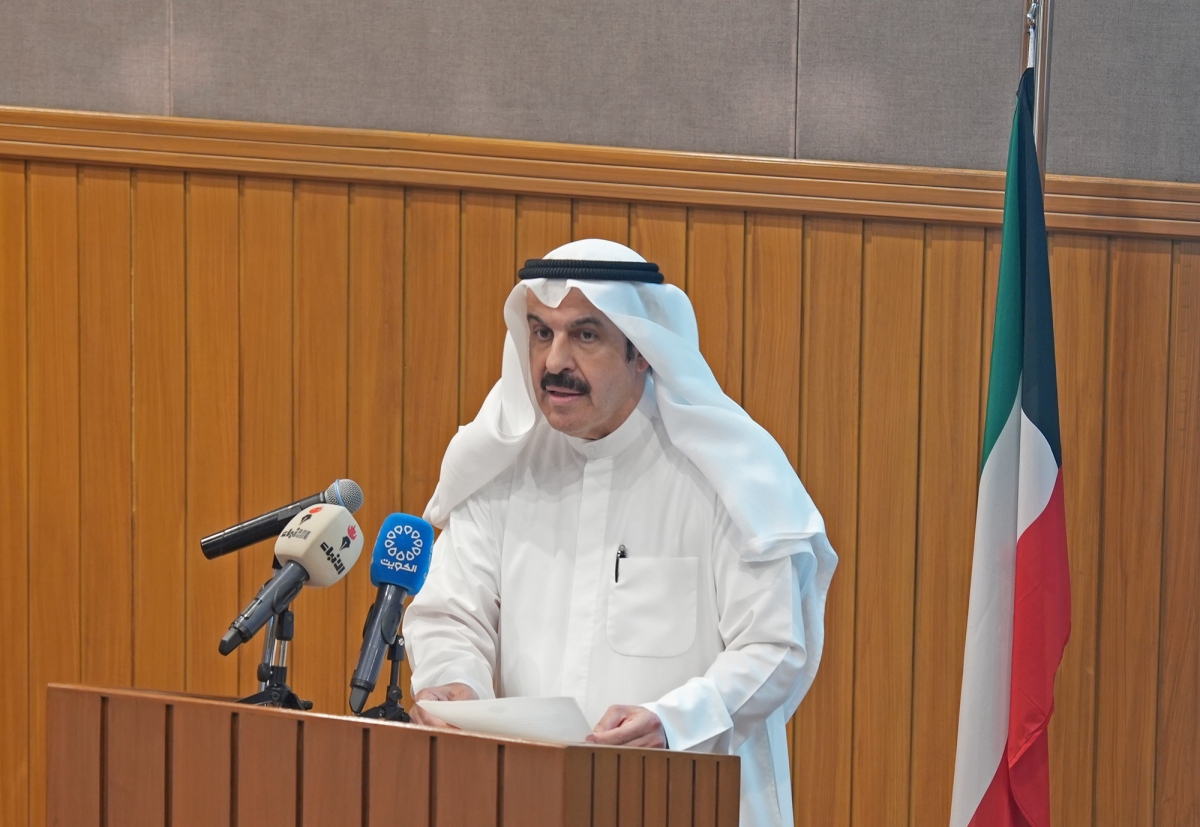
Arab Institute for Planning and Financial Controllers Authority launch program to enhance integrity and financial transparency in Kuwaiti government entities
Translated by Qiyas from الجريدة — Original source
This came in a speech by Dr. Al-Rafai today, Sunday, at the launch ceremony for the Integrity, Transparency, and Governance Enhancement Program in Financial Performance of Government Entities, held at the Arab Institute for Planning and implemented by the Financial Supervision Authority.
Dr. Al-Rafai added that the role of the Financial Supervision Authority is pivotal in supporting this system through its supervisory and financial responsibilities, enhancing compliance with laws and regulations, and providing advice and guidance to government entities. These efforts contribute to improving the quality of financial performance, enhancing the efficiency of state resource utilization, and supporting reform and development initiatives.
He clarified that launching this development plan reflects the commitment to continuously improving government performance, investing in national competencies, and keeping pace with changes and developments in financial management and supervision, in line with the objectives and aspirations of Kuwait Vision 2035 for a more efficient and effective government administration.
He pointed out that the success of these efforts requires integrated and coordinated roles among various state agencies and institutions, working as a team, based on the belief that improving financial performance is a shared responsibility. He emphasized that the ultimate goal is to enhance the efficiency of state institutions, protect their assets, and support their development trajectory.
For her part, Nida Al-Sahli, Head of the Financial Supervision Authority, said in a similar speech that the launch of the program represents one of the Authority’s strategic initiatives aimed at transitioning from the concept of procedural supervision to a broader concept based on capacity building, prevention, knowledge dissemination, and consolidating sound financial practices.
Al-Sahli added that the program will be implemented over four fiscal years, from April 1, 2026, to March 31, 2030, providing an appropriate timeframe for gradual and sustainable work, measuring results, and developing tools and practices according to emerging developments in the government work environment.
She explained that the importance of this program extends beyond the Authority and the entities under its supervision, noting that it is directly linked to Kuwait’s development journey and supports two key pillars of the state’s development plan.
She indicated that the first pillar, “Effective Government Administration,” is embodied in efforts to build institutional capacities characterized by efficiency, governance, integrity, and transparency in public fund management.
She stated that the second pillar, “Creative Human Capital,” involves investing in people as the fundamental basis for any sustainable institutional development, by qualifying government financial cadres and empowering them to keep pace with modern developments in financial management, supervision, and governance.
She noted that the program is linked to the concept of the knowledge economy by enhancing specialized financial knowledge, leveraging best practices, and utilizing financial and technical analysis tools to support the quality of financial decisions, improve public expenditure efficiency, and strengthen the foundations of sustainable development within the framework of Kuwait Vision 2035.
Al-Sahli highlighted that the Authority has achieved significant milestones since its establishment in safeguarding public funds, including preventive and prior supervision exercised by financial supervisors to prevent and correct erroneous financial procedures before implementation. This has contributed to preserving approximately 1.5 billion Kuwaiti dinars of public funds.
She added that this achievement is not merely a number but embodies the value of preventive supervision and its role in supporting a fundamental national and developmental goal: improving public expenditure efficiency and achieving optimal use of public resources.
She clarified that the Authority’s role extends beyond merely monitoring observations or correcting financial procedures; it also involves contributing to the construction of a more efficient, aware, and committed government financial environment, as well as supporting government entities with advisory services and expertise that enable them to address the root causes of errors and observations and elevate their financial practices.
Al-Suhaili expressed her gratitude and appreciation to Minister of Finance Dr. Yaqoub Al-Rifai, government entities, and staff members of the Financial Supervision Authority for their support and backing, and she voiced her anticipation for continued cooperation and engagement with the program.
For his part, Abdulrahman Al-Hadib, Project Director of the “Program for Enhancing Integrity, Transparency, and Governance in the Financial Performance of Government Entities,” stated in a similar address that the program was designed according to clear quantitative and qualitative targets, enabling a transition from planning to implementation, measurement, and performance development based on actual results.
Al-Hadib added that the program aims annually to enhance the efficiency and capabilities of 400 financial staff members from various government entities through the implementation of 20 specialized practical workshops in financial and supervisory fields, in addition to providing consultations on the development of five legislations annually, thereby strengthening integrity, transparency, and governance in government financial performance.
He explained that the program relies on practically measuring the impact of workshops by targeting an improvement of at least 30 percent in employees’ financial performance evaluation results compared to pre-participation assessment outcomes, noting that workshops serve as a means to achieve tangible and measurable development in knowledge, skills, and practice.
Al-Hadib further noted that specialized workshop topics also include artificial intelligence and its applications in accounting, auditing, internal review, risk management, budget preparation, monitoring government contracts, financial investigation, combating corruption and money laundering, and other related subjects.
He highlighted that impact measurement and sustainability are fundamental aspects of the program, as improvements will be monitored following workshop implementation, participants’ feedback will be analyzed, and evaluation results will be utilized to continuously develop workshop content in alignment with legislative and technical developments, as well as advancements in financial and supervisory management methods.
He indicated that through this program, the aim is to enhance the efficiency of financial performance in government entities, strengthen governance and compliance with financial regulations, and build qualified national cadres capable of applying best practices, thereby supporting transparency and financial discipline, contributing to improved public expenditure efficiency, and enhancing the business and investment environment.
Al-Hadib expressed his hope that this program would represent a practical, advanced step toward enhancing financial knowledge, consolidating governance, supporting compliance and transparency, and building qualified national capacities that efficiently contribute to developing the government financial management system and supporting the country’s development trajectory.
