Kuwait Times: 65 Years of Media Leadership
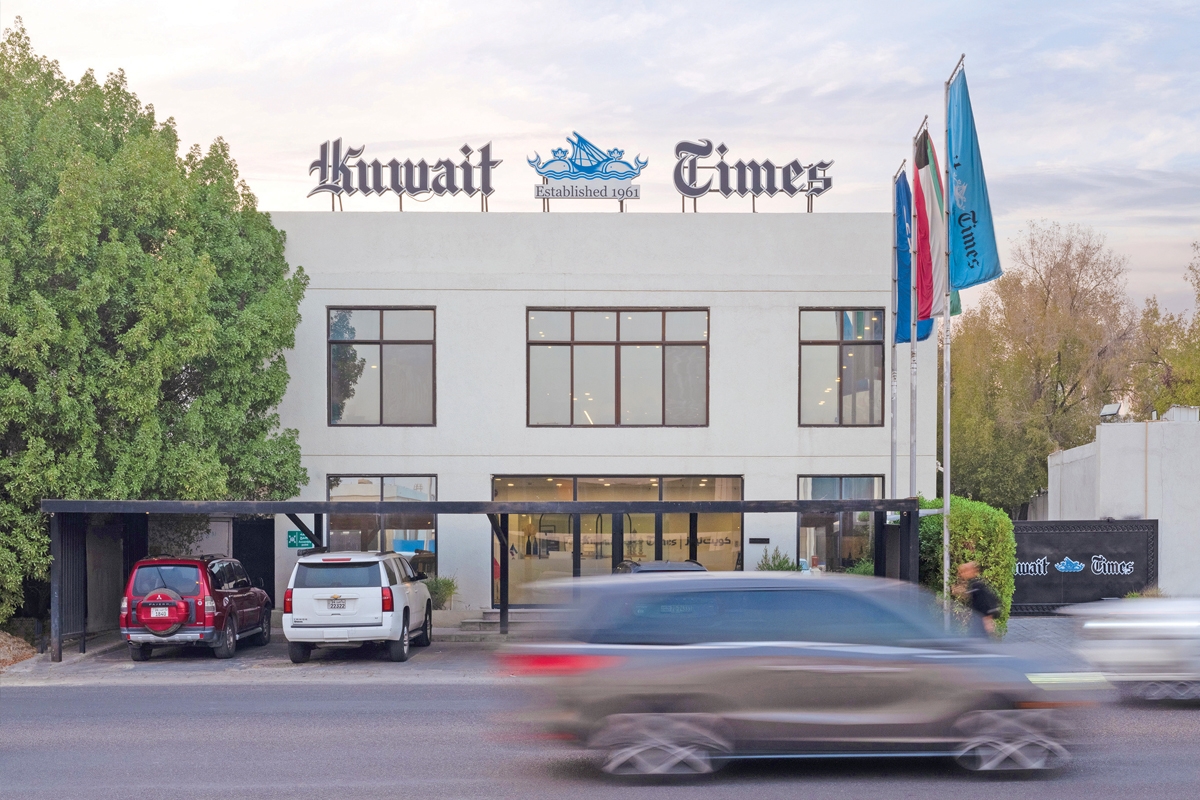
Kuwait Times celebrates the 65th anniversary of its founding, marking a distinguished media journey intertwined with the modern renaissance of Kuwait. The newspaper has accompanied the nation’s phases of construction, development, and the economic and social transformations it has witnessed since the early 1960s to the present day.
Over more than six decades since the publication of its first issue on September 24, 1961, printed at Al-Maqawi Press by the late journalist and Honorary President of the Kuwait Press Association, Yusuf Saleh Al-Alayan, may God have mercy on him, Kuwait Times has become the first English-language daily newspaper in Kuwait and the Arab Gulf region. It has established itself as one of the region’s most prominent media institutions, serving as a witness to the country’s development trajectory, the evolution of its institutions and bodies, and Kuwait’s regional and international presence.
Situated between a rich heritage and aspirations looking toward the future, the founding anniversary arrives as Kuwait Times continues its journey of transformation and renewal. It relies on its distinguished journalistic legacy while maintaining its core mission: providing professional, reliable journalism that reflects the image of Kuwait and keeps pace with the aspirations of its audience.
Abdullah Boftein, Deputy Editor-in-Chief of Kuwait Times, stated that the 65th anniversary is an occasion to take pride in the history of a pioneering national media institution. Since its inception, the newspaper has played a role that extends beyond mere publication, serving as Kuwait’s window to the world and a bridge for communication between Kuwait and English-speaking communities.
He added, “Kuwait Times has documented the state’s renaissance and conveyed it to the world through news, reports, and journalistic stories over the past decades. Alongside other esteemed national media institutions, it has helped introduce the world to the country’s history, institutions, and culture. Meanwhile, it has upheld its professional mission despite the changes the global media and journalism industries have undergone, particularly following the artificial intelligence revolution. It will continue to fulfill its mission and keep pace with the state’s journey and future aspirations under the wise leadership of His Highness the Amir of the State, Sheikh Meshal Al-Ahmad.”
Boftein continued, “In recent years, Kuwait Times has undergone a comprehensive institutional transformation encompassing content, the work environment, and digital presence. This has strengthened its media footprint and expanded its audience. We have been keen to ensure that the newspaper does not live off its history, but rather invests in that history to build its future.”
He explained that this transformation included investing in content production. The institution now features three distinct studio spaces, alongside the development of original content, programs, and journalistic stories that give Kuwait Times a unique identity that transcends the traditional model of a daily newspaper.
He noted that this comprehensive transformation has been reflected in the newspaper’s reach, content, financial performance, and market value. This has occurred in parallel with the development of products and content and the diversification of revenue sources, contributing to achieving the desired sustainability and the continuation of the print edition alongside digital expansion. This stands in contrast to global news organizations that have moved to cease printing and rely solely on digital publishing.
He added, “Commercial and advertising content has become an important part of the sustainability of media institutions today. However, our responsibility is to maintain a balance between commercial sustainability, genuine journalism, and content that holds value for the reader and society.”
Boftein affirmed that the changes were grounded in the newspaper’s history and archives. The Kuwait Times headquarters, located on the historic Press Street, houses a rich archive containing previous issues of the newspaper. This archive documents the political, economic, social, sports, and cultural events that Kuwait has experienced over the past 65 years.
He clarified that the institution has worked in recent years to revive this legacy, whether by dedicating a befitting space for the archive within its headquarters, through the archive account that reintroduces pages, photos, and stories from the past to new generations, or through special editions of the newspaper that have brought the print edition back into the hands of the younger generation.
Boufatin explained that the transformation was not limited to content and platforms, but extended to converting the newspaper’s headquarters into a vibrant space and a comfortable, attractive work environment. He said: “We have gradually transformed the newspaper’s headquarters into a Creative Hub, an incubator for creativity and content production, bringing together journalism, training, and community engagement. It attracts a new generation of journalists, photographers, talented individuals, and young writers, and opens its pages and content to support artists and athletes, while keeping its doors open to school and university students and specialists.”
He added: “We take pride in the fact that young people enter Kuwait Times as students, trainees, and visitors, and leave with a different perspective on journalism. Some even discover here their desire to make media and journalism part of their future.”
The 65th anniversary coincides with the fifth anniversary of Kuwait Times’ summer program, which has become one of the institution’s prominent annual initiatives and attracts significant participation from young people eager to learn about media work from the inside.
Boufatin stated that “the program is not merely a corporate social responsibility initiative, but a practical experience that contributes to preparing a new generation to learn real journalism, professional ethics, storytelling, photography, content creation, and working within the newsroom.”
He emphasized that the renewal also encompassed the institution’s culture and leadership, through empowering youth and giving them greater room for initiative and decision-making, alongside the active presence of female professionals in leadership positions and their contribution to the institution’s management and success.
He said: “We believe that an institution seeking to sustain itself cannot tie its success to specific individuals. We must build a new generation and give them the confidence and space to experiment, learn, and lead.”
He affirmed that the rapid transformations in the media industry and changing audience habits do not pose a threat to Kuwait Times’ legacy, but rather serve as a catalyst for further renewal and investment in platforms, original content, and new technologies, while upholding journalistic values of accuracy, credibility, and responsibility.
Boufatin concluded: “Today, we celebrate a history we are proud of, but our ambition does not stop at preserving what has been achieved. Tools change, platforms change, and audiences change; therefore, Kuwait Times will continue to evolve with them. We are grateful to every journalist, photographer, employee, and colleague who has passed through this place over the past 65 years and left their mark. Our responsibility today is to add to what they built and to hand over to the next generation a stronger, younger, more open institution, capable of shaping its own future and fulfilling its national and social responsibilities. We are also grateful to our followers and everyone who has shared this journey with us.”
On the occasion of the newspaper’s founding anniversary, the institution will open its doors, offices, printing press, and studios to all followers, readers, colleagues, and officials on Thursday, the 24th of this month, during the evening hours, to get a close look at its team, work environment, history, transformation story, and future vision.
