Greenland Deal: Trump Seizes Security Control... Denmark Clings to Sovereignty
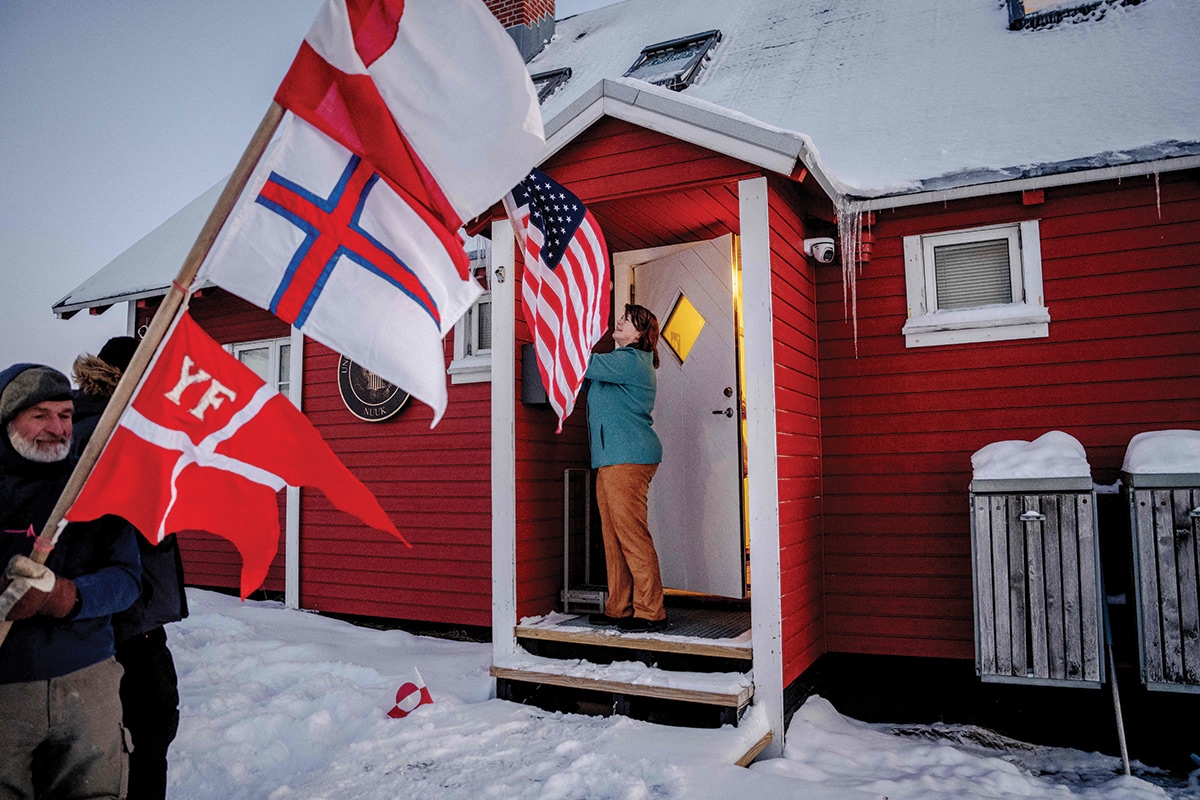
After months of US threats to take control of Greenland, Washington and Copenhagen announced they had reached an agreement regarding the polar island. US President Donald Trump described the deal as granting the United States “permanent control” over its security, while Denmark and Greenland quickly moved to affirm that the agreement does not affect Danish sovereignty or the island’s right to self-determination. This formulation reflects an attempt to contain the dispute without resolving questions regarding the extent of new US authorities.
Denmark and Greenland welcomed the agreement, which the three governments are expected to sign on the sidelines of the UN General Assembly meetings in New York next week. Danish Foreign Minister Lars Løkke Rasmussen expressed hope today that the long period of uncertainty would be replaced by a binding agreement that enhances Arctic and North Atlantic security while respecting Denmark’s “red lines.” However, the deal still requires approval from both the Danish and Greenlandic parliaments before entering into force.
The core paradox of the agreement lies in the differing language used on both sides of the Atlantic. While Copenhagen states that the agreement affirms the Kingdom’s sovereignty, its territorial integrity, and the Greenlandic people’s right to self-determination, Trump declared that Washington has obtained “permanent control over security and all other needs in Greenland,” adding that the agreement is open-ended and has no expiration date. He also stated that no adversary to the United States would be able to establish a base or military presence on the island, or carry out sensitive investments there, without the explicit written consent of Washington.
Thus, the announced formula appears closer to a significant expansion of US influence and security presence within the island, while formally leaving sovereignty in Danish hands. However, the boundaries of this expansion will remain tied to the final text of the agreement, the key details of which have not yet been disclosed, including the size of new US forces and facilities, and whether Washington will obtain official authority in areas such as foreign policy or natural resources.
US Secretary of State Marco Rubio said the agreement “addresses all our national security concerns regarding Greenland,” describing it as a major win for the United States and the American people. He emphasized that the deal permanently secures US security interests in the Arctic without cost to American taxpayers. He added that Greenland would remain part of North America’s strategic defense zone, thereby preventing any adversary from accessing it or the surrounding areas.
Washington also stated that the agreement grants it permanent access rights, the ability to establish military bases, and airspace rights, thereby expanding its capacity to use the island for the defense of North America. The US administration has not yet clarified how these authorities will be translated into practice or the size of the military presence it will establish.
Trump has made Greenland part of his strategic calculations since returning to the White House in January 2025, repeatedly asserting that US control over the island is necessary for security reasons. At the height of the crisis, he went so far as to threaten annexation and the use of force, raising concerns in Denmark and its European allies within NATO.
The island holds exceptional importance in US and Western strategic calculations. It is located on the shortest geographical route between North America and Russia, and its position allows for monitoring northern passages and defending North America. It also contains rare mineral resources that have not yet been widely exploited.
As Arctic ice melts and new sea routes emerge, competition for the region, its resources, and its waterways is intensifying, making Greenland a nexus of military security, energy, minerals, and global trade.
The agreement does not start from scratch. The United States already maintains a military presence in Greenland, most notably the Pituffik Space Base in the island’s north. A U.S.-Danish defense agreement signed in 1951 and updated in 2004 allows Washington to enhance its military deployments and facilities on the island, provided that Danish and Greenlandic authorities are notified in advance.
Media reports indicate that Washington intends to establish new military bases in southern Greenland, in addition to its existing presence in the north, but these reports have not yet been translated into specific details within the agreement itself.
The new agreement extends a process that began last January, when Donald Trump reached an understanding with NATO Secretary General Mark Rutte at the Davos Economic Forum regarding Greenland’s future, though the details remained vague. It is still unclear whether the current agreement represents the operationalization of that understanding or constitutes a separate deal.
Danish Prime Minister Mette Frederiksen spoke of “the prospect of reaching a good agreement for Greenland, the Kingdom of Denmark, and the United States,” stating it would be beneficial for NATO and Europe. Greenland’s Premier, Jens Frederik Nielsen, said the agreement strengthens the region’s security, while Greenland’s Foreign Minister, Múte Bourup Egede, described the development by saying, “We now have an agreement in hand.”
