History scholars from Kuwait University visit Beijing
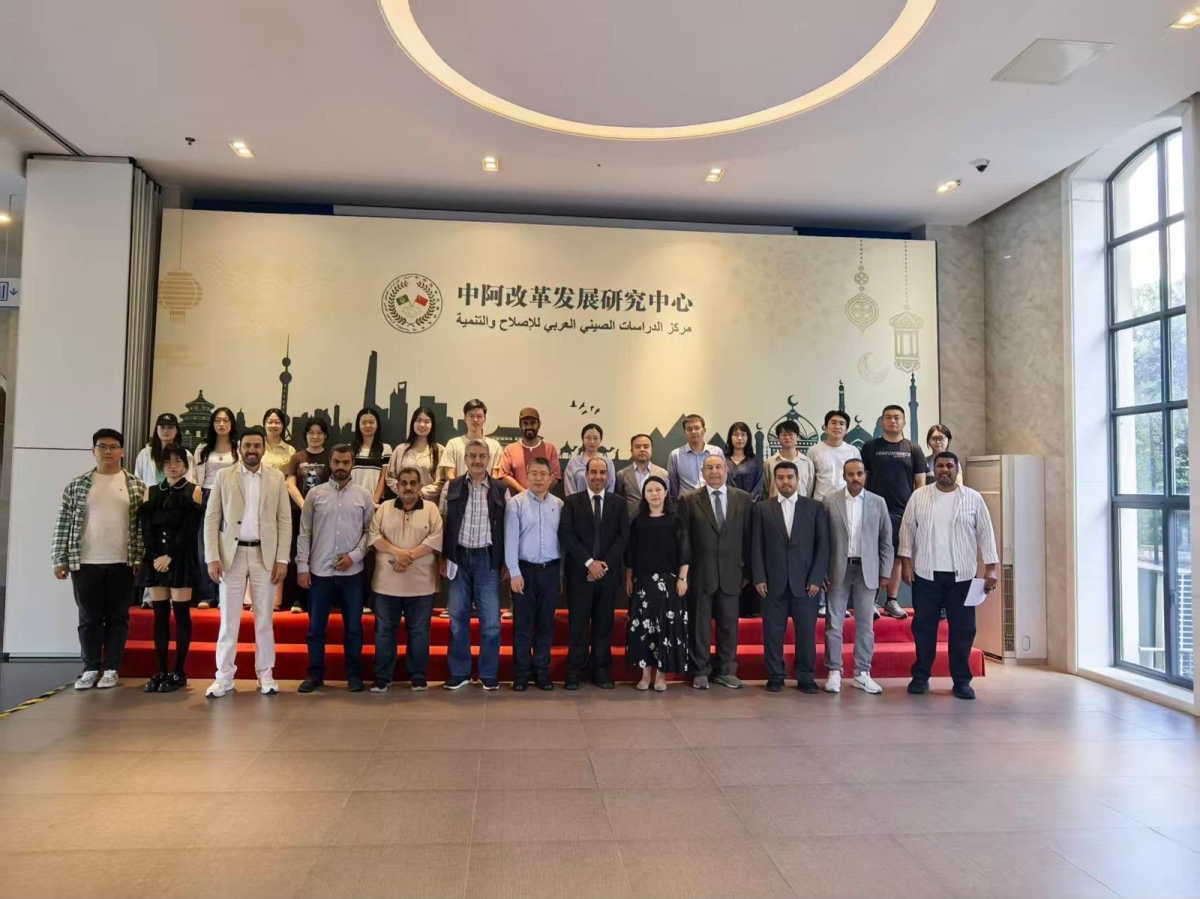
A delegation of faculty members from the Department of History at Kuwait University concluded a thirteen-day academic visit to the People’s Republic of China, which included the capital Beijing and the cities of Shanghai and Guangzhou. The itinerary featured academic meetings at two Chinese universities, along with field visits to historical and cultural sites and major industrial institutions.
The visit began with travel from Kuwait to Guangzhou, followed by a move to Beijing, where the delegation opened its tour with a visit to the National Museum of China and a view of the exterior of the Niujie Mosque. The following day, the delegation traveled to the Great Wall of China at the Badaling section, then visited the Olympic sites represented by the Water Cube and the Bird’s Nest stadium.
The delegation continued its historical tour in the capital with visits to Tiananmen Square, the Forbidden City (Imperial Museum), Jingshan Park, the Shichahai area, and the Drum Tower. They then met with faculty and researchers at Beijing Foreign Studies University, alongside a visit to the Old Summer Palace (Yuanmingyuan). The Beijing itinerary also included visits to the Yonghe Temple, known as the Lama Temple, the Temple of Heaven, and the historic Qianmen Street.
The delegation then traveled by high-speed train from Beijing to Shanghai, where they toured Nanjing Road, the City God Temple, and the Bund waterfront, along with a cruise on the Huangpu River. In Shanghai, the delegation visited the Shanghai Museum, Jin Mao Tower, the Xintiandi district, and Wukang Road. They held an academic meeting at Shanghai International Studies University and concluded their stay there with a tour of the historic Zhujiajiao town.
From Shanghai, the delegation headed to Guangzhou, where they visited the Chen Clan Academy, the Yongqingfang and Liwan districts, and Shangxiajiu commercial street. They also toured Shamian Island, Huacheng Square, the Haixinsha area, Haixin Bridge, and the Canton Tower plaza.
The visit concluded with a trip to Shenzhen, which included a visit to the headquarters of BYD to explore its electric vehicle technologies, as well as the Huachengbei commercial district. The delegation then proceeded to Guangzhou Airport to return to Kuwait.
The visit reflected the Department of History faculty’s commitment to organizing a well-planned academic visit with clearly defined objectives and stops, providing them and the two accompanying graduate student researchers with direct exposure to Chinese educational and cultural institutions.
