Ministry of Education: Concepts of Recycling Under Review for Inclusion in the Curriculum
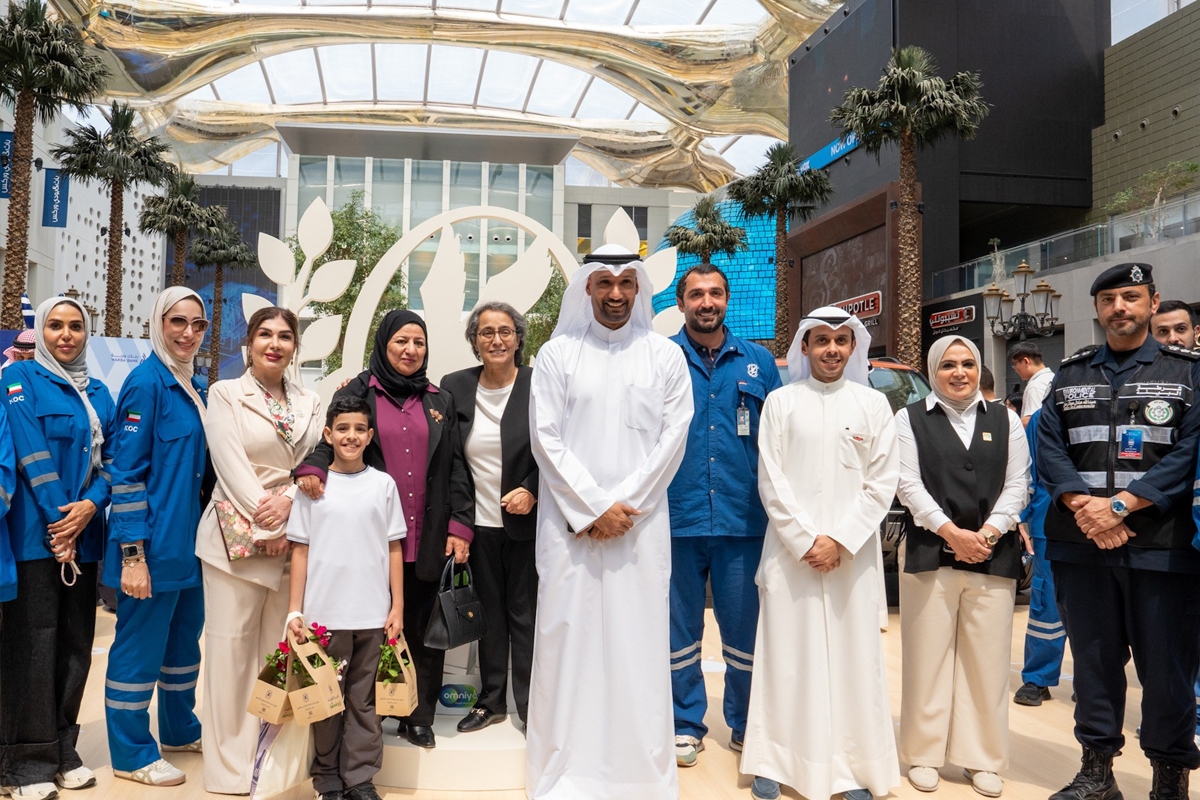
“Amna,” a non-profit plastic collection company, in collaboration with the Ministry of Education and under the supervision of the Public Authority for Environmental Affairs, launched the fourth edition of the “Amna Your School” competition during an event held at The Avenues Mall today. The event was attended by Deputy Minister of Education Dr. Khaled Al-Rashid, representing the Minister of Education, along with several officials and representatives of participating and supporting entities.
“Amna Your School” is one of the largest environmental competitions for schools in Kuwait. It targets students across all educational stages, from kindergarten to high school, for both boys and girls. The initiative aims to instill the behavior of sorting plastic waste at the source and recycling it, while enhancing students’ awareness of the importance of environmental protection and reinforcing sustainability concepts, in alignment with the “Kuwait 2035” vision.
In a speech, Deputy Minister of Education Dr. Khaled Al-Rashid affirmed the Ministry’s support for national initiatives aimed at enhancing environmental awareness among students. He noted that the Ministry’s participation in “Amna” is part of efforts to reinforce concepts of recycling and plastic sorting, and to introduce students to the importance of environmental conservation.
Al-Rashid stated that approximately 156 schools participated in the initiative last year, expressing hope that the number would double in the near future, eventually reaching the participation of all schools in Kuwait, thereby strengthening the culture of recycling within the school community.
He pointed out that the quantity of materials collected from schools for recycling reached approximately 792 tons, according to available figures. He considered this amount a positive indicator and expressed hope for an increase in collection volumes alongside the expansion of school participation.
Regarding the possibility of transitioning these initiatives from awareness campaigns to the school curriculum, Al-Rashid emphasized that environmental and recycling topics are beneficial for students from both awareness and educational perspectives. He noted that they help introduce students to concepts of material sorting, reuse, and utilization.
He revealed that a study on this matter is underway, the details of which the Ministry may announce soon. The study relates to incorporating certain lessons or information into the school curriculum, particularly concerning recycling and plastic sorting. He clarified that some environmental topics are already included in the scientific content and textbooks.
For her part, Sheikhah Al-Ibrahim, Director of Public Relations and Media at the Public Authority for Environmental Affairs, confirmed that the fourth edition of the “Amna Your School” competition is launching for the second consecutive year under the patronage of the Ministry of Education and the supervision of the Public Authority for Environmental Affairs. The goal is to enhance environmental awareness among students and reinforce concepts of sustainability and recycling.
Al-Ibrahim stated that the competition achieved tangible results last year, successfully collecting more than 264 tons of plastic over six weeks, which were recycled through companies approved by the Authority. She noted that the quantities collected by students contributed to reducing carbon dioxide emissions in landfills by more than 660 tons.
She added that the Authority aims to increase the number of participating schools and students this year, ultimately achieving the “zero plastic” goal in Kuwait. She emphasized that the objective extends beyond organizing a competition; it is about instilling environmental and sustainability concepts in students and transforming them into lasting behaviors.
Regarding the inclusion of environmental concepts in the school curriculum, she highlighted continuous cooperation between the Public Authority for Environmental Affairs and the Ministry of Education. She noted that a committee had previously studied the inclusion of environmental concepts and laws in the curriculum, expressing hope that the study would lead to the integration of these concepts into the school curriculum.
For her part, Sanaa Al-Ghamlas, CEO of the non-profit plastic collection company “Amani,” announced the launch of the fourth edition of the competition, in collaboration with the Ministry of Education, aiming to enhance the culture of waste sorting and recycling among students. She noted that school registrations for the competition began on September 13 and will continue until September 26.
Al-Ghamlas stated that the competition is now in its fourth year and includes students and teachers from both public and private schools across all governorates and educational stages. She explained that it provides schools with the opportunity to compete in plastic collection, with winning schools honored at each educational level, as well as the school that collects the largest quantity nationwide in Kuwait.
She added that the initiative goes beyond plastic collection, aiming to raise student awareness about the importance of source separation and to transfer this culture from school to home, thereby encouraging parents and community members to participate in collection and recycling efforts.
Regarding waste generation rates, Al-Ghamlas clarified that the latest published statistics, based on a study conducted by a German university in collaboration with the Public Authority for Environmental Affairs, showed that an individual in Kuwait generates approximately 1.7 kilograms of waste per day, a rate that ranks among the highest globally.
