Abu Dhabi Book Fair Records Notable Growth Indicators in Sales and Public Attendance
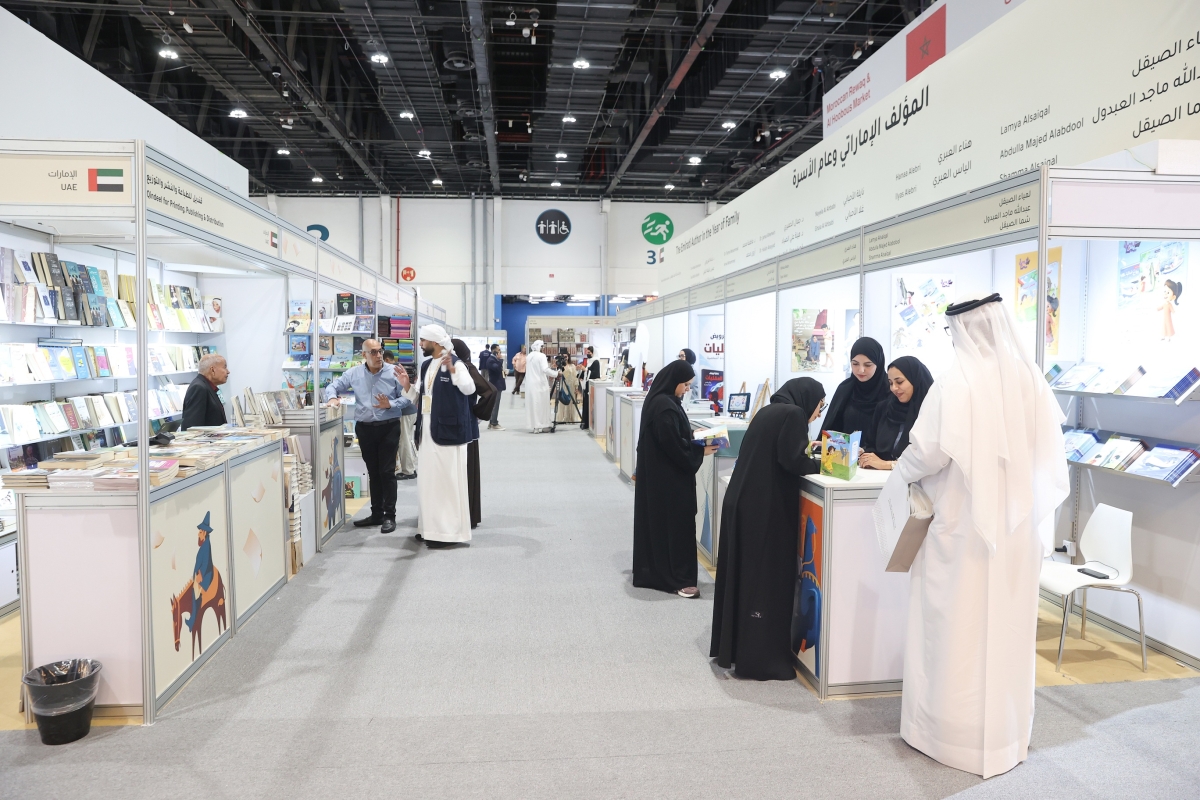
The Abu Dhabi International Book Fair recorded notable growth indicators in sales and public attendance on the first day of its 35th edition, reflecting the expanding cultural and economic impact of the fair and its ability to translate broad international participation into tangible engagement with books and its knowledge programs.
The fair’s daily report showed that book sales value on the first day increased by 97 percent compared to the same period last year. The number of books sold also grew by approximately 108 percent, indicating that the success was not limited to an increase in the financial value of sales but also extended to a broader base of book acquisition, the indicator most closely linked to the fair’s cultural mission and its promotion of reading.
According to the same report, visitor numbers on the first day of the fair, which opened on September 13, 2026, rose by 11 percent compared to the same day in 2025. This was accompanied by a larger jump in commercial activity, as total sales increased by 93 percent, meaning that spending within the fair grew at a pace far exceeding the growth in visitor numbers.
The first-day indicators gain significance within the international scale of the 35th edition, held from September 13 to 18, 2026, at the Abu Dhabi National Exhibition Centre (ADNEC) under the slogan “Let’s Turn the Page and Read the World.” The edition brings together approximately 1,200 exhibitors from 95 countries, along with more than 1,500 events, making the fair a platform that combines the publishing market with cultural, educational, and professional programs.
Specifically within the publishing industry, benchmark comparisons show that major international fairs combine geographic reach with commercial function. Despite differences in fair models and methods for counting participants, the Abu Dhabi International Book Fair’s attraction of exhibitors from 95 countries places it among events with extensive geographic diversity, particularly as a gateway to Arab publishing markets and the Middle East and North Africa region, positioning Abu Dhabi within the global transformation of the exhibition industry.
The most significant implication of the first day is that sales rose by approximately 94 percent, while visitor numbers increased by only about 11 percent. This means that the growth was not driven solely by higher attendance but by an almost doubling of the economic value generated per visit.
This performance reinforces the Abu Dhabi Arabic Language Center’s direction in developing the fair as a platform for the publishing industry, rather than merely a mass event for displaying books. The edition’s professional program discusses digital transformation, artificial intelligence, intellectual property rights, rights trading, translation, and changing reader behavior, thereby linking daily commercial activity to long-term shifts in content markets.
The published figures also reflect the fair’s success in achieving a dual equation that links expanding public access on one hand with increasing visit efficiency and converting it into actual book acquisition on the other.
