European Union offers Canada "partner member" status
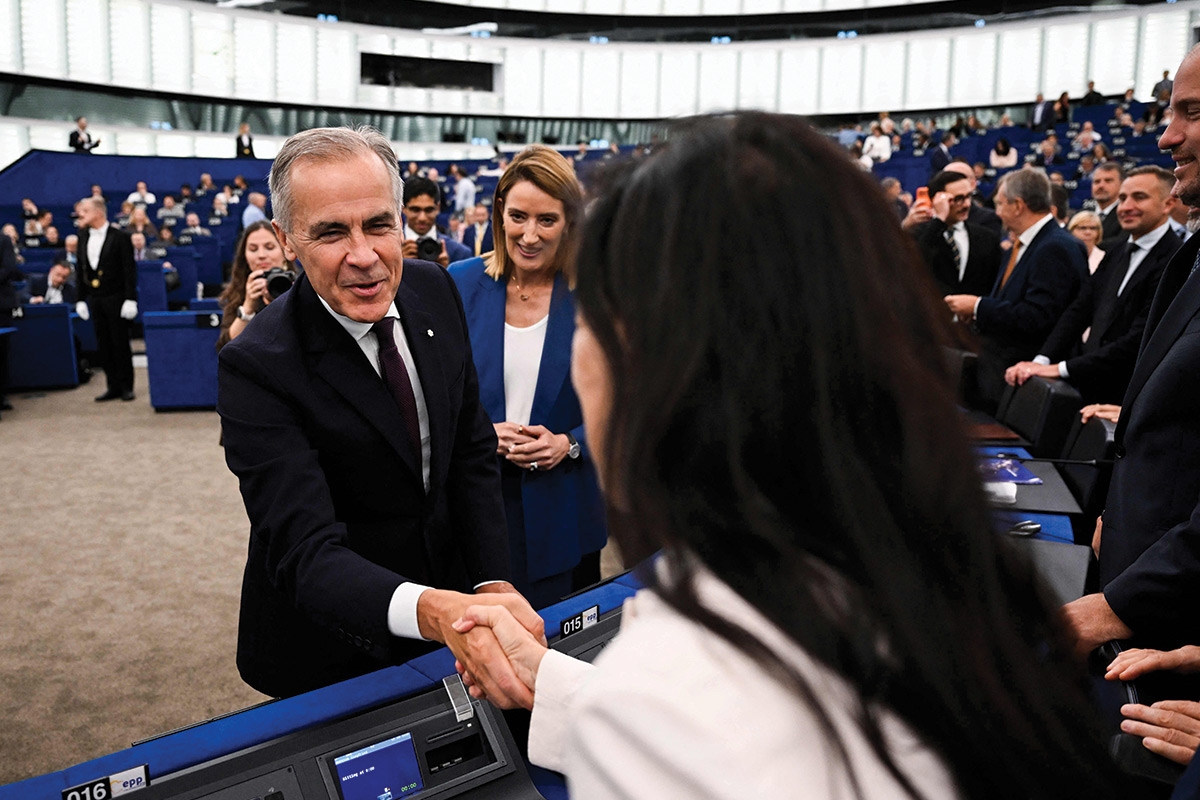
Amid strained relations between U.S. President Donald Trump’s administration and Canada, as well as with Washington’s European allies on the other side of the Atlantic, European Commission President Ursula von der Leyen today offered Canada the status of the first “partner member” of the European Union.
In her annual “State of the Union” address in Strasbourg, von der Leyen addressed Canadian Prime Minister Mark Carney, who was met with a warm round of applause from members of the European Parliament, stating, “We want to elevate our relations with Canada to the highest possible level.”
Canada, which is engaged in a trade war with Trump, is seeking new partners. Conversely, Europe, whose relations with Washington are experiencing similar tensions, is looking to rally support for its strategy aimed at balancing the two great powers, China and the United States.
The EU’s current legal framework does not provide for the status of “partner member,” making the proposal a new institutional precedent. Germany recently proposed granting Ukraine a similar status that would allow it to participate in certain EU ministerial meetings or summits without voting rights.
The proposed partnership agenda covers areas beyond traditional trade, including economic security, defense industries, technology and artificial intelligence, energy, the Arctic, critical minerals, batteries, quantum computing, and cybersecurity. This year, Canada became the first non-EU country to join the EU’s “SAFE” defense procurement program, signaling a growing security dimension in the relationship.
In parallel, von der Leyen proposed the establishment of a “European Security Council” comprising EU member states and international partners, including Canada, the United Kingdom, Norway, and Ukraine, with the aim of coordinating responses to security risks facing the continent. She stated that the Commission would put forward ideas to turn the council into reality, arguing that the nature and scale of existing risks make this more urgent.
She also called for the creation of a “Security Emergency Protocol” modeled on the consultation mechanism outlined in Article 4 of the NATO treaty, allowing any member state to request an emergency meeting when facing a threat. The mechanism aims to coordinate a unified European response to incidents that fall below the threshold of “armed aggression” but threaten national security, such as drone incursions, acts of sabotage, cyberattacks, and Russian hybrid attacks.
These calls come amid a series of security incidents in European countries, the latest of which was the discovery of a Russian “Gerbera-2” explosive drone in the sea off northern Poland, days after a Russian strike targeted a train on the border between Ukraine and Poland.
In related news, Lithuanian President Gitanas Nausėda said following a meeting of the National Security Council in Vilnius today that the drone shot down by North Atlantic Treaty Organization (NATO) fighter jets over Lithuania yesterday is believed to be a Russian drone that strayed off course, adding that it is likely the incident was not an intentional attack on Lithuania.
