Kuwaiti Woman Earns 73 Dinars for Every 100 Earned by Kuwaiti Man... Wage Gap Narrows Slowly
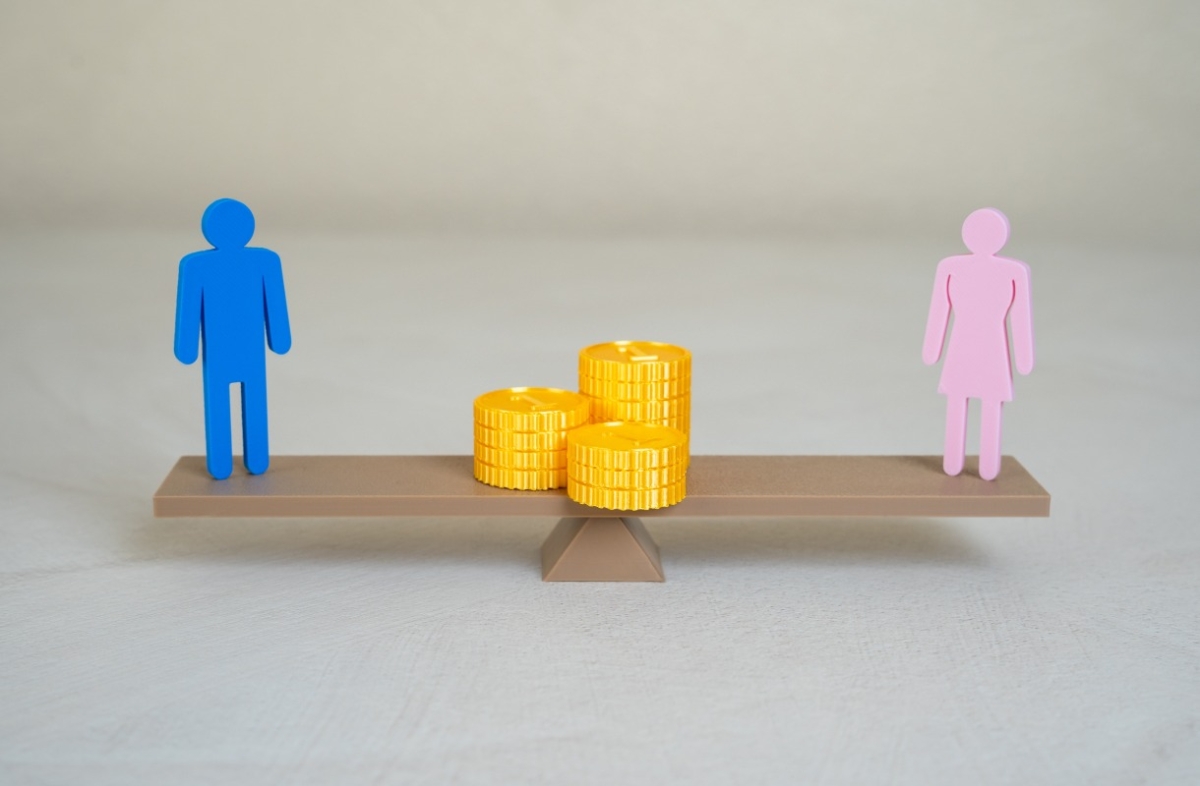
A statistical report reveals a narrowing of the gender wage gap in Kuwait, though a disparity in averages persists.
Translated by Qiyas from الجريدة — Original source
On September 18 each year, the world observes International Equal Pay Day, established by the United Nations to support the principle of “equal pay for work of equal value.” The UN estimates the global gender pay gap between women and men at approximately 20%.
In Kuwait, this occasion raises a direct question that data can partially answer: Do Kuwaiti women earn less than men? And what is the size of the gap?
According to the latest data from the Central Statistical Bureau for the first quarter of 2026, the average monthly salary for Kuwaiti workers in both the public and private sectors was 1,877 dinars, compared to 1,376 dinars for Kuwaiti women. This represents a monthly difference of 501 dinars, meaning that, on average, a Kuwaiti woman earns about 73 dinars for every 100 dinars earned by a Kuwaiti man.
However, the story is more complex than a single figure; a gap in average salaries does not necessarily mean that a man and a woman performing the same job receive different paychecks.
The gender pay gap gains greater significance when considering the scale of Kuwaiti women’s participation in the labor market. According to the latest data from the Public Authority for Civil Information as of the end of June 2026, approximately 3.3 million people work in Kuwait, with women comprising about 30.7% of the workforce, equivalent to over one million working women.
The picture is entirely different among citizens. Out of approximately 495,700 working Kuwaiti men and women, women account for 48.9%, representing nearly 242,000 working Kuwaiti women compared to 253,000 working Kuwaiti men.
In other words, Kuwaiti women have approached numerical parity with men in the national labor market, but this parity in presence has not been reflected in average income.
In the private sector, the average salary for Kuwaiti men is 1,681 dinars, compared to 1,140 dinars for Kuwaiti women, a difference of 541 dinars. This means that the average salary of a Kuwaiti woman in the private sector is about one-third lower than that of a Kuwaiti man.
Between the first quarter of 2025 and the same period in 2026, the average salary of Kuwaiti women in both the public and private sectors rose from 1,348 to 1,376 dinars, an increase of approximately 2%. In contrast, the average salary of Kuwaiti men rose from 1,865 to 1,877 dinars, an increase of about 0.64%.
The disparity is more pronounced in the private sector, where the average salary of Kuwaiti women increased from 1,070 to 1,140 dinars over the year, a growth of approximately 6.5%, compared to a growth of about 1.1% for the average salaries of Kuwaiti men.
Thus, while the gap remains large, the average salaries of Kuwaiti women are currently growing at a faster rate than those of Kuwaiti men, particularly in the private sector.
The 26.7% gap compares the average salaries of all Kuwaiti men with the average salaries of all Kuwaiti women. These data alone do not reveal whether a man and a woman in the same position, with the same job grade, qualifications, and years of experience, receive different salaries.
Average salaries are influenced by several factors, including the types of jobs held by men and women, the sector in which they work, job grades, years of experience, and access to higher-paying managerial and leadership positions.
Therefore, the concept of the “average pay gap” differs from that of “equal pay for similar work.”
The Global Gender Gap Report, published by the World Economic Forum, treats “equal pay for similar work” as a separate indicator within the measurement of economic participation and opportunity, alongside indicators such as estimated income, labor force participation, and access to senior positions.
International indicators reveal another paradox. In the 2025 Global Gender Gap Report, Kuwait ranked 128th out of 148 countries, compared to 131st in 2024.
According to the report, Kuwait has closed approximately 99.3% of the gender gap in education, while only 55.1% of the gender gap in economic participation and opportunities has been closed.
The disparity between these two indicators places the issue in a broader context than salary alone. The World Economic Forum measures economic participation and opportunities through a range of factors, including labor force participation, income, pay equality for similar work, and access to professional, technical, and senior positions.
In other words, Kuwait has come very close to achieving parity in education, and Kuwaiti women have nearly reached men in numerical terms in the labor market, yet the economic gap remains significantly wider.
With women now accounting for nearly half of the national workforce, the debate is no longer solely about the number of women in the labor market, but also about the quality of their participation: Where do they work? What jobs do they hold? What job levels do they reach? And how present are they in the highest-paying positions? These are questions that average salary data alone cannot answer, though they may help explain part of the disparity.
At the same time, women make up 48.9% of the national workforce, and their average salaries have grown at a faster rate than men’s over the past year.
The different question is: Do Kuwaiti women earn less than men for the same work? Average data alone cannot answer this.
Here lies the paradox: Kuwaiti women have become nearly half of the national workforce, yet they still do not receive a corresponding share of income.
