Oil Surpasses $108 Amid Escalating Supply Concerns
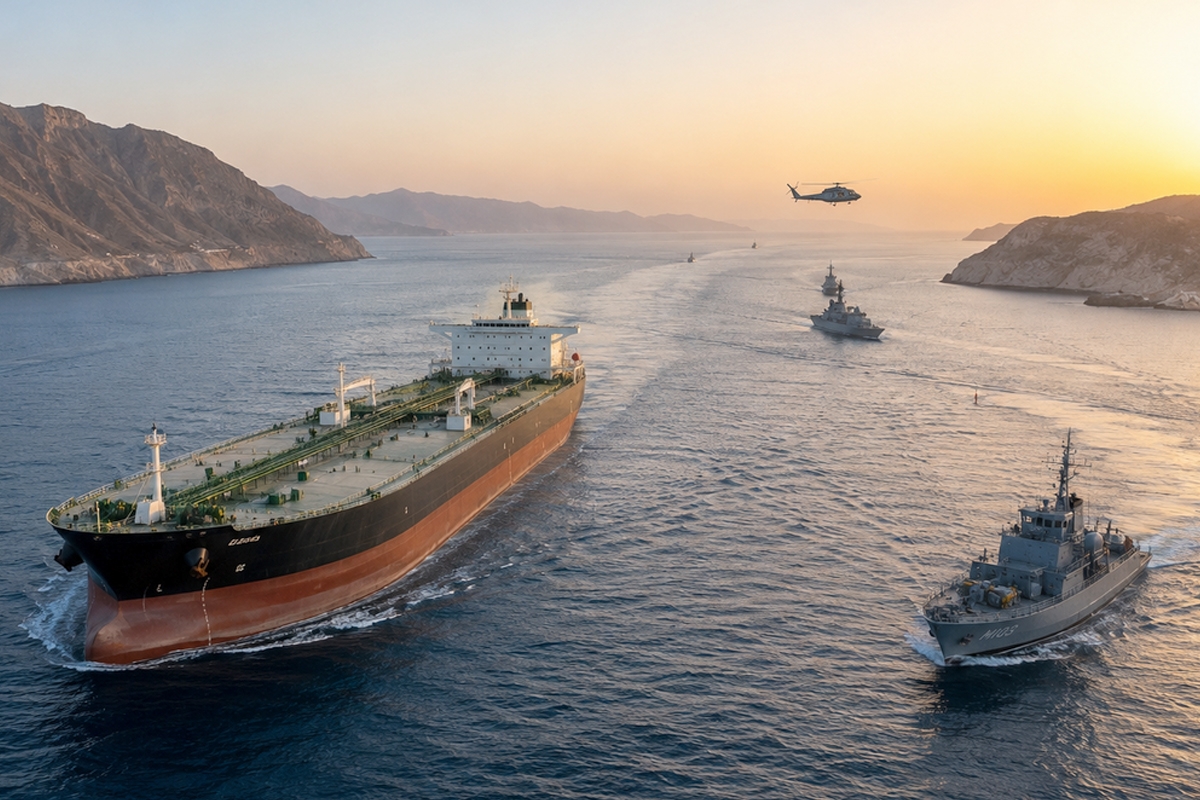
Kuwaiti crude oil prices rise globally amid fears of supply disruptions caused by Houthi attacks on Saudi Arabia and their impact on the East-West pipeline and the Strait of Hormuz.
Translated by Qiyas from الجريدة — Original source
The price of a barrel of Kuwaiti crude rose by $4.39 to reach $123.41 per barrel in trading on the day before yesterday, compared to $119.02 in trading on the previous Friday, according to the price announced by the Kuwait Petroleum Corporation.
In global markets, oil prices rose by more than two percent yesterday as concerns persisted over supply disruptions following heightened tensions in the Middle East, casting doubt on efforts to mitigate shipping risks in the region.
Fears over oil supplies have intensified after Houthi forces, allied with Iran in Yemen, launched new attacks on Saudi Arabia on Monday, while several Arab Gulf states postponed talks scheduled with Iran.
Hamad Hussein, a climate and commodities expert at Capital Economics, said, “The Houthis’ new attacks on Saudi Arabia could affect investors’ expectations in the oil market regarding the intensity and duration of the conflict.”
The Houthis said yesterday that they launched dozens of missiles and drones at the King Khaled Military City airbase in southern Saudi Arabia, targeting aircraft hangars, radar systems, runways, and ammunition depots, in response to airstrikes carried out by the Kingdom in Yemen.
This came after attacks on Saudi Arabia on Friday, which Riyadh blamed on Iran-backed militants in Iraq, and which disrupted a pipeline linking the eastern and western parts of the Kingdom, allowing oil exports to bypass the heavily patrolled Strait of Hormuz, through which about one-fifth of global oil supplies previously passed.
Saudi buyers and traders said that oil available for export in the Kingdom could begin to run out within days unless the east-west pipeline resumes operations, potentially leading to the loss of up to four percent of global oil supplies from the market.
In a note, Goldman Sachs said, “The latest attack could be more dangerous, threatening the remaining volumes of Yanbu exports, which amount to about two million barrels per day, as the latest estimates for repair times range from ‘very soon’ to up to eight weeks.”
The bank pointed out that attacks on oil infrastructure represented a significant escalation of the conflict and increased the likelihood of Brent crude prices exceeding $120 per barrel, based on a scenario in which average oil production from the Gulf region in 2027 remains 4 million barrels per day below pre-war levels.
Hussein said, “Unless there is any change in demand or oil flows through the Strait of Hormuz increase, the continued closure of the ‘East-West’ pipeline for several weeks could push Brent crude prices to $130 per barrel.”
Tim Waterer, chief market analyst at KCM Trade, said, “Oil traders treat every new attack or targeting of infrastructure as an additional supply risk.”
Shipping data showed that navigation in the strait saw further declines at the beginning of this week, following escalating attacks in the Middle East region.
Preliminary data from Kpler today showed that the number of ships crossing the strait dropped to four on Monday, down from ten the previous day, raising concerns about shipping movements on a route that had previously carried about one-fifth of global oil supplies before the outbreak of the US-Israeli war on Iran on February 28.
Two dry bulk cargo ships, one loaded and one empty, departed the waterway, while two oil tankers entered the strait, both sailing in ballast.
These figures do not include some ships that may have transited the strait with their Automatic Identification System (AIS) transponders turned off to avoid detection.
Iran’s Fars News Agency reported yesterday, citing the Revolutionary Guard, that an oil tanker was hit by explosions and caught fire after colliding with mines in the strait, without specifying the date of the incident.
Also yesterday, Arab Gulf states postponed talks scheduled with Iran to discuss potential agreements concerning Hormuz, dealing a setback to diplomatic efforts aimed at ending the conflict and its repercussions on global oil supplies.
In the Bab el-Mandeb strait, data from Kpler indicated that 21 cargo ships transited yesterday, down from 28 the previous day.
Before the start of the Iranian war on February 28, the Strait of Hormuz typically saw the daily transit of approximately 125 large commercial vessels, including oil and gas tankers, bulk carriers, and container ships. This traffic accounts for nearly 20 percent of global daily supplies of crude oil and liquefied natural gas.
A senior source in the Saudi Ministry of Energy stated that the East-West pipeline in the Riyadh and Medina regions was targeted several times on the morning of September 10. The pipeline was shut down as a precaution, and the attacks resulted in some injuries. Medical care was provided to the injured, according to the Saudi Press Agency (SPA).
Oil prices rose by 8 percent over the past week due to these disruptions, surpassing the $100-per-barrel threshold for the first time since July.
On another front, Russian President Vladimir Putin stated today that Kyiv is ready to support a US proposal for a ceasefire between Russia and Ukraine at energy-related sites, provided that Washington ensures Moscow is genuinely prepared to end its war on Ukraine.
Separately, official data from China showed that refinery oil production rose for the second consecutive month in August, supported by fuel exports after Beijing eased restrictions in mid-July.
Diesel prices in the United States reached an unprecedented high during today’s trading, exceeding $6 per gallon, placing pressure on President Donald Trump’s administration ahead of the midterm congressional elections.
According to the American Automobile Association (AAA), the price of this fuel, widely used in land transport, agriculture, and construction, reached $6.2694, amid supply declines due to the war in the Middle East and Ukraine’s attacks on Russian refineries, as reported by Agence France-Presse (AFP).
The rise in diesel prices increases freight and supply chain costs, pushing consumer price inflation higher. This trend poses direct political pressure on the Republican Party ahead of the elections and complicates Trump’s plans to ease monetary policy.
Venezuela is participating this week in the G20 energy ministers’ meeting organized by the United States, reflecting Washington’s keen interest in the country’s resources, particularly its oil.
The meeting of the world’s largest economies began on Monday in Houston, Texas, and is scheduled to continue until Wednesday.
White House Energy Advisor Jared Agnew stated: “You will hear from several ministers we have hosted from Venezuela in the coming days, discussing one of the President’s major goals, which has made the American continent the nerve center for affordable, reliable, and secure energy.” He specifically pointed to the attendance of the Venezuelan minister in charge of the mining sector.
Venezuela holds the world’s largest proven oil reserves, estimated at more than 300 billion barrels, yet its production remains limited, hovering around 1.2 million barrels per day.
Since the detention of Venezuelan President Nicolás Maduro in an operation carried out by US special forces last January, Trump has sought to revitalize this sector. On August 28, he announced a “historic” agreement with Caracas that allows Washington to exploit 17 Venezuelan oil fields, with an estimated production capacity of around 35 billion barrels, in exchange for investments.
Several refineries in the United States were specifically designed to process Venezuelan crude oil, but they have been largely deprived of it in recent years due to sanctions and supply difficulties.
However, oil flows have rebounded this year, reaching levels unseen in eight years, although supplies remain modest compared to the peak recorded in the late 1990s.
Trump hopes that Venezuelan oil will offset disruptions currently affecting global supply chains due to the war in the Middle East, which has driven up prices.
Calculations by Reuters, based on data from fuel market participants, found that three of Russia’s six largest diesel refineries were forced to significantly cut production or halt it entirely in September due to damage from drone attacks.
US President Donald Trump highlighted the fuel crisis in Russia on Sunday, urging Ukrainian President Volodymyr Zelensky to stop targeting Russian diesel infrastructure, stating that the attacks are causing fuel shortages that “harm the world.”
Ukraine, which is frequently subjected to Russian attacks on its energy infrastructure, says that refineries are legitimate military targets.
Diesel is widely used in the agricultural sector, which was already facing pressure in the United States before the war with Iran, as it has suffered declining profit margins for the fourth consecutive year amid the return of drought, rising input costs, and the repercussions of Trump’s trade policies.
The conflict in Iran has disrupted global fuel supplies, while Ukrainian drone attacks on Russian refineries in recent months have reduced the country’s fuel production, forcing Moscow to restrict exports of gasoline, diesel, and jet fuel.
According to market data, the six refineries—Omsk, Kirishi, Taneco, Volgograd, Nizhnekamsk, and Perm—account for about half of Russia’s diesel production.
Sources said that the Kirishi refinery has shut down completely, while Volgograd and Nizhnekamsk are operating at about a quarter of their capacity, with diesel production in those refineries far below usual levels.
