Before Cancer Reveals Itself in Our Bodies
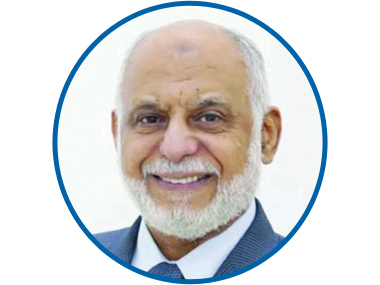
At the invitation of colleagues in the leading oncology departments at Al-Azhar University, I participated last week in the Sixth International Conference on Oncology Treatment and Surgery (OncoAzhar 2026). From the thirtieth floor, on the banks of the Nile, Al-Ainy Hospital stretched out before me, with landmarks coming into view that I had passed as a student thousands of times half a century ago.
The scene stirred many emotions, but this time I was looking out from a conference discussing a different medical world: genes, targeted therapy, robotics, artificial intelligence, and efforts to detect cancer before it announces itself in our bodies.
The conference brought together experts and researchers from Egypt, the Arab world, Europe, and America. Its slogan was “Beyond the Survival Curve,” a phrase that encapsulates a significant shift: success today is no longer limited to extending patients’ lives, but ensuring they live better lives through more precise treatments with fewer complications.
The world recorded approximately 20 million new cancer cases in 2022 and nearly 10 million deaths. With rising life expectancy and population growth, new cases are projected to exceed 35 million annually by 2050.
However, the other side of the picture is more optimistic. A recent analysis by the World Health Organization and the International Agency for Research on Cancer concluded that 37 percent of new cases, or about 7.1 million cases, were linked to preventable causes, primarily smoking, infections, alcohol consumption, overweight, and physical inactivity. Another study estimated that approximately 48 percent of cancer deaths could have been avoided through prevention, early detection, and better curative treatment.
Thus, our battle begins years before the treatment room: in a cigarette that was not lit, a weight that was not prevented from increasing, physical activity that was not neglected, and a screening test that was postponed with the excuse: “I don’t have any symptoms... why should I get tested and worry myself?”
Some may be surprised to learn that we have vaccines capable of preventing certain cancers. The HPV vaccine protects against the infection that causes most cervical cancers and some other cancers, while the hepatitis B vaccine reduces the risk of chronic infection that can lead to liver cancer.
This is a brilliant concept in preventive medicine: administering a vaccine today to prevent a tumor that may appear decades later. Therapeutic and personalized vaccines, designed according to tumor characteristics, represent a promising field, but many of their applications remain in the research and clinical trial stages.
In the past, it was enough to say: lung, breast, or colon cancer. Today, naming the organ is not sufficient. We study the tumor tissue, and sometimes what it releases into the blood, searching for genetic, molecular, and protein changes that drive cells toward cancerous behavior.
If we identify the “key,” we may find the drug that disables it, and in some cases, we can identify susceptibility to the disease and take early preventive measures. If cancer does appear, we can often determine the most appropriate treatment for that specific tumor and that specific patient with a precision previously unattainable.
One of the most captivating aspects of the conference was multi-cancer early detection tests from a single blood sample. A seemingly healthy person, with no pain, no mass, and no symptoms, yet we search their blood for biological signals that may indicate cancer before it announces itself.
In a remarkable lecture by Professor Hamid Al Shamsi from the United Arab Emirates on recent developments and artificial intelligence in oncology, he referred to a study involving five thousand people, from whom blood samples were taken to assess the feasibility of early detection of more than 70 types of cancer.
If large-scale studies confirm the ability of these technologies to detect cancer early, and more importantly, to reduce mortality, we may be witnessing a genuine transformation: from searching for a specific cancer in a specific organ to searching in the blood for cancer signals while they are still silent.
But I do not believe it will take the doctor’s chair. The algorithm sees data, while the doctor sees the human being. What we need is a more capable doctor, empowered by technology, without losing clinical judgment or human empathy.
I speak from my experience in oncologic surgery and cancer center management: Kuwait has made significant progress. We have specialized centers and national experts whose expertise has accumulated over decades, alongside Kuwaiti consultants in highly specialized fields. We look forward soon to moving into the new Kuwait Cancer Center, a facility designed to international standards, with advanced diagnostic, therapeutic, and technological capabilities, to serve as a turning point in the diagnosis and treatment of cancer in Kuwait and the region.
After more than thirty years in this field, I believe we must change the question. Instead of asking only, “How do we treat cancer?” let us also ask: “How do we prevent it when we can, and how do we catch it early, before it outpaces us and grows?”
When prevention becomes a culture, early detection a habit, and treatment precise according to the tumor’s molecular fingerprint, and when artificial intelligence serves the doctor rather than replacing him, we will have surpassed the “survival curve.” Our true victory will not be measured merely by patients living longer, but by fewer people becoming ill in the first place.
