Himalayan Ice Melts, Sparking Concerns Over Landslides
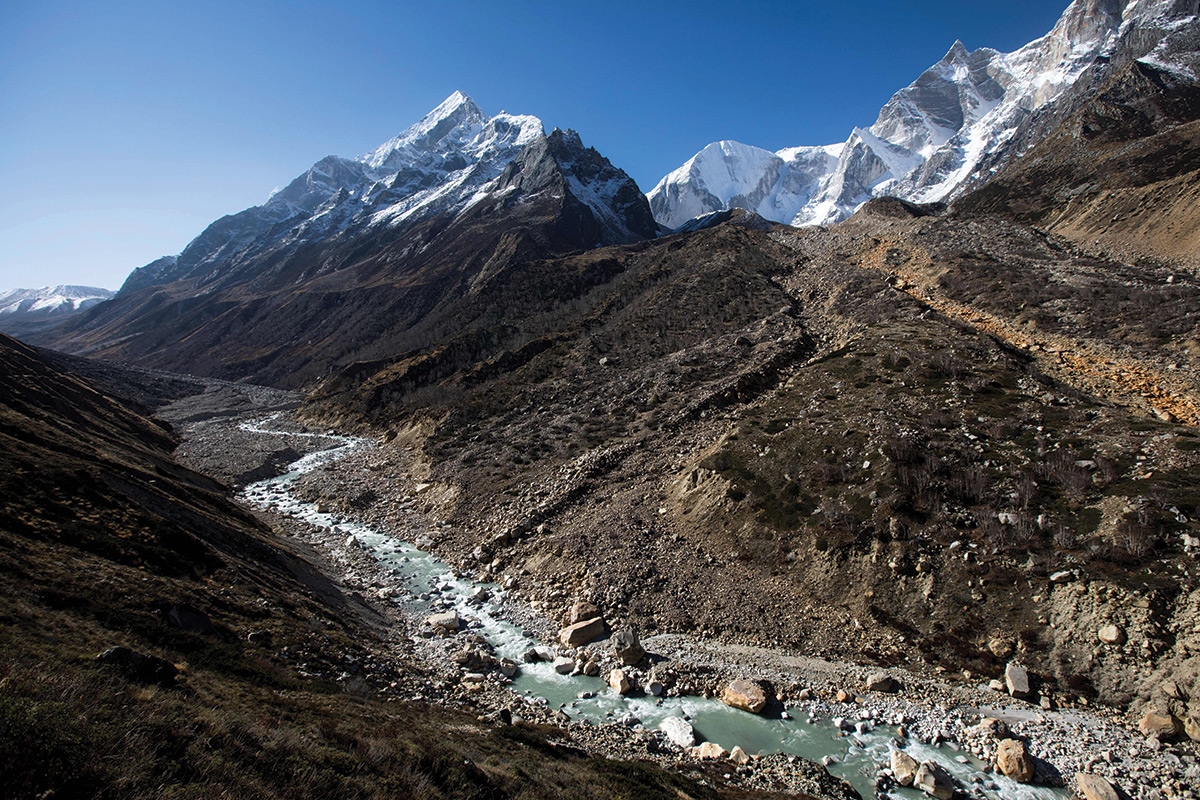
A study published this month revealed that the Himalayas are approaching a critical tipping point, with glaciers melting at a faster rate than they did a decade ago.
These findings follow a glacial collapse in the Himalayas that occurred in late August along the border between Nepal and Tibet, triggering a series of landslides and severe flooding in the valleys below. At least 1,300 people were confirmed dead, and more than 5,300 remain missing across Nepal and the Chinese Tibet region.
The study, published by Reuters today, showed that glacial retreat is leaving behind unstable glacial lakes, separated from potential collapse only by small amounts of rock and scattered ice above valleys inhabited by millions of people.
It added that the rate of ice mass loss in the Himalayas has accelerated over the past few decades. Currently, only 21 of the approximately 40,000 glaciers in the Hindu Kush Himalaya region—a vast mountain range spanning eight countries from Afghanistan to Myanmar—are under field monitoring.
About 200 glacial lakes in India have been classified as high-risk, with 56 of them categorized as “severe risk,” meaning millions of residents in areas downstream are in danger.
Although the Himalayan region accounts for about 18 percent of India’s land area, it experiences roughly 35 percent of the country’s natural disasters.
