Watan's Destination: Advice for the Minister of Education
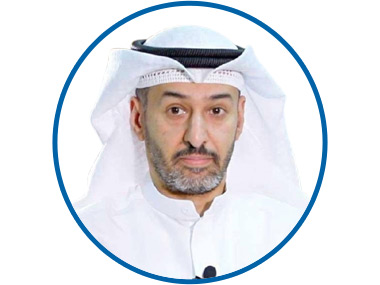
Minister of Education Jalal Al-Tabtaba’i told Al-Jarida newspaper, in an interview with journalist Ahmed Al-Shammari published yesterday, that “we have completed 80% of the education reform plan.”
The plan he referred to had only its main headings published in January 2025, encompassing six pillars: (administrative and financial matters, international curriculum standards, education development, the engineering pillar, ministry computerization, and smart schools). These are undoubtedly important pillars, and more importantly, difficult ones. If 80% of them were indeed completed in less than two years, Kuwait’s education system would be competing with Finland, Singapore, and South Korea—the countries ranked highest in the quality and efficiency of their education.
In my view, issues related to evaluating executive performance and rushing its completion are among the most prominent problems in assessing the efficiency of many ministries, not just the Ministry of Education. It is unacceptable for the entity that drafts the plan to be the same one that implements it and also evaluates its results, especially if the plan is not fully published and accompanied by clear timelines for completion. In such cases, the likelihood of bias in evaluation is high and the results inaccurate.
There is no need to reiterate the importance of the Ministry of Education and its role in educating and shaping generations; this is self-evident. However, claims about a record-breaking “completion rate” in education reform cannot be dismissed without clarification or detail. Even the curricula, which constitute one of the key pillars of education reform and were replaced at the beginning of last year, have not been adequately tested for more than one academic semester in person, due to the circumstances of the regional war. On what foundations or results did Minister Al-Tabtaba’i base the percentage he reached?
During the interview with Al-Jarida, the minister’s statement, “If I violate the laws, hold me accountable,” caught my attention. In truth, I do not know what mechanism allows us—citizens—to hold the minister accountable if he were to violate the law, God forbid.
My advice to Minister Al-Tabtaba’i, if he wishes to “audit” his work, is to present the education reform plan and its implementation status to independent government bodies such as Kuwait University or the Kuwait Institute for Scientific Research, with the participation of experts in general and higher education. These entities could then read the realistic completion rates. Kuwait spends annually on education an amount equivalent to about 8% of its GDP, which is higher than what the top-performing countries in education indicators spend. Yet, the results over the years, which are not solely attributable to Minister Al-Tabtaba’i’s tenure at the ministry, generally place Kuwait among poor and backward countries.
Perhaps, if we wish to achieve genuine progress in the current period amid sharp regional fluctuations, without exaggeration or marketing successes that require extensive review, we should focus on ensuring that the academic year continues fully with in-person education, as long as other sectors in the country are functioning normally.
