Issuance of a law decree regulating drones and light sport aircraft
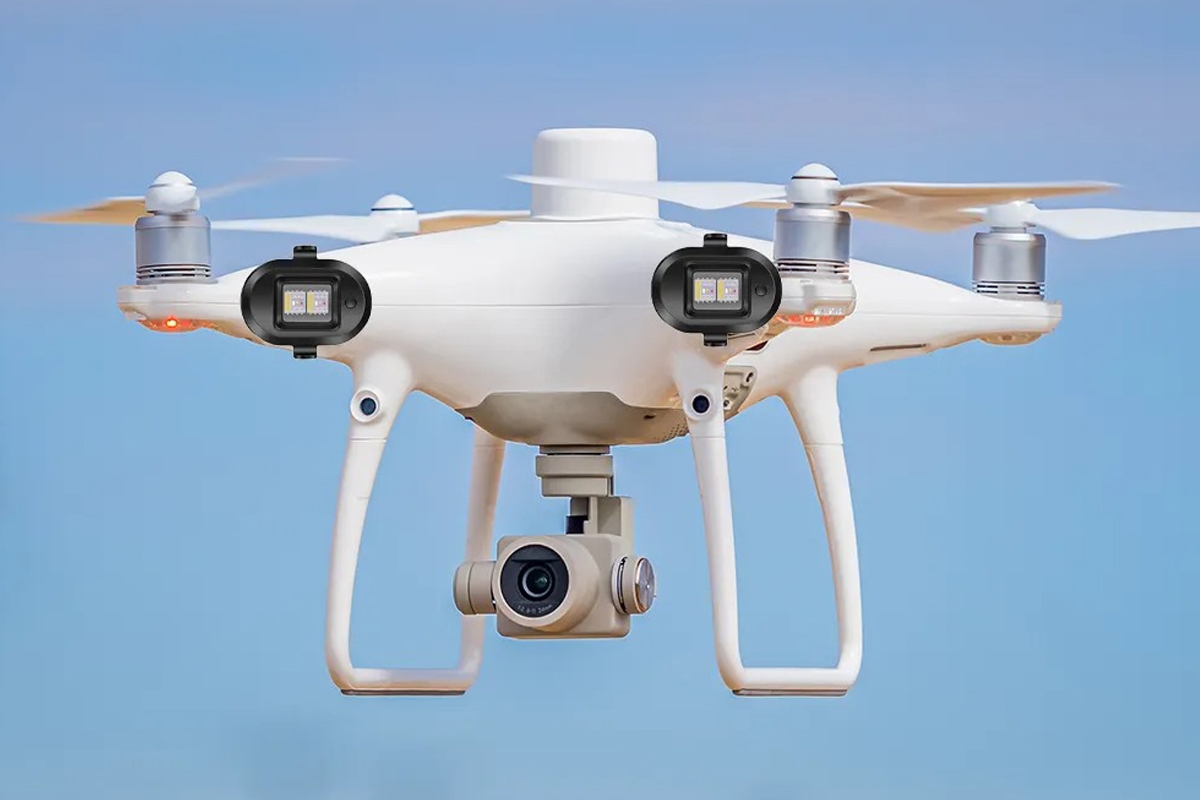
Following the publication yesterday in the Official Gazette (Al-Qabas) of the decree-law regulating the use of unmanned aerial vehicles (drones), light sport aircraft, air sports, and related activities, the Chairman of the Public Authority for Civil Aviation, Sheikh Engineer Hamad Mubarak Al-Sabah, affirmed that the law represents a significant and pioneering step toward enhancing air navigation safety in the country.
Sheikh Al-Sabah stated yesterday that “the law is the result of coordinated government efforts aimed at strengthening the legislative framework and completing the regulatory structure governing these activities, in alignment with adopted international standards and in coordination with relevant state authorities.” He expressed his gratitude and appreciation for the political leadership’s support, which played a crucial role in the swift issuance of the law, describing it as an achievement and a source of pride for the State of Kuwait in regulating this new type of aviation activity.
He emphasized that the regulation of these activities aims to address the unregulated use of drones and light sport aircraft, and the associated risks to air navigation safety, public order, individual privacy, and the safety of persons and property. He also noted the potential threats posed by the misuse of such aircraft to airports, critical infrastructure, and restricted or prohibited zones.
He confirmed that the Authority will oversee the implementation of the law’s provisions in coordination with the Ministry of Interior, security and military agencies, and other competent government bodies, thereby enhancing inter-agency coordination and ensuring that these activities are organized within established frameworks.
The decree, comprising 44 articles, prohibits the operation of any aircraft prior to obtaining approval from the Ministry of Interior. Violation of this provision is punishable by imprisonment for a term not exceeding two years and a fine of up to 2,000 Kuwaiti dinars. It also authorizes security and military agencies to intercept any aircraft flying over restricted or prohibited areas, or in the vicinity of military and security installations and sites, or to disable, take control of, or shoot it down, if it poses a threat to national security or the safety of individuals and property.
The decree stipulates that no legal or civil liability shall attach to these agencies or their personnel for any damage caused to the aircraft as a result of exercising these powers. It also mandates the compulsory registration and airworthiness certification of each drone, as well as prior approval for the import, manufacture, assembly, and programming of unmanned aircraft. A one-year grace period is provided to regularize existing situations and issue the executive regulations before the end of 2026.
Decree-Law No. 89 of 2026 concerning the regulation of the use of unmanned aerial vehicles, light sport aircraft, air sports, and related activities prohibits the operation of any aircraft before obtaining approval from the Ministry of Interior, with violations punishable by imprisonment for up to two years and a fine of up to 2,000 Kuwaiti dinars.
The decree, which comprises 44 articles and was published in Issue No. 1808 of the Official Gazette (Al-Qabas) yesterday, entered into force upon its publication. It authorizes security and military agencies to intercept any aircraft flying over restricted or prohibited areas, or in the vicinity of military and security installations and sites, or to disable, take control of, or shoot it down, if it poses a threat to national security or the safety of individuals and property. It stipulates that no legal or civil liability shall attach to these agencies or their personnel for any damage caused to the aircraft as a result of exercising these powers, while mandating compulsory registration and airworthiness certification for each drone, prior approval for the import, manufacture, assembly, and programming of unmanned aircraft, and a one-year period to regularize existing situations and issue the executive regulations before the end of 2026.
The explanatory memorandum accompanying the decree states that Kuwait has witnessed a notable expansion in the use of unmanned aerial vehicles (UAVs), light sport aircraft, air sports, and related activities in recent years. This growth spans multiple sectors, including government, service, commercial, artistic, research, and recreational fields, as well as their use in operations requiring precision, speed, or involving risks that are impossible or difficult for humans to perform using traditional means.
This rapid development has been accompanied by diversity in the forms, sizes, technical specifications, operational methods, and control systems of these aircraft. Consequently, their use has become increasingly widespread, and the use of airspace is no longer limited to manned aircraft or traditional aviation activities. It now encompasses new operational models that require clear legal and technical regulation to balance the encouragement of legitimate uses with the protection of airspace security and safety.
Furthermore, the unregulated use of these aircraft and activities may pose risks to air navigation safety, national security, public order, individual privacy, and the safety of persons and property. Additionally, misuse could threaten airports, critical infrastructure, and restricted or prohibited areas. Therefore, it has become necessary to establish a comprehensive legislative framework that defines conditions for registration, licensing, authorization, and operation, while outlining obligations, prohibitions, required measures, and penalties for violations.
The explanatory memorandum further notes that, given the Emiri Amiri Order issued on May 10, 2024, which stipulated in Article 4 that laws be issued by decree-laws, the accompanying draft law regulating the use of UAVs, light sport aircraft, air sports, and related activities within Kuwait has been prepared. This draft ensures safe and organized use, in accordance with civil aviation safety and public security considerations, without infringing upon the jurisdictions of security and military authorities or other relevant government entities. In drafting the project, the General Authority of Civil Aviation was designated as the competent technical authority responsible for overseeing the implementation of its provisions within the scope of civil aviation, in coordination with the Ministry of Interior, security and military authorities, and other relevant government entities, each within its respective jurisdiction. This approach ensures the integration of roles among air safety requirements and security, regulatory, and technical requirements.
The provisions of the draft decree-law were formulated into six chapters comprising forty-four articles, as follows:
Chapter One, comprising Articles 1 and 2, covers General Provisions. It begins by defining the terms and expressions necessary for the application of the draft, including: the Competent Minister, the Authority, Aircraft, Unmanned Aerial Vehicle (UAV), Light Sport Aircraft, Air Sports, Airport, Operator, Pilot, Airworthiness Certificate, Restricted Area, Prohibited Area, Airport Zones, Visual Line of Sight (VLOS), Extended Visual Line of Sight (EVLOS), Operational Operations, and Operations Manual. This chapter also specifies the objective of the draft, which is to regulate the use of UAVs, light sport aircraft, air sports, and related activities within Kuwait, thereby safeguarding the security and safety of airspace.
Chapter Two, comprising Articles 3 to 8, outlines the competencies of the General Authority of Civil Aviation, entrusting it with supervising the implementation of the provisions of this project, and taking the necessary measures and precautions for the security and safety of operational activities. It also empowers the Authority to conduct oversight and inspection of licensees and permit holders, issue necessary implementation guidelines, define and regulate aircraft-related activities and air sports, classify aircraft types, determine qualification requirements and altitude limits, establish measures to be taken when using aircraft, adopt standard rules regarding aircraft noise, and approve the operations manual submitted by the aircraft operator.
Chapter Three, comprising Articles 9 to 15, regulates provisions on registration, licenses, and permits. It stipulates the establishment of a registry with the Authority to record information pertaining to the aircraft and any rights associated with it. It mandates that the aircraft be registered and obtain an airworthiness certificate before being used by the owner. Furthermore, it prohibits operating, piloting, or assisting in piloting an aircraft without a license. The issuance of licenses is linked to Kuwait’s aviation safety rules and regulations and requires approval from the Ministry of Interior. This chapter also regulates licenses for air sports and commercial activities related to import, export, manufacturing, assembly, sales, leasing, programming, and technical permits, as well as the necessary security approvals and the use of aircraft by government entities. It establishes the mechanism for submitting, renewing, and including required data in license and permit applications.
Chapter Four, comprising Articles 16 to 31, details the obligations, prohibitions, and measures prescribed under this project. It mandates compliance with the provisions of issued licenses and permits, as well as Kuwait’s aviation safety regulations. Aircraft are required to display markings indicating their identity and registration. The chapter defines the duties of the operator and pilot and outlines their responsibilities. It imposes adherence to technical standards and restrictions set by the Public Authority for Communications and Information Technology to ensure no interference with frequencies allocated for air navigation or other communication networks.
Regarding prohibitions, the use of an aircraft is prohibited prior to obtaining approval from the Ministry of Interior. Transferring a license or permit is also prohibited without the Authority’s approval. In accordance with the Executive Regulations of this Law-Decree, flying within airport areas, restricted or prohibited zones, at night, or under unsuitable weather conditions is forbidden unless conducted under established controls and permits. The number of passengers in each sports aircraft must not exceed the number stated in the registration certificate. Additionally, capturing images or recording video footage of individuals, private property, or public facilities specified in the Executive Regulations of this Law-Decree using an aircraft is prohibited unless the conditions stipulated in these regulations are met.
Finally, regarding measures, the chapter enumerates the circumstances under which the Authority may suspend or revoke a license or permit. It empowers the relevant authorities within the Authority, in coordination with security and military entities, to take the necessary technical and operational measures to cooperate with aircraft posing a threat in restricted or prohibited zones, or in the vicinity of military and security facilities and sites.
Chapter Five, comprising Articles 32 to 39, is dedicated to penalties. It stipulates that nothing shall prejudice any harsher penalties prescribed in other laws, and grants the Public Prosecution exclusive jurisdiction to investigate, prosecute, and take legal action regarding the offenses outlined in this draft law. It also details the primary penalties for violating its provisions, rules on recidivism and penalty aggravation in the event of an incident resulting from a violation, and supplementary penalties that courts may impose, such as the revocation or suspension of licenses or permits, closure of facilities, or confiscation of aircraft and seized items. Furthermore, it establishes the liability of private legal entities within the limits specified in the draft, without prejudice to the right of the injured party to claim compensation.
The final chapter, comprising Articles 40 to 44, contains the final provisions. It grants judicial police status to employees of the Authority, as designated by a decision from the competent Minister, to establish crimes committed in violation of the law’s provisions, its executive regulations, and implementing decisions. It also authorizes the Authority to offer or accept settlements in accordance with established regulations, provided this does not affect crimes proven to have been committed with the intent to harm national security and state interests.
The law also obligates the owner of each aircraft to regularize their status within one year from the date the law comes into force. It mandates the issuance of the executive regulation for this law, in coordination with relevant authorities, no later than December 31, 2026. The law stipulates that it shall be implemented and enforced from the date of its publication in the Official Gazette.
Sheikh Engineer Hamoud Mubarak Al-Sabah, Chairman of the General Authority for Civil Aviation (GACA), stated that the issuance of the law regulating the use of unmanned aerial vehicles (UAVs), light sport aircraft, air sports, and related activities constitutes an important and pioneering step in Kuwait toward organizing these activities and enhancing the safety of air navigation in the country.
Speaking to KUNA yesterday, Sheikh Hamoud Al-Sabah said the law is the result of coordinated government efforts to strengthen the legislative framework and complete the regulatory structure governing these activities, in alignment with accepted international standards and in coordination with relevant state authorities.
He expressed his gratitude and appreciation for the political leadership’s support, which significantly contributed to the swift issuance of the law, describing it as an achievement and a source of pride for Kuwait in regulating this new type of activity within the aviation sector.
He also thanked and appreciated the efforts of government agencies, particularly the Ministries of Defense, Interior, Justice, and the Office of Fatwa and Legislation, for their substantial contribution to finalizing the draft law.
He emphasized that regulating these activities aims to address the unregulated use of UAVs and light sport aircraft, and the associated risks to air navigation safety, public order, individual privacy, and the safety of persons and property. Additionally, it addresses potential threats to airports, critical infrastructure, and restricted or prohibited areas arising from the misuse of such aircraft.
Sheikh Hamoud Al-Sabah affirmed that the Authority would oversee the implementation of the law’s provisions in coordination with the Ministry of Interior, security and military agencies, and relevant government bodies, thereby enhancing inter-agency coordination and ensuring the organization of these activities within approved frameworks.
He expressed his appreciation for the diligent efforts of the officials and technical staff at GACA in preparing the draft law and fulfilling its requirements in accordance with accepted international standards, contributing to the development of the civil aviation system in Kuwait.
Decree-Law No. 89 of 2026 concerning the regulation of the use of unmanned aerial vehicles (UAVs), light sport aircraft, air sports, and related activities entered into force upon its publication in the official gazette, Kuwait Al-Yaum, with the aim of establishing a comprehensive legal framework governing the use of these aircraft and safeguarding the security and safety of the country’s airspace.
The decree prohibits the operation of any aircraft prior to obtaining approval from the Ministry of Interior, stipulating that violation of this provision is punishable by imprisonment for a term not exceeding two years and a fine ranging from 1,000 to 2,000 Kuwaiti dinars, or either of these penalties.
The legislation establishes an integrated system for registration, licensing, and permits. No aircraft may be operated within Kuwait without first obtaining an operating license from the Public Authority for Civil Aviation. Furthermore, piloting an aircraft or assisting in its operation without a valid license is strictly prohibited. Licenses are issued in accordance with Kuwait’s aviation safety rules and regulations, and only after securing approval from the Ministry of Interior.
