Al-Samait: By High Directives... Citizens Equal in Joining Public Prosecution
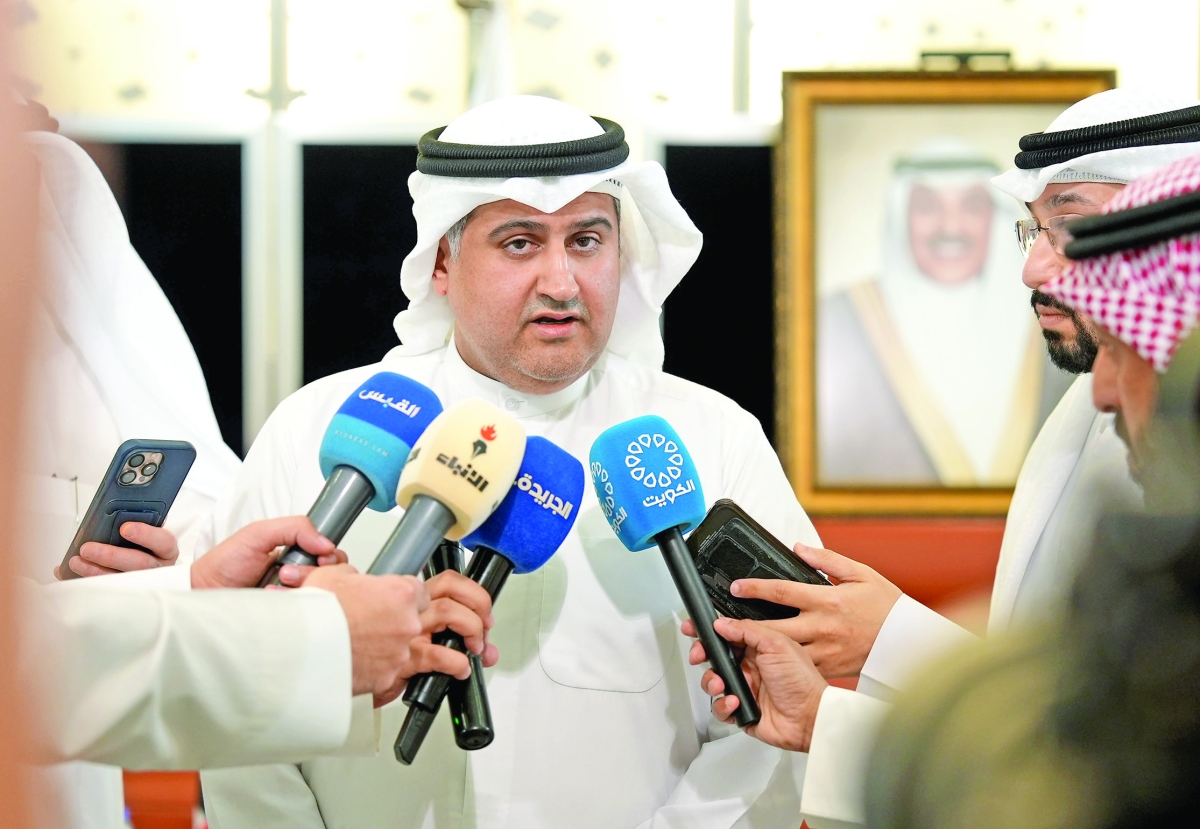
Minister of Justice confirms equality of citizens in joining Public Prosecution, announces imminent approval of several new laws and legislations
Translated by Qiyas from الجريدة — Original source
While inspecting the electronic written exams held at the University of Kuwait for graduates of the 2024/2025 academic year who applied for the position of “Junior Legal Researcher,” which qualifies candidates for the role of “Deputy Public Prosecutor (C),” Justice Minister and Advisor Nasser Al-Samaitt affirmed that Kuwaitis are equal in their eligibility to join the Public Prosecution, in accordance with the high directives of His Highness the Amir of Kuwait, Sheikh Meshal Al-Ahmad Al-Jaber Al-Sabah.
Al-Samaitt added that, given His Highness’s special attention to the judiciary, the Amir has reviewed the new admission mechanism for the Public Prosecution. The most significant innovation in this mechanism is the implementation of electronic exams based on unified and clear standards. He emphasized that this represents a major step forward in standardizing evaluation criteria, reinforcing justice and transparency, and ensuring equal opportunities for all applicants.
He clarified that a total of 855 citizens and residents applied for the position, of whom 632 met the required conditions to sit for the exam. He stressed that sons and daughters of the nation stand on equal footing, and that merit based on objective results is the decisive factor in the selection process.
Speaking to journalists on the sidelines of the tour, Al-Samaitt announced the imminent completion of the Penal Code, which constitutes a completely new framework for crimes in Kuwait. He also noted that the Juvenile Justice Law and the Child Law are close to approval, along with four other laws expected to be enacted before the end of the year: the Commercial Arbitration Law, the Notarization Law, the Tenancy Law, and the Law Regulating the Legal Profession. The latter will introduce a comprehensive new regulatory framework and significant reforms for the legal profession, restructuring its organization and controls, similar to the reforms implemented in the Law Regulating the Judiciary. He stated that this law will be distinctive and feature substantial improvements.
He stressed that “judicial Kuwaitization is a sovereign matter, responding to the Amir’s directives,” adding, “We accept nothing less than 100 percent national representation in our judiciary, with judicial branch members capable of managing the institution with full competence and efficiency.”
Regarding privileges granted to individuals whose citizenship has been revoked, he affirmed that the reference point is decisions issued by the Council of Ministers, as they constitute the legal basis, in accordance with the amendment to Article 15/3 of the Citizenship Law. He pointed out that privileges are not granted to those whose citizenship was revoked due to forgery, but only to those whose citizenship was revoked under other provisions.
Justice Minister Nasser Al-Samaitt revealed that among the laws expected to be completed before the end of the year are the Commercial Arbitration Law, the Notarization Law, and the Law Regulating the Legal Profession. The latter will introduce a comprehensive new regulatory framework for the legal profession, featuring significant reforms similar to those in the Law Regulating the Judiciary, including a complete restructuring of the profession’s organization and controls. The law will be highly distinctive. He noted that efforts are intensifying to finalize the Tenancy Law this year, with current and future focus directed toward laws related to the social, criminal, and economic systems.
In statements to journalists yesterday on the sidelines of his inspection tour of the electronic written exams held at the University of Kuwait for 2024/2025 graduates applying for the “Junior Legal Researcher” position (qualifying for Deputy Public Prosecutor “C”), Al-Samaitt said that older laws issued in the 1960s, 1970s, and 1980s had strong foundations, and their amendments were beneficial.
He revealed that the penal code will soon be finalized, representing a completely new system for crimes in Kuwait and alternative penalties, incorporating highly advanced concepts that align with the nature of Kuwaiti society. It criminalizes certain dangerous acts that have emerged today but are not currently offenses under Kuwaiti law. Laws on juvenile affairs and the Child Law are also in the pipeline, while personal status matters are currently in the opinion-gathering phase.
He added that everyone is aware of His Highness the Amir’s keen interest in the judicial sector, as well as his particular focus on national security. Today, all candidates have equal opportunities, with no preferential treatment for anyone, provided they meet the announced criteria. He emphasized that the Public Prosecution serves as the primary pillar of the judiciary. With the state’s Kuwaitization plan, which the law sets at five years, he affirmed that the judiciary will be fully Kuwaitized before the deadline, specifically reaching 100% Kuwaiti representation by September 30, 2030. “We currently have an annual replacement rate of 15%. Today, 87% of the judiciary consists of Kuwaitis, and by September 30, 2027, this figure will rise to 92%.”
He noted that Kuwaitizing the judiciary is a sovereign matter and a fulfillment of high-level directives, stating that they do not accept anything less than 100% national representation in the judiciary, and that judicial council members are capable of managing the sector with full competence and efficiency.
Al-Sameet further stated that, in parallel, there is an update of the legislative framework aimed at addressing problems at their root before they reach the courts. This was evident in the case of “performance orders,” where two legislative amendments reduced the number of cases pending before the courts by 36%. He noted that similar results can be achieved in many other areas, pointing out that legislative gaps had previously led to a backlog of cases in the courts.
Regarding powers of attorney, Al-Sameet announced that their procedures will be completed electronically, with translation services available. This will allow powers of attorney to be issued, authenticated by the Ministry of Foreign Affairs, and enhanced with personal photographs through an electronic application. They can also be canceled via the same application.
He revealed that work is currently underway on the real estate registry in partnership with Microsoft to create an electronic system that will be ready by the end of 2027. He also disclosed that the first fully integrated electronic judicial system will be the Family Court.
He indicated that issues of alimony in family cases will be clarified, and a new measure known as the “coercive fine” has been introduced in family cases to curb behaviors and actions that emerged under the previous law, which was drafted by individuals not familiar with Kuwaiti society. These include electronic visitation rights over a two-week period and matters of overnight stays.
He mentioned that a Family Protection Program is currently being developed, with all its details to be announced next month. This includes restructuring all ongoing procedures and providing comprehensive training for personnel. Some staff are currently unqualified and will need to obtain licenses, including for the role of “official legal notifier,” subject to regulatory requirements. Additionally, a mandatory course will be introduced for those preparing for marriage, serving as a condition for contracting marriage, similar to the existing marriage medical examination requirement.
