Al-Tabtabai to Al-Jarida: Education enters a new phase under the Amir's reign
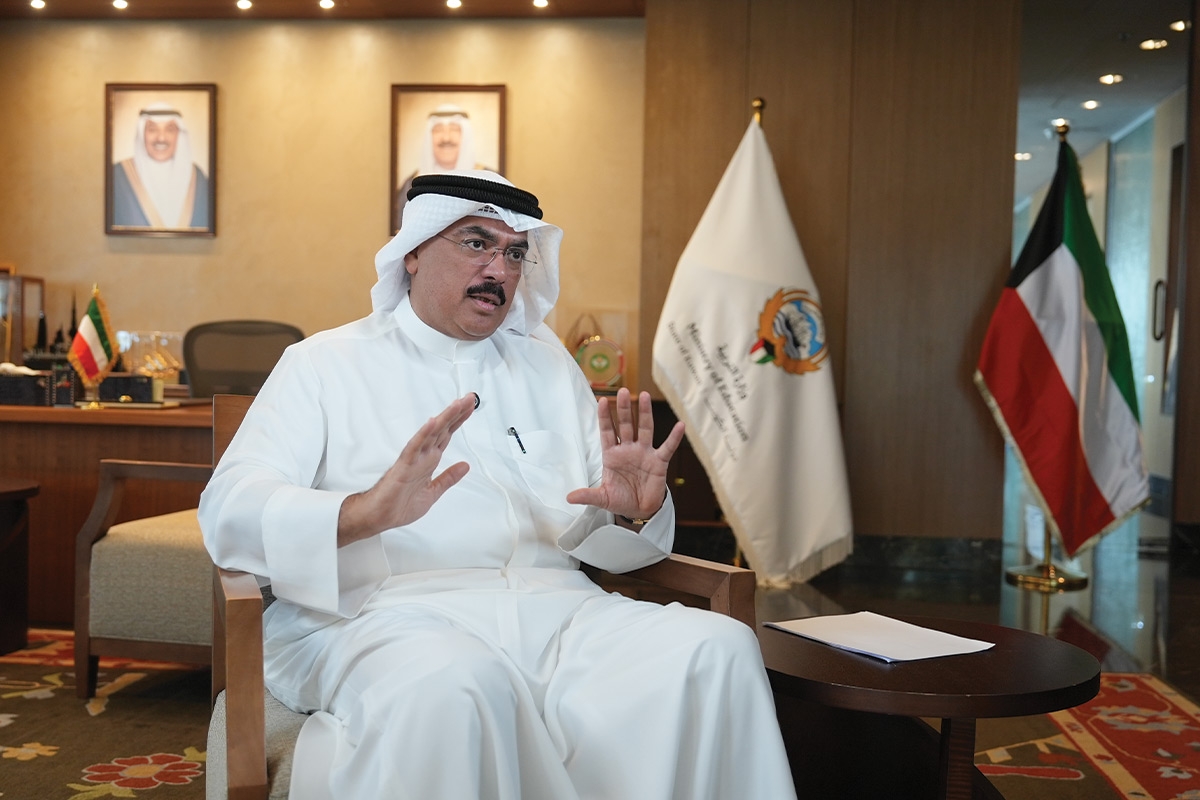
Minister of Education reveals education reform plan and creation of schools for the gifted
Translated by Qiyas from الجريدة — Original source
• In light of the Ministry of Education’s efforts to develop the educational system and improve its outcomes, what are the key projects you are working on to achieve this goal?
When I had the honor and responsibility of leading the Ministry of Education, it was clear that the ministry reaches every household in Kuwait, whether it contains a student, a teacher, or an administrator. It is one of the largest entities in terms of workforce size. At the same time, we cannot overlook the contributions of previous ministers, who exerted great effort and dedicated their time to serving education. Each era had its own circumstances and achievements.
When I assumed leadership of the ministry, there were many issues that required on-the-ground assessment. Therefore, I conducted unannounced visits to schools without prior arrangement, and listened to education professionals, as well as male and female students. Through these visits, we were able to identify priorities and files requiring attention.
Accordingly, we developed a reform plan consisting of six pillars, under which 40 objectives were defined, with a timeline of two years. After one year and ten months, we managed to achieve more than 80 percent of these objectives, even though the plan’s designated period had not yet expired.
We presented the plan to the political leadership and the Council of Ministers, and it received support, follow-up, and accountability, given the keen interest of His Highness the Emir, His Highness the Crown Prince, and His Highness the Prime Minister in developing education.
At the same time, we welcome constructive criticism and benefit from it, and we strive to listen to diverse opinions, especially from those with expertise and competence who follow educational affairs. In fact, we engaged some experts and competent individuals who had previously raised observations and criticisms regarding the ministry’s performance, and included them in the committees of the Education Reform Plan to benefit from their views, experiences, and proposals.
We believe that objective criticism helps us develop, and we welcome and study any observation that can contribute to improving our work, because our ultimate goal is singular: developing education and serving the best interests of our student children. We continue to fulfill our national responsibility according to a clear vision and well-considered decisions, with continuous review of our actions, listening to experts and practitioners, and benefiting from every idea that contributes to developing the educational system. No skepticism will deter us from continuing the reform process, as long as we work according to clear principles and place the interests of our student children and the future of education in Kuwait at the forefront of our priorities.
• You mentioned that the care for gifted individuals in Kuwait is not a recent phenomenon, and that its beginnings are linked to the vision of the late Amir Sheikh Jaber Al-Ahmad, may God have mercy on him... How did this journey begin?
Kuwait has been a pioneer in caring for the gifted, and attention to this field spans decades. An important milestone at the beginning of this journey was the vision of the late Amir Sheikh Jaber Al-Ahmad, may God have mercy on him, who was among the earliest supporters of the idea of establishing specialized schools for the gifted in Kuwait, and of benefiting from pioneering global experiences and transferring them to Kuwait, based on his belief that talent is a national resource that deserves to be discovered, nurtured, and developed.
This vision marked an important launch for the journey of caring for the gifted in Kuwait, and it continued and evolved over the years and administrations. It was not merely an idea tied to a specific phase, but rather a continuous national endeavor.
The journey continued and evolved during the era of the late Amir Sheikh Sabah Al-Ahmad, may God have mercy on him, and witnessed the establishment of the Sheikh Sabah Al-Ahmad Center for Giftedness and Creativity, affiliated with the Kuwait Foundation for the Advancement of Sciences, alongside specialized programs and classes that were introduced in subsequent years in collaboration with the Ministry of Education.
Today, under the reign of His Highness the Amir of Kuwait, Sheikh Meshal Al-Ahmad Al-Jaber Al-Sabah, we are advancing this national journey to a new, more integrated stage through the establishment of specialized government schools for gifted students.
The current emphasis on education and its development in the country responds to directives from His Highness the Amir, Sheikh Meshal Al-Ahmad, stressing the necessity of prioritizing education as the true driver of national progress and the production of skilled cadres equipped with modern tools, with special care for gifted and academically outstanding students.
Therefore, we are not starting from scratch today; rather, we are continuing a national initiative launched with the vision of the late Sheikh Jaber Al-Ahmad Al-Jaber Al-Sabah (may God have mercy on him), which has evolved over the years and successive administrations, and we are building upon it in a more specialized and organized manner.
The new phase transitions us from specialized programs and classes to a comprehensive government school dedicated to the gifted student, providing an educational environment and programs tailored to their abilities, helping to discover and nurture their talents.
Our goal is not to treat talent merely as an ability we discover, but as a national resource we invest in, providing the appropriate environment for creativity and excellence, so that we may have a creative generation capable of contributing to shaping Kuwait’s future.
In the first phase, we opened two government schools for gifted students and established a dedicated Gifted Students Office directly under the Minister’s office, ensuring a clear institutional framework and direct oversight for this file.
Over 1,400 male and female students applied to the two schools, while the Ministry aims to select approximately 300... How will gifted students be identified?
It is important to distinguish between academic excellence and giftedness. Achieving 100% or 99% does not necessarily mean a student is gifted, as giftedness has specific criteria and tests that reveal a student’s abilities. Therefore, the selection process follows international tests and standards to identify students who meet the scientific and clear criteria for giftedness.
The tests we rely on are based on specialized international tests and standards for identifying gifted individuals, which were consulted from specialized global institutions and universities, then standardized by Kuwaiti experts to suit the educational environment in Kuwait.
These tests measure a range of abilities, including intelligence, creativity, and academic achievement. Students are selected based on test results and grade rankings, within the limit of available seats, as we strive to ensure that the discovery and selection of gifted students are based on scientific foundations, clear standards, and fairness.
Certainly not. There are academic talents and performance talents. For example, a student gifted in mathematics may have different abilities and needs than a student with talent in another scientific or applied field.
The schools we have currently opened focus more on academic giftedness. Therefore, we work to discover and develop each student’s abilities through enrichment programs that emphasize problem-solving and practical application, helping students in the future to continue their studies and specialize in fields that match their abilities and talents.
At the same time, the care for gifted students is not limited to the academic aspect. The Gifted Students Office’s efforts also include discovering and nurturing performance talents in areas such as arts, theater, calligraphy, public speaking, sports, and others, according to clear standards and specialized programs, in partnership with relevant state entities, thereby providing opportunities for these talented individuals to develop their abilities and compete locally and internationally.
- The scientific track system currently in use is close to the concept of the credit-based system, but in a more developed form. Previously, Kuwait had the well-known tracks: scientific, literary, and religious, and these tracks continue to exist. Today, however, we aim to provide students with broader options that align with their interests, abilities, and future prospects, in accordance with labor market requirements.
• On what basis were these tracks selected?
- The selection of tracks was based on a study of the labor market. We formed committees comprising members from within and outside the Ministry of Education, and studied the labor market’s needs and the specialties Kuwait will require in the future. We are not only studying today’s market needs, because a student who enters the system now will graduate in three years; therefore, we must anticipate what Kuwait will need in terms of engineering, medical, literary, technical, and other specialties at that time. The tracks are built on this basis.
- The tenth grade serves as a common foundational year, during which students study general courses and undergo two “Exploration” experiences: “Exploration 1,” which focuses on human and social aspects, and “Exploration 2,” which focuses on scientific and technical aspects. After the tenth grade, we can better identify the student’s future direction, whether they wish to pursue medicine, engineering, law, or other fields. Track selection is based on an integrated system that includes academic grades, achievement, aptitudes, interests, and results from the Exploration courses.
- We have coordinated with higher education in this regard to ensure alignment between what students study in secondary school and what they will pursue at the university. As part of preparations for implementing the system, we selected 12 schools—six for boys and six for girls—to pilot the track system.
- Education relies on a set of fundamental elements: the student, the curriculum, the teacher, school administration, and the school building. Therefore, the development process must be comprehensive and not limited to a single aspect.
- We have developed curricula up to the ninth grade, focusing on reinforcing concepts of citizenship, loyalty, and belonging, while adhering to scientific and educational standards. During the current year, we are completing the tenth-grade curriculum, followed by work on the eleventh grade next year, and then the twelfth grade the year after that. We are proceeding gradually in the development process to avoid sudden changes that could affect students, ensuring that the system transitions in an organized and step-by-step manner.
• Regarding the issue of teachers, you mentioned a large surplus. What is its size?
- Currently, there are approximately 33,000 male and female teachers who represent a surplus over the actual needs of schools, out of a total of about 91,000 male and female teachers. When we refer to this surplus, we are not citing estimated figures, but rather the results of studies and extensive meetings that assessed the actual needs of schools and compared them with the number of teachers in various specialties.
- The study revealed a surplus in several specialties, including Islamic education and physical education, among others. Consequently, the Ministry initially focused on addressing the surplus rather than implementing a replacement plan. This will be followed by a phase of redistributing male and female teachers among schools according to each school’s actual needs.
For example, one school employs 42 teachers specializing in Islamic education, while its actual need does not exceed six teachers. In another school, there are 29 physical education teachers, whereas its actual need is only four teachers. These imbalances must be addressed, with the goal of achieving a balanced and equitable distribution of educational staff, ensuring that the number of teachers in each school corresponds to its genuine needs, thereby guaranteeing optimal utilization of human resources and enhancing the efficiency of the educational process.
The teacher is the foundation and core of the educational process. From this perspective, addressing surpluses and redistributing staff according to the actual needs of schools represents a fundamental requirement for achieving balance in the educational field, and providing a comfortable and suitable working environment for teachers, enabling them to fulfill their mission and duties as required.
Alongside the proper distribution of staff, there is another equally important aspect: qualifying and continuously developing teachers. The teacher’s role extends beyond classroom management and knowledge transmission to instilling values and scientific and social concepts, and interacting with learners of varying abilities and needs.
Therefore, curriculum development cannot occur without developing teachers and equipping them with professional tools, whether in practical and applied aspects, methods of interacting with students across different groups, or mastery of curricula and teaching methodologies to achieve educational objectives.
In this context, we have presented a comprehensive study for the qualification of new teachers, ensuring their professional and pedagogical preparation before undertaking their educational duties. As for current teachers, we are working on the “Teacher Licensing” project in collaboration with the Organisation for Economic Co-operation and Development (OECD) and specialized committees, to establish the required professional standards, contributing to the continuous development of teacher performance and competence.
At the same time, I emphasize that the majority of our teachers possess high competence and extensive experience. I have personally interacted with many of them through committees and working teams, and I have observed their distinguished expertise and capabilities. What we are working on today is not starting from scratch, but rather building upon these experiences, developing them, and empowering them further to keep pace with the requirements of developing the educational system and enhancing its outcomes.
We issued Decision No. 116 regarding the conditions for holding supervisory positions, which include school principals, assistant principals, and department heads. Through this decision, we established specific and clear criteria for career advancement, aiming to ensure that school management is undertaken by individuals who possess the necessary competence and qualifications to fulfill their responsibilities. Accordingly, we introduced tests and standards that measure the extent to which applicants possess the skills and competencies required for the position they are applying for, because the standard must be clear, uniform, and applied to everyone without exception.
Those who meet the conditions and pass the required standards have the right to apply and advance. Those who do not meet them at this stage should work on developing their capabilities and fulfilling the requirements to become qualified in future applications. The standards serve as the fair arbitrator among everyone, as they are applied equally to all without exception or discrimination.
I state this clearly: “If I violate the standards or laws, hold me accountable.” However, if the approved conditions and standards are applied equally to everyone, there should be no objection merely because they do not apply to a specific individual. Our ultimate goal is clear: a single standard governing everyone, equal opportunities, and ensuring that supervisory positions are attained by those who deserve them based on competence and merit.
- Previously, there was a multiplicity of sources for decisions, regulations, and directives governing school operations, some of which were not updated to align with recent developments. This often led to discrepancies in the interpretation and implementation of procedures from one school to another. Therefore, it was essential to unify these references within a single, clear, and updated regulatory framework, serving as the authoritative reference for all school administrations.
From this perspective, we formed a team comprising specialists with diverse expertise from the Ministry of Education and the educational field, alongside academics and specialists from Kuwait University, Abdullah Al-Salem University, and the Public Authority for Applied Education and Training. This was done to leverage educational and academic expertise in preparing a comprehensive regulation that clearly governs school operations.
As a result of this effort, we issued the Comprehensive Regulatory Framework for Education, which spans from kindergarten through secondary education. It includes 22 chapters regulating various aspects of the educational process and school operations, such as the school day, curricula, student assessment, behavior and discipline, attendance and absenteeism, as well as organizing aspects related to students, teachers, and school administrations.
Today, we have a single, clear reference for the educational field, replacing the previous multiplicity of documents, regulations, and directives. This ensures that each school administration knows its rights and responsibilities, and that the application of systems and procedures is uniform and clear across all schools.
- Yes, before approving the regulation, we were keen to involve the educational field in its preparation. We initially published a draft electronically via the Ministry of Education’s website, allowing education sector employees to review its provisions and submit their comments and suggestions, according to their educational stage and field of work.
We received between 7,000 and 8,000 comments and suggestions, which were studied and addressed by specialized teams, leading to amendments in provisions that required them. In our view, the field’s opinion is crucial, as it is closest to the realities of school life and best equipped to identify practical challenges that may arise during the implementation of any regulation.
Our goal was not to issue a theoretical regulation, but rather a practical regulatory framework that is applicable and responds to the actual needs of schools. Since the regulation was approved and implemented, no fundamental issues requiring reconsideration have emerged thus far. This underscores the importance of involving the field and listening to its feedback before making decisions that directly affect its operations.
• Where do you stand in the digital transformation process within the Ministry of Education and the “Overseas” e-learning platform? What is its place within your future plans?
- Over the past two years, we launched and developed a wide range of digital services and platforms, totaling 29 services and platforms. Additionally, new platforms are currently being finalized to serve students, teachers, parents, and the Ministry. Our aim is to expand the use of technology across various services and procedures provided by the Ministry.
We also have the “Teams” program, which offers many capabilities that were not fully utilized. Therefore, we are working to activate communication through it between parents and schools, enabling parents to monitor their children’s progress, check their assignments and short quizzes, and communicate with teachers.
As for remote learning, we use it when necessary and under exceptional circumstances. However, in-person education within schools remains our primary approach.
- Electronic transfers have addressed part of the problem of teacher distribution, as we previously experienced overcrowding in certain schools alongside shortages in others. Consequently, transfers are now based on actual vacancies and genuine needs.
We have approximately 950 schools, including kindergartens, primary, intermediate, and secondary levels. Teacher distribution across these schools must be fair and balanced. A total of 16,000 individuals registered in the electronic transfer system, with 6,000 successfully transferred according to available vacancies, while 10,000 remained without available positions. We are working to develop the system in the future to make the transfer process more transparent and organized.
We have a set of platforms and are developing new ones, primarily aimed at organizing various services and procedures. These include a legal platform related to penalties and sanctions, enabling employees to review recorded penalties against them and those lifted in accordance with the law.
We are also currently developing the “Munasabat” (Events) platform, which will consolidate events and activities hosted by schools and administrative departments, as well as the “Ta’” platform for training and development. This includes digitizing all procedures for courses, missions, and study leaves, from needs assessment to decision issuance. Additionally, we have the “Dal” electronic platform for new candidates from the Civil Service Bureau, aiming to complete their procedures without the need for in-person visits and allowing them to track their applications online. We also offer “Hamd Chat,” an intelligent chat service linked to artificial intelligence and the school curriculum, providing students with clear question-and-answer banks through digital interaction.
The digital “Baligh” reporting tool was introduced last academic year as a key instrument that greatly assisted us in monitoring school readiness, maintenance works, and cleanliness. Its importance became even more evident during the summer period, when we used it to survey schools, identify their needs, and plan routine and urgent maintenance. It also enabled electronic documentation and tracking of works carried out by engineering teams.
The program is now available to all school principals, allowing them to report any notes or issues related to school readiness. These reports are sent electronically to the relevant administration, where they are processed and tracked through the system until completion. The program relies on 42 criteria covering various readiness elements, providing us with a clear and updated overview of each school’s status and the required actions.
During the preparation period, we received approximately 11,000 reports via “Baligh.” About 10,300 were addressed, while roughly 700 remain under processing. These figures are not merely reports; they provide a database that helps prioritize tasks, direct work teams, and electronically track and document completed actions.
For us, preparations for the academic year do not begin shortly before school opening; they effectively start on the last day of exams. Immediately after the end of the academic year, engineering teams conduct field visits to schools across the six governorates to inventory needs related to air conditioning, sanitary facilities, civil works, school furniture, routine and urgent maintenance, and other elements associated with school building readiness.
Thus, “Baligh” has become a tool linking field monitoring, engineering work, and electronic follow-up. It helps us identify school needs promptly, prioritize actions, and monitor implementation until completion, thereby enhancing school readiness to welcome students at the start of the academic year.
The work process involves three stages: surveying or assessment, processing and modification, and finally completion. Initially, the issue is recorded, then referred to the competent authority for handling. After the work is executed, the engineer returns to verify its completion and close the report.
There are construction projects that may take one, two, or three months, depending on their nature, which are carried out by maintenance contractors. As for cleaning, security, and school transportation, we have existing contracts covering these aspects; in transportation, we have a contract that provides more than 1,200 buses.
- The rate of book delivery from publishers and their distribution to schools reached 97 percent, with 137 books delivered out of 141. We are proceeding according to the established schedule in this regard.
We also opened five schools during the year, including two kindergartens in Al-Mutlaa, a girls’ secondary school in West Abdullah Al-Mubarak, and two schools for gifted students, as part of the Ministry’s preparations and expansion to provide educational facilities in line with needs.
• There is a Gulf and international trend toward integrating artificial intelligence into education. Where does the Ministry of Education stand on this file?
- We have introduced artificial intelligence concepts from the first grade through the ninth grade, as well as cybersecurity concepts. Now, these have been developed for inclusion in the tenth-grade curriculum. This process is implemented gradually, in accordance with students’ ages and educational stages.
We cannot provide first-grade students with the same concepts we offer to high school students. Therefore, the content begins with concepts appropriate to the student’s age and then develops progressively, stage by stage, until the student acquires knowledge suitable for their abilities and academic level.
- Yes, we have incorporated legal, social, and awareness-related topics into the curriculum, including traffic issues, bullying, cyberbullying, integrity, combating financial crimes, drug-related crimes, and other topics related to student behavior, awareness, and responsibility toward themselves and society.
These topics are selected based on documented studies of the most prevalent issues among juveniles. We have collaborated with the Juvenile Prosecution Office, the Juvenile Court, as well as advisors and specialists, to identify the most prominent issues and violations among juveniles and to determine the age groups in which each issue appears most frequently.
Accordingly, we focused on the most common issues and worked on integrating awareness about each issue at the appropriate age stage. Awareness campaigns precede the age at which problems are likely to emerge, rather than coming after they occur. For example, driving without a license is more closely associated with a specific age group; therefore, it is important to begin awareness about its risks and legal consequences before students reach that stage. Conversely, bullying may appear at younger ages, so awareness about it begins in earlier stages.
For us, the idea is that the curriculum should play a preventive and awareness-raising role, not limited solely to academic knowledge, but also contributing to building students’ awareness of the law, behavior, and social responsibility from early educational stages.
- These have been implemented from the first grade through the ninth grade, and now they have reached the tenth grade. Next year, there will be additional topics in the eleventh grade. Thus, we continue to introduce these concepts gradually.
Moreover, awareness efforts are not limited to textbooks and curricula alone. There is collaboration with the National Guard, the General Fireforce, and some departments of the Ministry of Interior to deliver lectures and awareness programs for students. This reflects cooperation among various state entities to educate our children about risks and issues that emerge in society.
• At the end of the interview, what message would you like to convey to teachers, students, and parents?
- His Highness the Emir, His Highness the Crown Prince, and His Highness the Prime Minister are highly committed to the education sector, and there is substantial support for the Ministry. Our students are Kuwait’s future and our true investment, which makes our collective responsibility significant in working to develop the educational system.
He commended teachers, school administrations, and Ministry of Education leadership for their cooperation in implementing decisions and regulations, and called on them to continue their collaborative efforts. He noted that parents are partners in this endeavor, and their support for the Ministry, within permissible frameworks, contributes to the success of the educational process.
Al-Tabtabaei emphasized that academic excellence does not necessarily imply that a student possesses giftedness, clarifying that the identification of gifted students is conducted according to global tests and criteria. More than 1,400 students applied to gifted schools, while the Ministry aims to select approximately 300 of them.
He pointed out the opening of two schools in the first phase and the establishment of a gifted students office directly under the Minister’s office, alongside the provision of enrichment curricula focused on students’ abilities, problem-solving, and practical application.
The Minister of Education revealed that there are approximately 33,000 surplus staff members out of a total of 91,000, confirming that the Ministry is working to address imbalances in the distribution of personnel according to the actual needs of schools. He explained that the electronic transfer system received 16,000 applications, and 6,000 male and female teachers were transferred based on available vacancies.
Al-Tabtabaei confirmed that concepts of artificial intelligence and cybersecurity have been gradually integrated into the curriculum from the first grade through the ninth grade, and have now reached the tenth grade, taking into account students’ ages and the nature of their educational stages. He added that the Ministry has also introduced legal and social topics, in coordination with the Juvenile Prosecution and Juvenile Court, after identifying key issues by age groups and incorporating them into appropriate curricula.
Al-Tabtabaei stressed that the Ministry welcomes advice, constructive criticism, and proposals that support the development of education, affirming that “our doors are open, and before our doors, our hearts are open.” He noted that students represent Kuwait’s true investment, and that the success of the reform process requires the cooperation of teachers, school administrations, and parents, alongside the support enjoyed by the education sector from the political leadership.
