Thomas Friedman: Netanyahu and Trump's election victory will lead Israel and America to "self-destruction"
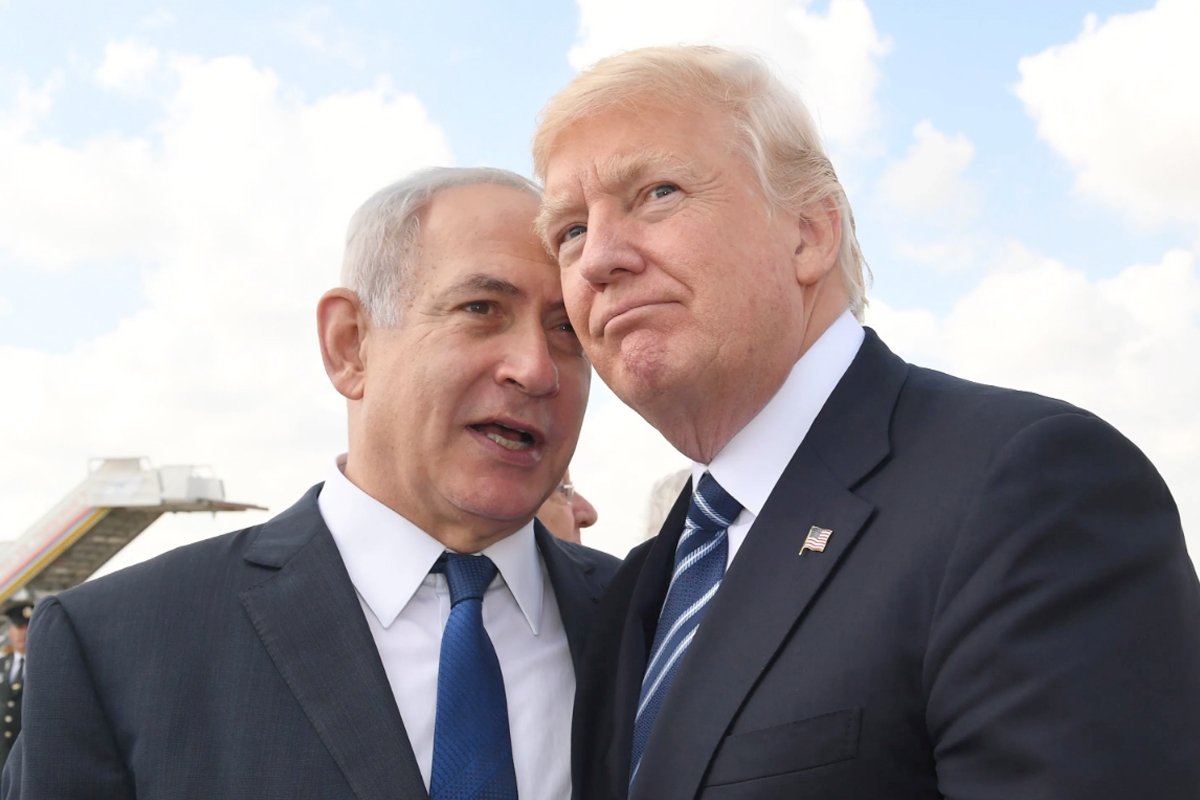
Veteran American writer and journalist Thomas Friedman warned in an article published in The New York Times that the victory of Israeli Prime Minister Benjamin Netanyahu in the general elections scheduled for October 27, combined with the election of US President Donald Trump to the midterm congressional elections, would lead Israel and the United States to “self-destruction.”
The article levels sharp criticism at Netanyahu and his ruling right-wing coalition, which includes politicians advocating “Jewish supremacy,” a group described by a former head of the Mossad as worse than the American racist organization the Ku Klux Klan (KKK).
Friedman argues that if this coalition is re-elected, it is likely to continue its project of weakening the State Attorney General and the Israeli Supreme Court, and may take steps as far as annexing the West Bank and Gaza, and displacing Palestinians from these areas on ethnic grounds.
Friedman predicts that if this trajectory continues, Israel could become a pariah state internationally, comparing the potential situation to what happened with South Africa during the apartheid era.
He notes that Israel has already lost significant support among a large segment of the American Democratic Party, many young Republicans, and most European liberal parties.
He anticipates an increased exclusion of Israeli academics and artists from international events, and a rising wave of emigration from Israel among highly skilled professionals, including scientists, mathematicians, AI and software engineers, pilots, military personnel, and nuclear physicists.
He cites a recent study finding that 1,370 doctors left Israel for at least 12 months over the past three years, a number exceeding the number of doctors working in many major Israeli hospitals.
Friedman quotes former Israeli Defense Minister Moshe Ya’alon, who served in Netanyahu’s government and comes from a centrist-right political background, comparing the ideology of extremist Israeli settlers in the West Bank to Nazi Germany.
Ya’alon asked at the time: “What is Jewish supremacy? Eighty years after the Holocaust. It is ‘Mein Kampf’ turned upside down. We are now the superior race,” referring to the famous book by Nazi leader Adolf Hitler. Friedman considers Ya’alon’s assessment a very serious warning bell within Israeli society itself.
Friedman acknowledges that Israeli society remains deeply affected by the events of October 7, and therefore does not expect Israel to immediately move toward new, comprehensive peace negotiations with the Palestinians. However, he believes that if the opposition manages to defeat Netanyahu, significant change could occur. He specifically highlights Gadi Eisenkot, the former Chief of Staff of the Israeli Defense Forces, as one of the leading opposition figures. In some respects, he compares him to the late Israeli Prime Minister Yitzhak Rabin. He sees that in the event of an opposition victory, there would likely be at least a halt to settler attacks against Palestinians in the West Bank, which he says the Netanyahu government permits.
Friedman states that Trump would be very wrong to support Netanyahu in the elections, as he obstructed the US peace plan for Gaza, and points out that if Netanyahu loses, Trump would gain an Israeli partner more willing to attempt implementing his Gaza plan.
Friedman warns that Israel is heading toward becoming an uneducated and radicalized society if Netanyahu continues to make significant concessions to maintain the support of hardline religious right-wing parties.
It specifically points to these parties’ efforts to exempt thousands of ultra-Orthodox Jewish youth from military service and to provide millions of dollars to their religious schools, while many of these institutions fail to offer an education suitable for the modern economic landscape or the skills necessary for employment.
He highlights a paradox cited by Israeli economist Dan Ben-David, head of the Shorashim Institute for Social and Economic Research, which notes that while the fertility rate among most segments of Israeli society stands at approximately two children per woman, it reaches around seven children per woman among the ultra-Orthodox Jews who are politically allied with Netanyahu. He notes that the ultra-Orthodox population is doubling roughly every 25 years.
Ben-David points out that the ultra-Orthodox educational system does not provide children with the basic education required for economic independence or for understanding the foundations of modern democracy, warning that about a quarter of first-grade students in Israel are now ultra-Orthodox.
Friedman warns that, in his view, the past four years have presented a grim preview of what may await Israel if it does not change course.
After Israel, Friedman turns to his home country, the United States, where he describes Trump as “the most un-American president I have known in my life.” Friedman accuses the US president and his allies of using the “America First” slogan to dismantle a wide range of institutions and alliances that established the American and global order after World War II, such as NATO, the United Nations, the World Health Organization, the World Trade Organization, and the US Agency for International Development. He adds that this has also damaged close US relations with Canada and Mexico, as well as US military alliances with South Korea and Japan.
Friedman argues that these institutions and relationships, taken together, contributed to American and global economic prosperity and maintained peace among major powers for several generations, concluding that the actual result of dismantling them will leave America isolated and in decline.
He specifically points to what he considers Trump’s disregard for Putin’s recent “boasting” about helping Iran in its war against the United States in the Gulf, including supplying it with necessary equipment and goods. He views this as Putin continuing to insult America while Trump acts as if nothing serious is happening.
Friedman attributes this to the fact that, unlike previous US presidents, Trump does not consider democracy a core value and appears more comfortable dealing with authoritarian leaders such as Putin and Kim Jong Un.
On another front, the writer cites a report by Eric Lipton, which states that no US president in history has received similar revenues from businesses that benefited from his presidential decisions. According to the report, Trump generated approximately $1.4 billion in new revenues during the first year of his return to the presidency, linked to cryptocurrency businesses, directly benefiting from his policies in this area.
Friedman uses all these reasons as part of his broader argument regarding the erosion of democratic standards and institutions, predicting that Trump’s victory in the midterm elections will move these policies into “a completely new phase.”
In this context, Friedman cites a warning from Ian Bassin, CEO of Protect Democracy, that a Republican victory in the midterm elections would constitute the “most dangerous scenario.” Bassin explains that Trump is currently politically weak and unpopular, which constrains his actions. However, if he wins the election, it would alter the calculations of Republican members of Congress, Silicon Valley tech executives, and other influential figures. They would perceive Trump as stronger, making them less inclined to oppose him, while Trump himself would feel more powerful and bold than ever before.
Friedman criticizes the alienation of many U.S. allies, including Canada, at a time when the world is undergoing what may be the most significant technological shift in human history, with the emergence of AI agents and robots capable of self-improvement. This occurs amid worsening climate change, rising temperatures, and extreme weather disruptions—issues that demand broad international cooperation.
He also points to China’s rise in the global electric vehicle market, contrasting it with Trump’s focus on oil.
Friedman condemned the war in Iran, arguing that it drains U.S. military resources. He described Defense Secretary Pete Hegseth as a “clown” who has fired or blocked the promotion of more U.S. generals than the number of Iranian generals killed.
In his concluding remarks, Friedman quotes a former U.S. president who stated in a private conversation that the United States could survive a second Trump term as long as American institutions remain intact. However, the writer warns that these institutions are no longer so, questioning whether the Department of Justice, the Department of Health and Human Services, the Centers for Disease Control and Prevention, and the Federal Communications Commission can still be considered independent and sound after being used to serve the president’s political and personal interests.
Friedman emphasizes that restoring these institutions to independence and expert management in the future will be far more difficult than many believe. In his view, this applies to Israel as well, where Netanyahu has appointed loyalists and close associates to key positions throughout the Israeli bureaucracy, reaching even into the heart of national security institutions.
Friedman concludes by urging American and Israeli voters to take all this into account when entering polling stations, noting that “no external enemy is strong enough to destroy American or Israeli democracy—not Iran, not Russia, nor any other country. The only thing truly capable of doing so is self-destruction.”
