Winds and Pegs: The Late Professor Hamza Abbas
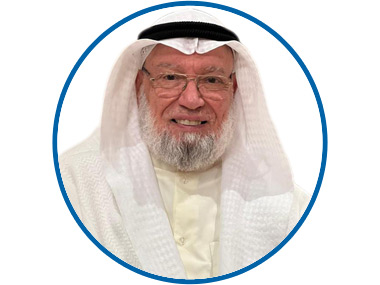
I first became acquainted with the professor, financial expert, and economist, former Central Bank Governor, Mr. Hamza Abbas, during my tenure in the National Assembly. May God have mercy on him, he was a meticulous follower of the financial and economic proposals and projects presented in the Assembly. His views on these matters were candid whenever he was invited to the Assembly to offer his opinion. I often engaged him in detailed discussions regarding the appropriate stance toward these proposals and their impact on the financial and economic situation. His position was scientific, clear, and convincing, supported by evidence and figures, and aligned with the views of distinguished Kuwaiti economists who had frequently warned against populist proposals that contributed to the flawed nature of the discourse in the Assembly and nearly exacerbated structural financial and economic imbalances in Kuwait.
When I assumed the chairmanship of the Financial Committee in the 2003 and 2006 parliamentary terms, I asked him to serve as an advisor to this committee. He replied, “For your sake, I will agree,” as he was displeased with the poorly considered financial proposals presented in the Assembly and was satisfied with my opposition to them.
Years later, when Sheikh Sabah Al-Ahmad, may God have mercy on him, established the High Economic Advisory Committee (I believe it was in 2011), Mr. Hamza and I were among its members, alongside other distinguished Kuwaiti economists. I recall among them Sheikh Mohammed Sabah Al-Salem, Sheikh Salem Abdulaziz Al-Sabah, Dr. Nabil Al-Munaqi, Dr. Adel Al-Subaih, and brothers Nasser Al-Ruwain, Abdulmajid Al-Shatti, and Sami Al-Anbawi.
I still remember his statement in this committee: “If reliance on a single source of income continues and education and the economy remain unreformed, tens of thousands of young people will suffer from unemployment in the future, which could threaten social security.” This was the conviction of all committee members. Subsequently, we also participated in the drafting committee for the report.
The committee then presented its report to Sheikh Sabah Al-Ahmad, with the drafting committee present. In the report, we highlighted all the risks identified by Mr. Hamza and the economist members. We concluded the report with important recommendations that we hoped would achieve substantial reform. Mr. Hamza was candid, as was his custom, in explaining the risks mentioned in the report during his conversation with Sheikh Sabah. At the end of the meeting, after reviewing the report, Sheikh Sabah ordered the Cabinet during the same meeting to implement all the recommendations contained in the report. Unfortunately, this was not achieved.
May God have mercy on Mr. Hamza Abbas, who was dedicated in his work, offering sincere advice to his country as Central Bank Governor, advisor to the National Assembly, and to all the committees in which he participated.
