Gold Slides as Oil Rises and Investors Await Inflation Data
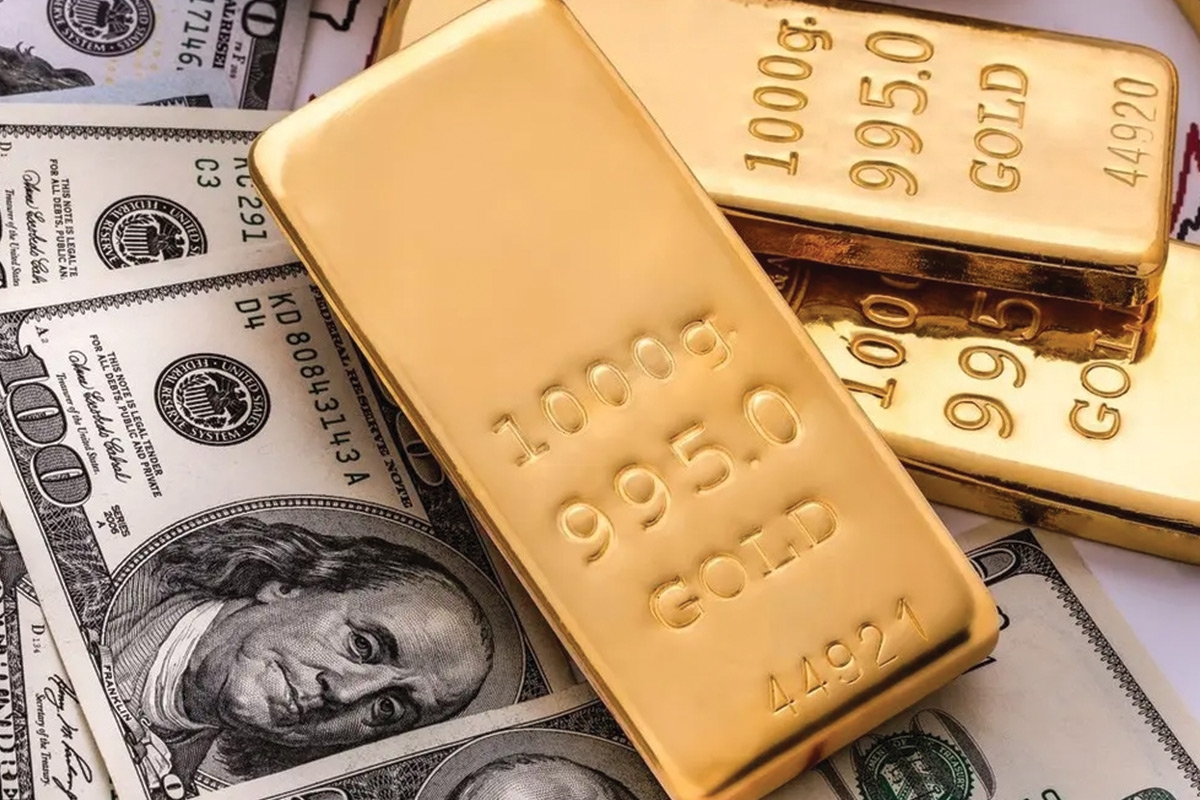
Gold declined amid investor anticipation of US inflation data and interest rate decisions.
Translated by Alqyas from Al-Jarida — Original source
Gold prices dipped slightly today as oil prices rose, while investors awaited key inflation data to be released this week in search of clues about the path of the US Federal Reserve (the central bank) regarding interest rates.
Spot gold fell 0.1 percent to $4,399.99 per ounce, after earlier recording $4,442.70 during the session, while US December gold futures dropped 0.7 percent to $4,444.50.
Nicholas Tsabouras, market analyst at Tradeweb, owned by Jefferies, said: “Caution dominates gold trading today, as it is caught between bets that the Federal Reserve will raise interest rates and a weakening dollar. Rising oil prices fuel inflation risks and expectations that the Fed will hike rates, putting pressure on the precious metal.”
Spot gold fell as much as 2.4 percent on Friday after data showed a sharp acceleration in US job growth in August, while the unemployment rate held steady at 4.1 percent, indicating an improvement in the labor market.
According to the CME Group’s FedWatch tool, traders are currently pricing in a 60 percent probability that the central bank will raise interest rates at its monetary policy meeting, up from 50 percent prior to the data release.
US Producer Price Index data is scheduled for release on Thursday, and Consumer Price Index data on Friday, in search of further indicators of the Federal Reserve’s monetary policy stance.
Mohammed Al-Murairi, Regional Director for the Middle East at Orbx, reaffirmed his positive outlook on gold despite rising expectations of interest rate hikes, noting the precious metal’s ability to maintain gains above the $4,300 level.
He stated that buying opportunities remain, particularly as central banks continue to increase their gold holdings at these price levels, expecting a broadly positive outlook for gold prices in the fourth quarter of the year.
He said US employment data released on Friday bolstered optimism about the possibility of an interest rate hike at the Federal Reserve’s September meeting, noting that market expectations for a rate hike had risen to 63 percent.
Al-Murairi explained in an interview with Arabiya Business that these expectations were reflected in bond market performance, coinciding with the jobs data release. However, markets are awaiting important economic data this week that will help determine the future path of US monetary policy, led by the Consumer Price Index, along with production data released a day earlier.
He noted that the Fed would likely keep interest rates unchanged during its September meeting, despite the possibility of using inflation data as justification for a rate move, pointing to ongoing political pressure from US President Donald Trump’s administration and its statements regarding interest rates.
He added that the most likely scenario is a rate hold in September, pending further data that will give the Fed a clearer view on the possibility of rate adjustments later in the year.
Al-Murairi stated that the moves by central banks, including the Bank of England and the European Central Bank, had previously shown variations in the timing of interest rate cuts compared to the Federal Reserve. He noted that, for the Fed at the current stage, the most important factor is monitoring economic data, particularly growth and inflation figures in the United States.
He also highlighted the importance of monitoring bond markets and avoiding a repeat of bond sell-offs or large waves of selling, considering this a priority that may attract the Fed’s attention in the coming period.
Regarding the yen, Al-Murairi said that no official intervention in the currency market has been announced so far, but market movements suggest the possibility of interventions, coinciding with statements about the potential for interest rate hikes by the Bank of Japan, amid ongoing changes in Japanese monetary policy.
He added that the speed of the yen’s movement and its positive rise suggest that unannounced market interventions are taking place.
He pointed out that previous interventions, including those by the Americans through selling euros and supporting the Japanese yen, did not yield sustainable results over the long term, as the yen quickly shed part of its gains after surges.
He clarified that interventions alone do not constitute a fundamental solution, and that more significant changes are required, primarily interest rate hikes and a shift in monetary policy by the Bank of Japan, which he expects to be the upcoming trend, currently reflecting positively on the yen against the dollar.
