Watan's Destination: You Are Not an "Uncle"
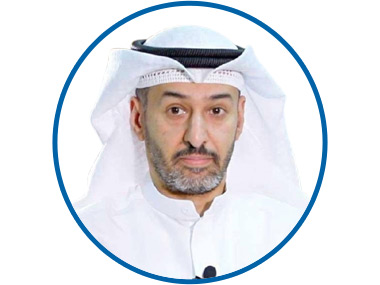
In my view, the term “Uncle” has been subjected to considerable trivialization in our society over the past years, drifting from its original concept rooted in social reverence to suspicions of sycophancy and hypocrisy toward the wealthy and influential, or to securing a certain immunity for individuals whose pasts and trajectories are already a matter of public contention.
It may be useful to note that the word “Uncle,” widely used in Kuwait today, is actually relatively recent, or at least not part of the vernacular. The term traditionally used and most common in this context is “Hajji,” which blends social respect with the religious connotation associated with the elderly. Indeed, the word “Hajji” is not applied to young people, even if they have performed the Hajj pilgrimage more than once.
As I understand it, outside the family context, the word “Uncle” is addressed to an elderly person as an expression of pure social status. Consequently, it is inappropriate to bestow it upon someone holding an official position. Executive officials, by the nature of their roles, are subject to evaluation and accountability. In contrast, being called “Uncle” reflects a high degree of respect and reverence, making even mere disagreement with such a person’s views—let alone evaluating, holding accountable, or criticizing them—appear as a sign of poor upbringing on the part of the younger individual.
Furthermore, if we were to apply the title “Uncle” to matters of “governance,” it should be subject to certain regulatory standards. This means there should be no conflict of interest—such as functional or commercial ties—between the speaker and the “Uncle,” in accordance with the principle of “non-conflict of interest.”
Of course, I do not restrict anyone’s right to bestow any title upon whomever they wish. However, I believe it is inappropriate for someone to be called “Uncle” if they have spent their life harming people, inciting against their social security, amassing wealth through illegal means, or acting as a political instrument to divide society and undermine its rights. Advancing in age does not forgive sins unless the perpetrator acknowledges their wrongdoing.
