Oil Prices Fall Amid Uncertainty Over Renewed US-Iran Strikes
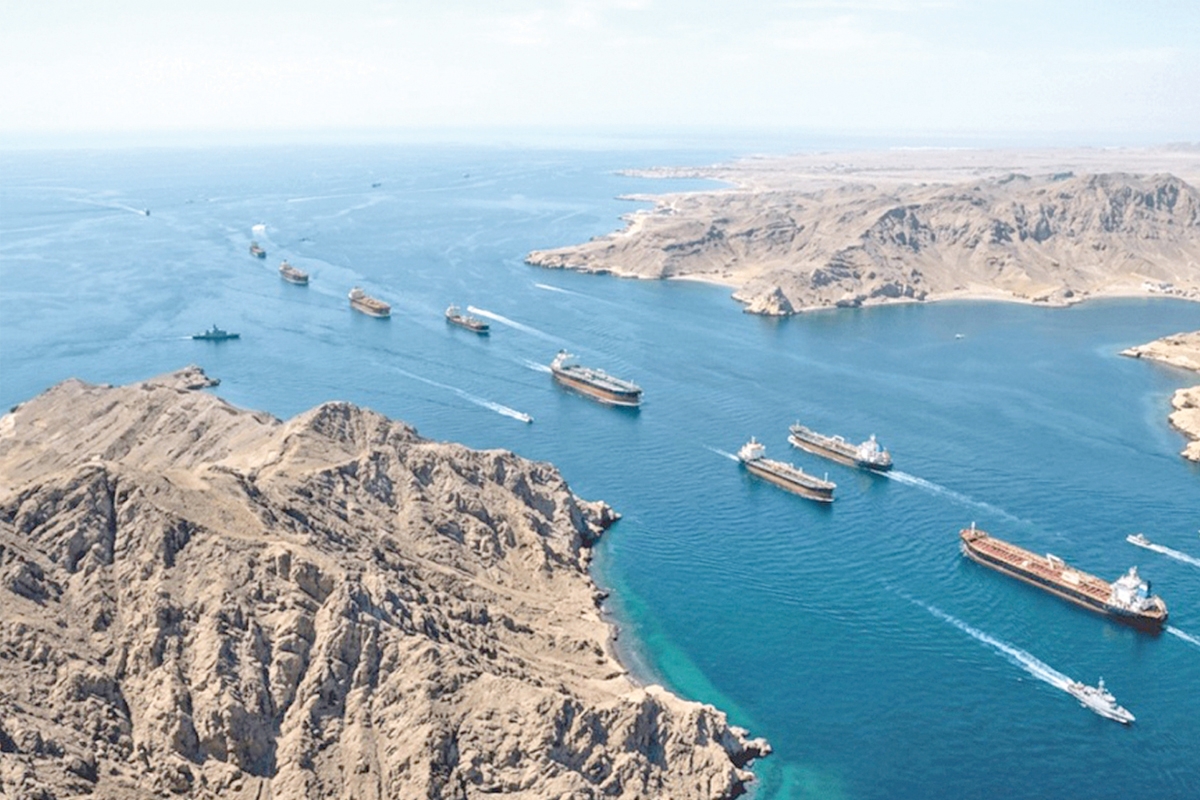
Oil prices dropped due to geopolitical tensions, while Russia signaled a temporary production cut and Chevron raised its market balance forecasts.
Translated by Alqyas from Al-Jarida — Original source
Oil prices fell today as investors assessed the uncertainty surrounding the resumption of military strikes between the United States and Iran and its impact on Middle East supplies.
Meanwhile, the price of a barrel of Kuwaiti crude rose by $2.12 to reach $98.23 per barrel in yesterday’s trading, up from $96.11 on Tuesday, according to the price announced by the Kuwait Petroleum Corporation.
Tony Sycamore, an analyst at IG, said in a note that oil prices declined amid early signs of a de-escalation in the latest tensions, with no confirmed reports of a firefight since around midday Wednesday Sydney time.
US President Donald Trump said today that the renewed US campaign against Iran would not last “very long,” and that US forces had targeted Iranian radar and missile systems.
Trump added, “We destroyed all the new equipment they tried to build near the Strait of Hormuz, some defensive and some offensive... It was a very violent attack last night, and we are ready to launch another attack whenever we want.”
Sycamore said, “If the de-escalation continues, which is highly questionable, it won’t be long before oil shipments exiting the strait—via tankers turning off their transponders and ship-to-ship transfers—return to the levels seen at the end of last week.”
Initial shipping data from Kpler on Wednesday showed that four crude tanker vessels transited the Strait of Hormuz, a figure below the 10-day average of approximately 13 ships.
Two Iraqi energy sector officials said on Wednesday that Iraq increased its oil exports to around 2.34 million barrels per day in August from about 1.35 million barrels per day in July, with September exports also expected to rise, as steep discounts and Iranian approvals for Iraqi oil tankers to pass through the Strait of Hormuz encouraged buyers.
The United States said on Tuesday that 17 million barrels of oil transited the Strait of Hormuz on Monday, describing it as the largest volume of crude oil to pass through the waterway since the start of the US-Israeli war on Iran.
Reuters quoted sources as saying that the scheduled OPEC+ meeting on Sunday would not include any decision on oil production policy, with discussions focusing primarily on market developments.
This comes after Brent crude jumped by more than 8% over three sessions, while crude prices remain roughly 60% higher since the beginning of the year.
For his part, Russian Deputy Prime Minister Alexander Novak said Russia would slightly reduce its oil production this year, but the situation is temporary and production will begin to increase once local refineries complete their scheduled maintenance.
A draft government forecast reviewed by Reuters this week showed that Russia lowered its oil production forecast for this year to the lowest level in 17 years, and revised its fuel export projections for 2026 and 2027 due to the war with Ukraine.
The projections, to be finalized by the end of September and used in budget preparation, included lowering oil production estimates for the period from 2026 to 2029 by between 16 million and 20 million tons compared to previous forecasts published in May.
Speaking on the sidelines of the Eastern Economic Forum in Vladivostok, Novak said Russia is currently experiencing a “partial decline” in production volumes compared to expected figures.
Russian news agencies quoted him today as saying, “This is partly due to oil refineries operating below capacity because of unscheduled maintenance. However, this is a temporary phenomenon, and in principle, once refineries resume operations and the situation stabilizes, production will increase.”
Responding to a question about the impact on the market, Novak said that OPEC+, which accounted for about 40 percent of global oil production in July according to Reuters calculations, is facing what he described as an “internal challenge” due to declining supplies through the Strait of Hormuz.
He clarified that “OPEC’s role remains important, because the production volumes of member countries are very high and represent a large share of global exports, so this will undoubtedly have a significant impact on global markets.”
Chevron CEO Mike Wirth said the global oil market has moved closer to supply-demand balance, supported by improved supply flows through the Strait of Hormuz in recent weeks.
Wirth explained that increased supplies, along with reduced Chinese purchases, drawdowns from inventories, and the availability of some previously sanctioned barrels, have helped ease market pressures and stabilize prices near $90 per barrel.
However, he warned that inventory levels are now much lower than at the start of the crisis, noting that escalating attacks during the current week remain a concern for markets.
Wirth also confirmed that Chevron’s increased production in Venezuela will be gradual and will not provide a quick solution to any potential disruptions in oil supplies through the Strait of Hormuz, as developing production takes years.
Chevron announced plans to more than double its oil production in Venezuela over the next five years, through a $7 billion investment that strengthens its presence in the country.
The oil giant obtained rights to operate two additional oil fields in the Orinoco region, which holds most of Venezuela’s crude oil reserves.
Preliminary shipping data showed that six cargo ships transited the Strait of Hormuz today, down from 11 the previous day and well below the 10-day average of approximately 13 ships.
Kpler data also showed that a large LNG carrier, two long-range product tankers, a Supramax tanker, and a Panamax tanker entered the strait from the Gulf of Oman. Additionally, a large LNG carrier loaded with cargo exited the strait bound for the Gulf of Oman.
The number of ships transiting the waterway may change, as some vessels turn off their transponders while underway.
Reuters reported on Wednesday, citing a government website, that Iran added more ships deemed non-compliant to its blacklist, making them subject to fines, seizure, or detention if they attempt to sail through the Strait of Hormuz.
Saudi Arabia said on Wednesday that an Iranian attack on an oil tanker owned by its national shipping company resulted in the deaths of two Filipino sailors.
In the Strait of Bab al-Mandab, Kpler data showed that 31 cargo ships transited the waterway on Wednesday, the highest number since August 24 and above the 10-day average of 25 ships. The data indicated that 17 ships transited the waterway on Tuesday.
The ongoing “Hormuz” crisis has driven shipping stocks to the forefront of winning bets in markets in 2026, pushing them to their highest levels in over a decade as the sector benefits from disruptions that have hampered one of the world’s most critical oil trade routes.
Data from Lloyd’s List Intelligence showed that a basket of 35 shares of shipping companies listed in the United States and Europe rose by about 68% since the beginning of the year, outperforming the S&P 500 index by more than five times, while gaining 82% over the past twelve months.
Oil tanker stocks led the gains, rising 120% since the start of the year, followed by car carrier, gas, and dry bulk shipping companies, according to CNBC, as reported by Arabi Business.
Andreas Bofelsen, managing director at Haven Capital Management, said the shipping sector offers a hedge against geopolitical disruptions, noting that maritime transport markets have previously benefited from major volatility, including the coronavirus pandemic, Houthi attacks in the Red Sea, and the Russia-Ukraine war.
Shipping companies attracted investors seeking exposure to commodity supply chains and cash-flow-generating assets, before the war with Iran added new momentum to the sector by disrupting navigation in the Strait of Hormuz.
The disruptions forced oil tankers to take longer routes and increased insurance costs, effectively reducing the available supply of ships despite ongoing global trade flows.
Stock prices reflected these developments: Danaos shares traded at their highest level since 2008 after a roughly 60% jump this year, while Frontline and Teekay Tankers shares reached their highest levels since 2011.
PWL LPG hit a record high, while Seabulkers and Navios Maritime Partners touched multi-year peaks, and International Seaways recorded its all-time high last week.
The Breakwave Tanker Shipping ETF, which specializes in crude oil tanker futures contracts, surged about 650% since the outbreak of war in the Middle East in February, with its gains exceeding 2,300% since the beginning of the year.
Nicholas Tsirogalas, CEO of Tafton Investment Management, said that longer sea voyages increased what is known as the “ton-mile” index, boosting demand for oil and chemical tankers, dry bulk carriers, and gas carriers.
