Trump vows to respond to Tehran's targeting of US bases in the region
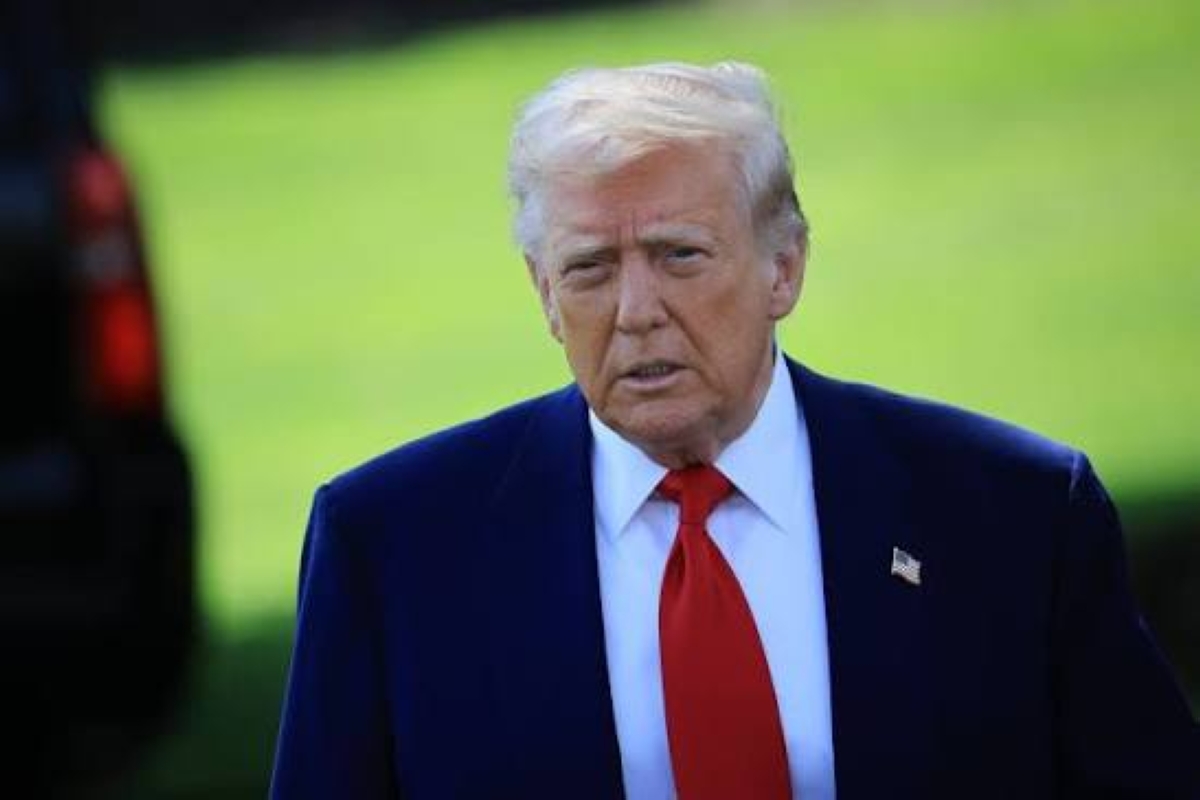
Iran targeted US bases in Jordan and the UAE in retaliation for US strikes on facilities in the Strait of Hormuz, with Trump pledging a response.
Translated by Alqyas from Al-Jarida — Original source
Clashes between Iran and the United States have resumed after a month of calm and increased American pressure, marked by the declaration of an “economic war” against Tehran. On Monday, Donald Trump pledged to “respond with force” to the Islamic Republic following its recent attacks on U.S. targets in the Middle East.
For the first time since late July, U.S. forces announced an attack targeting “two Iranian missile launch platforms on Larak Island” located in the strategic Strait of Hormuz.
Tehran retaliated by launching missile and drone attacks targeting U.S. military sites in Jordan and the United Arab Emirates. Iranian President Masoud Pezeshkian affirmed that his country does not wish for the war to continue.
Trump threatened Tehran on Monday to retaliate for its recent attacks on U.S. targets in the Middle East, according to Fox News.
In response, Pezeshkian stated during his meeting with Indian Prime Minister Narendra Modi, ahead of the Shanghai Cooperation Organization summit in Kyrgyzstan on Monday, “We believe that continuing the war is not in our interest nor in the interest of the region.”
On the night of Sunday into Monday, the Iranian Revolutionary Guard announced that its forces retaliated for the shelling of Larak by targeting U.S. forces at King Hussein and Al-Azraq bases in Jordan “with missiles and drones,” causing “serious damage” according to the statement.
Tehran also announced on Monday that it had targeted “dozens of drones” at the Al-Minhad Air Base in the UAE, where U.S. helicopters and troops were stationed.
Earlier, the Iranian Foreign Ministry condemned the new U.S. strikes, asserting that the Iranian forces’ response was a “legitimate act of self-defense.”
The Iranian president had previously affirmed in a statement before his departure for Kyrgyzstan, “We do not seek war, but we will deliver a decisive response to the aggressors.”
Hours after Tehran announced the targeting of a base in the UAE, the UAE Ministry of Defense stated on the X platform that it had intercepted a drone over its territorial waters coming from Iran.
The Iranian Armed Forces warned neighboring countries of a “much stronger response” if any new “aggression” were launched from their territories by Washington.
The United States stated that its attacks on Larak Island aimed to prevent Iran from deploying more naval mines in the strait, days after it announced the clearance of mines from the area.
U.S. Central Command (CENTCOM) spokesperson Captain Tim Hawkins told Agence France-Presse in a statement that “Revolutionary Guard forces were observed preparing to launch missiles loaded with naval mines toward the Strait of Hormuz.”
Despite the U.S. announcement, Iran reported on Monday morning that a tanker attempting to cross the strait caught fire after colliding with two naval mines, a claim denied by the U.S. military.
CENTCOM stated in a press release that “no ship collided with mines in the Strait of Hormuz,” adding, “This is another attempt by the Revolutionary Guard to intimidate regional commercial navigation through media deception.”
The mutual shelling comes as the conflict enters its seventh month since the initial U.S.-Israeli strikes on Iran on February 28, following a month of military calm.
Despite a ceasefire declared in April and the signing of a memorandum of understanding paving the way for a final peace agreement in June, no deal has been reached. Washington has since declared an “economic war” on Tehran.
The April ceasefire ended military operations, but ongoing sporadic strikes, largely concentrated around the Strait of Hormuz, have diminished the chances of reaching a final agreement.
The U.S. military stated that its latest strike against Iran occurred on July 29 in response to an “attempted surprise attack” on its forces in the region. This followed attacks on Iran over 13 consecutive nights earlier in July.
Iran’s closure of the Strait of Hormuz has also harmed the global economy, driving up oil prices due to supply shortages.
The prospect of war with Iran faces strong opposition from the American public, as the midterm elections in November approach, which could end Republican control of Congress.
Last week, a new package of U.S. “secondary” sanctions was introduced, which does not directly target Iran but instead affects its commercial partners.
For his part, U.S. Treasury Secretary Scott Bessent affirmed on Monday, during a series of meetings in the United States with his counterparts from the Group of Twenty nations, that his country “will continue to exert pressure” on Tehran.
Iranian Foreign Minister Abbas Araghchi accused Israeli Prime Minister Benjamin Netanyahu on Monday in a post on X (formerly Twitter) in Hebrew of deceiving Washington and pushing it into war against the Islamic Republic, describing him as a “snake.”
He later stated that the solution to the dispute is “clear and simple: the United States must honor its commitments and adhere to” what was signed in the memorandum of understanding, “at which point matters will return to normal.”
