IRGC Pushed for Escalation Ahead of 'Lark Strike'
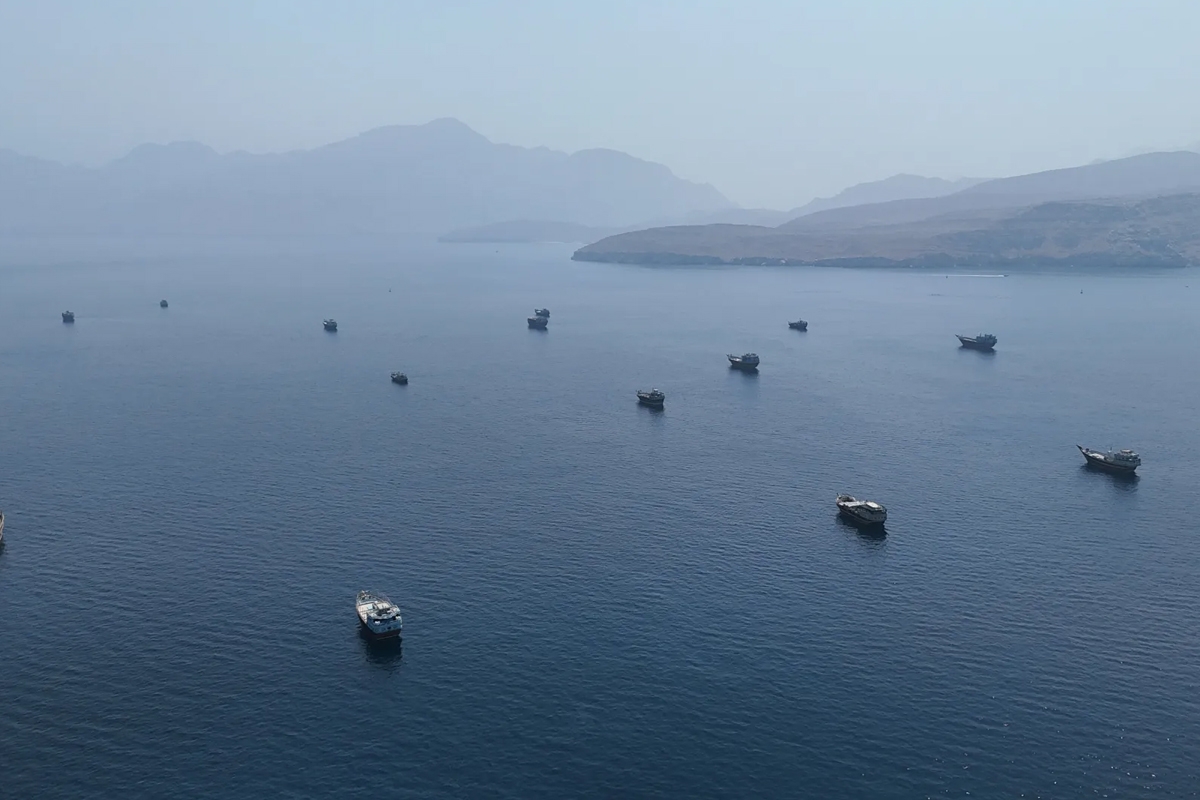
Iran's Supreme National Security Council discussed military escalation versus economic interests, with the decision postponed until Boshruyeh returns from the Shanghai summit following the Lark strike.
Translated by Qiyas from الجريدة — Original source
An official from Iran’s Supreme National Security Council told Al-Jarida that the council’s latest meeting, held just before President Masoud Pezeshkian’s departure for Kyrgyzstan to attend the Shanghai Cooperation Organization summit, saw representatives of the Islamic Revolutionary Guard Corps (IRGC) insisting on military escalation to break the naval blockade imposed on Iran and thwart Washington’s attempt to operate the Strait of Hormuz without Tehran’s involvement. Meanwhile, the government delegation, including Pezeshkian, Foreign Minister Abbas Araghchi, and Central Bank Governor Abdolnaser Hemmati, stressed that Iran’s national interest required reaching what they described as a “Hudaybiyyah-style peace” with Washington, as the economic situation approached total collapse.
According to the source, Quds Force commander Esmail Qaani raised the possibility of widening the confrontation during the meeting, stating that Lebanese Hezbollah was prepared to resume fighting with Israel, and that a war erupting in southern Lebanon would benefit Tehran by providing justification for any further escalation in the Gulf.
Qaani added, according to the source, that the Houthis in Yemen, who are facing attacks from government forces, as well as Iraqi armed factions linked to Tehran that are under increasing pressure to restrict arms smuggling, might also see an interest in participating in any major regional escalation.
On the other hand, Araghchi warned against the repercussions of widening the confrontation. He said that, according to the source, a new war in Lebanon could electorally benefit Israeli Prime Minister Benjamin Netanyahu, while the participation of Iraqi factions in any escalation against Gulf states could lead to internal Shia infighting.
According to the source, the meeting concluded with a decision not to settle on the escalation option at present, and to wait for Pezeshkian’s return from Kyrgyzstan and to review the outcomes of the meetings he would hold there, particularly with Chinese President Xi Jinping and Russian President Vladimir Putin, before making a final decision on the next step.
However, developments that occurred after the meeting, foremost among them the US escalation at Larak Island, shuffled the cards and introduced a new factor into Iranian calculations.
The source said that Tehran decided at this stage to limit itself to responding to the US airstrike and awaiting Washington’s response, rather than immediately moving to the escalation that had been debated within the council.
The source did not clarify whether Iranian forces had indeed attempted to lay new mines in the Strait of Hormuz, as the US military claimed, or whether these forces moved based on a political decision or on their own initiative by the IRGC in an effort to push matters toward escalation.
