Trump announces 'biggest oil deal in world history' with Venezuela
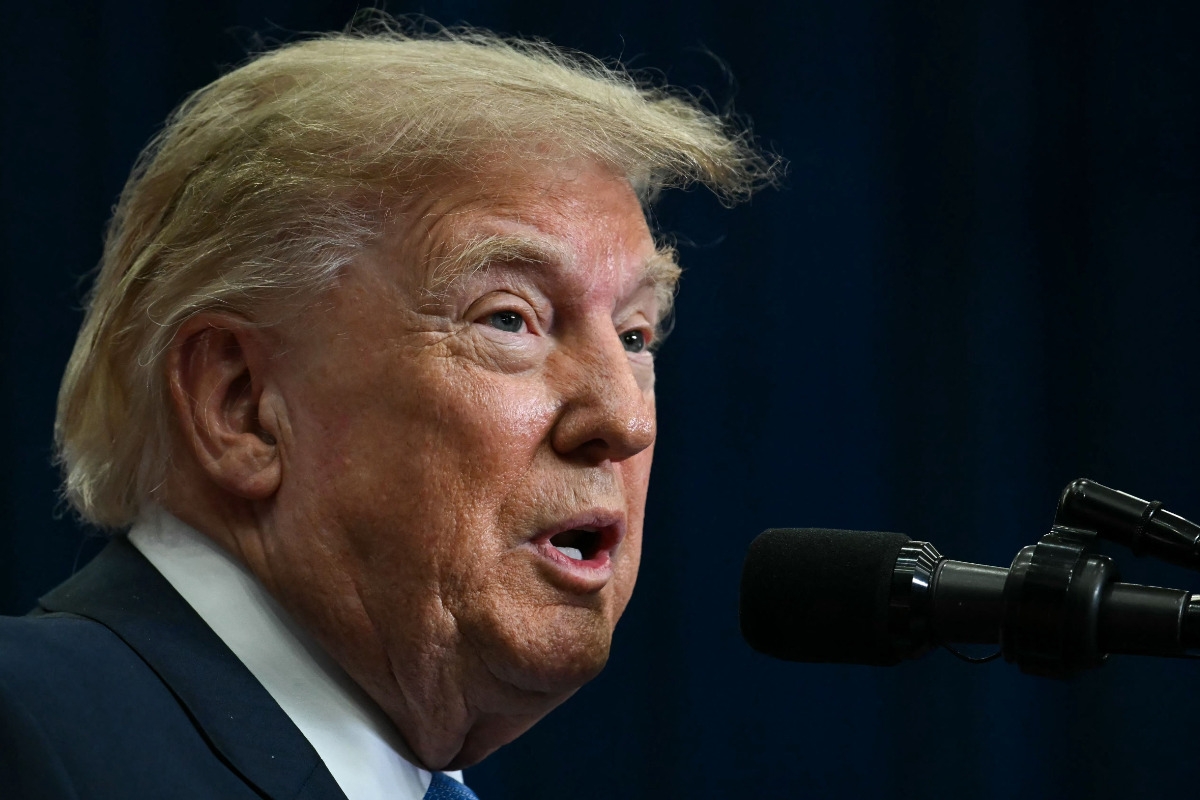
President Trump announced an oil agreement with Venezuela ensuring control over 65 billion barrels, with expectations of private investments worth $100 billion.
Translated by Alqyas from Al-Jarida — Original source
US President Donald Trump announced on Friday that his administration had reached a major oil agreement with Caracas, ensuring US majority control over more than 65 billion barrels of Venezuela’s oil reserves.
US and Venezuelan officials stated that the deal, which Trump described as “the largest oil deal in world history,” would bring approximately $100 billion in private investment to Venezuela.
Venezuela holds the world’s largest proven oil reserves. Its government has faced intense pressure from the Trump administration since US forces ousted President Nicolas Maduro in January and arrested him.
Trump did not hide his desire for US control over Venezuelan oil. In a post announcing the deal on his Truth Social platform, he said the major agreement would more than double US oil reserves.
For her part, Rodriguez confirmed the reach of a deal she described as “historic,” which would have a “major impact on the revival of our nation.”
Rodriguez praised potential investments “exceeding $100 billion and more than $209 billion in state tax revenues.”
Trump noted that his Secretary of State, Marco Rubio, and Secretary of Defense Pete Hegseth, reached this agreement with Rodriguez “through a partnership with the private sector.”
Rubio said the deal demonstrates how “President Trump’s bold foreign policy is achieving gains under the America First approach: ensuring stable reserves and low-cost oil in our hemisphere and lowering fuel prices here at home.”
Rubio wrote on the X platform, “For the Venezuelan people, this agreement will bring around $100 billion in private investment, support thousands of high-paying jobs, and drive the process of rebuilding the Venezuelan economy.”
Jorge Pinon, a researcher at the Energy Institute at the University of Texas at Austin, described the agreement as unconventional, noting that it raises many questions about how oil assets would be transferred, “not to a private company, but to another country.” Pinon said, “We do not know how the transfer will take place,” adding, “Is it a sale? A transfer of ownership? Or will the transfer only occur once the reserves are actually extracted?”
The Axios website reported on Thursday that the two countries were holding talks regarding more than ten producing oil fields, which hold proven reserves of 90 billion barrels, out of Venezuela’s total reserves of approximately 300 billion barrels.
According to Axios, in exchange for a US ownership stake, private companies, including US firms, would develop the fields and provide additional oil revenues to Venezuela.
The site also noted that the deal would more than double US oil reserves, at a time when the US Strategic Petroleum Reserve has reached its lowest level in 40 years.
High gasoline prices are a major political issue for Trump, whose popularity has declined ahead of the midterm elections scheduled for November, following his war on Iran, which disrupted global oil supplies.
The Trump administration had urged US companies to invest in Venezuela, but these companies remain cautious due to the country’s dilapidated infrastructure and past experiences with the Caracas government, which had confiscated the assets of foreign investors.
In this context, Chevron, the only US oil company still operating in Venezuela at the time of Maduro’s ouster, stated in July that it had raised its daily crude oil production to 280,000 barrels and planned to increase production by 50% by the end of 2028.
John Kilduff, an energy expert at Agnew Capital, said the biggest problem facing oil companies in Venezuela is “the safety and security of investment.” He added that if the United States were to take control of or acquire oil fields, the goal would be “to establish a kind of state-controlled zone where U.S. companies could enter and operate without disruption, with the hope of eliminating the political risks that typically accompany investment in Venezuela.”
