Oil declines as markets assess the impact of US sanctions on Iran
Oil prices continued their decline yesterday, following a drop of more than 2 percent at the close of the previous session, as investors assessed the impact of new U.S. sanctions targeting Iran. Crude contracts fell at t
Translated by Qiyas from الجريدة — Original source
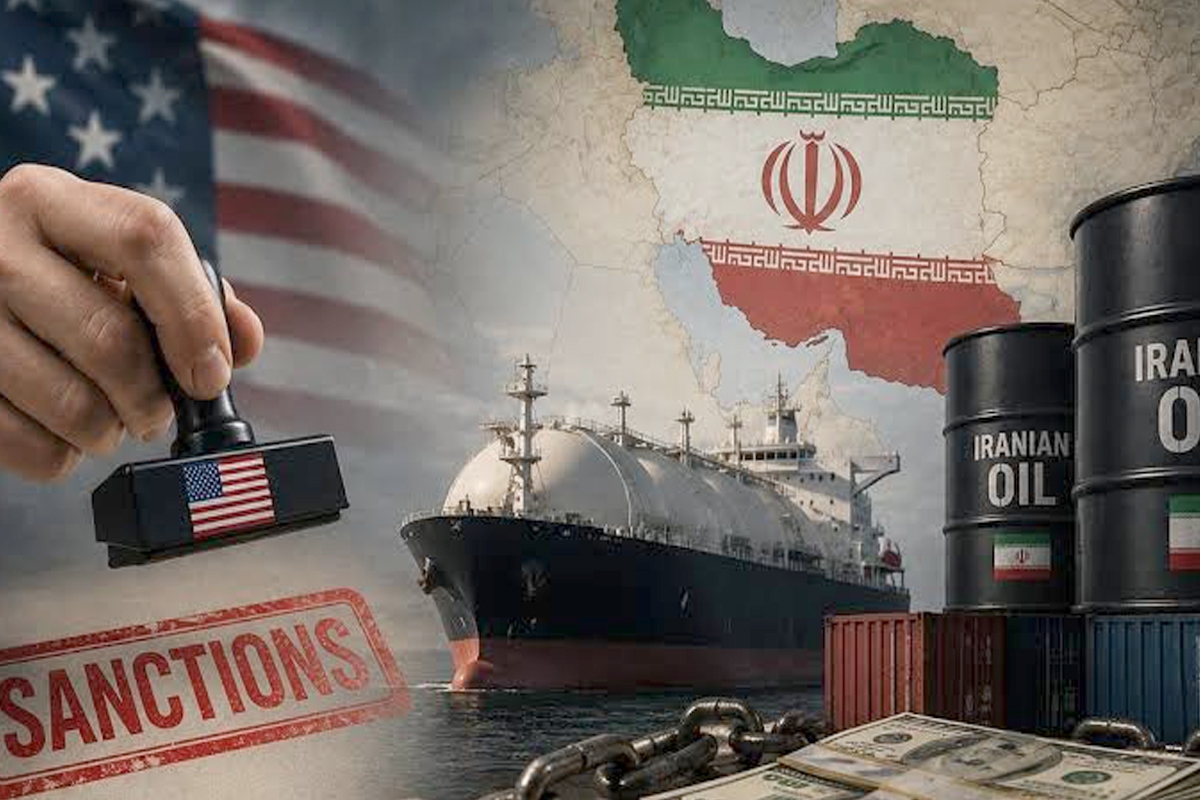
Oil prices continued their decline yesterday, following a drop of more than 2 percent at the close of the previous session, as investors assessed the impact of new U.S. sanctions targeting Iran.
Crude contracts fell at the Monday close, with U.S. crude hitting its lowest level in a week amid profit-taking after prices had risen over the past two weeks.
The price of a barrel of Kuwaiti crude fell by $1.06 to $92.65 in trading the day before yesterday, compared to $93.71 in last Friday’s trading, according to the price announced by the Kuwait Petroleum Corporation.
In a note yesterday, ING commodity analysts wrote, “The market does not appear to have been significantly affected by Washington’s efforts to intensify economic pressure on Iran, as traders view U.S. attempts to urge partners to distance themselves from trade with Iran as marginal and having little impact on the market.”
U.S. Treasury Secretary Scott Bessent announced on Monday the expansion of sanctions to cut off Iran’s economic lifeline, forcing it to end the war between the two countries. He stated that countries must cut their commercial ties with Tehran or risk exclusion from the dollar-based financial system.
However, he refrained from specifying which countries would be targeted or revealing when those sanctions would take effect, saying he preferred to give them time to comply with the new directive.
While U.S. Defense Secretary Pete Hegseth stated on Monday that the United States does not rule out the use of military force against Iran, the country is shifting toward exerting greater economic pressure. Analysts say this has alleviated concerns about potential threats to oil supplies in the Middle East due to the war.
Tim Waterer, chief market analyst at KCM, said, “Markets appear to be assessing economic pressure as a less risky path for supplies compared to military action, which is why the initial reaction was a drop in oil prices rather than a sharp rise.”
However, he warned that “Iran still retains the ability to retaliate by disrupting maritime shipping, which is why a residual premium remains on oil prices.”
Highlighting these threats, the UK Maritime Trade Operations agency reported that an oil tanker was targeted by an unidentified projectile and disabled on Tuesday, approximately nine nautical miles (16.7 kilometers) northeast of Shinas in the Sultanate of Oman.
Iran continues to insist on maintaining control over the strategic Strait of Hormuz, through which shipments equivalent to about 20 percent of global oil consumption passed before the outbreak of war in February.
Supply disruptions caused by the U.S.-Israeli war on Iran, which began on February 28, have led countries to draw down their commercial and strategic reserves.
The U.S. Department of Energy reported on Monday that crude oil stocks in the U.S. Strategic Petroleum Reserve fell by approximately 3.7 million barrels to 289.7 million last week, reaching their lowest level since November 1982.
Shipping data showed that only two tankers transited the Strait of Hormuz on Monday, marking the lowest daily count of bulk commodity vessel transits since early May.
Although this number declined compared to Sunday, when seven vessels of various types transited, it remains subject to adjustment as some ships disable their navigation transponders during passage.
Separate preliminary data from Fortex, a ship-tracking firm, showed that oil transit volumes reached 5 million barrels per day the day before yesterday. According to a seven-day moving average, oil flows through the strait ranged between 6 million and 7 million barrels per day through August 23.
Iran stated it had blacklisted 45 tankers for violating its rules regarding passage through the strait, threatening to take action against ships engaged in ship-to-ship transfers, thereby escalating restrictions in the strait six months after the outbreak of the Iran war.
Xavier Tang, senior market analyst at Fortex Analytics, said, “It remains to be seen how the Iranian Gulf Strait Management Authority will enforce compliance on these ‘non-compliant’ vessels.”
He added, “If the conflict in the region escalates or ships are attacked at the strait, traffic through the Strait of Hormuz could be affected.”
Before the war, approximately 20 percent of global crude oil and liquefied natural gas (LNG) flows passed through the strait.
Iran has vowed to retaliate against broad U.S. sanctions aimed at cutting off its economic lifeline, expressing confidence that its main trading partners will resist the pressure campaign launched by Washington.
Data from Kpler showed that 30 vessels transited the Bab al-Mandab strait on Monday, a figure largely in line with the ten-day average, compared to 28 vessels on Sunday.
Patrick Pouyanné, CEO of French oil major TotalEnergies, stated that the cost of shipping oil through the Strait of Hormuz on a supertanker amounts to approximately $20 million, or roughly $10 per barrel, providing significant profit margins for traders and shipowners.
He explained that the company purchases oil from within the Gulf at prices ranging between $50 and $60 per barrel, as producers seek to offload supplies and reach markets.
During an energy conference in Norway on Monday, the TotalEnergies CEO noted that continued oil flows through the Strait of Hormuz have helped keep global prices below the $100-per-barrel mark, while fuel markets, particularly gasoline and diesel, continue to face pressure due to supply shortages.
Pouyanné said the company will invest in expanding the oil export pipeline in Fujairah, UAE, and will continue investing in the Middle East despite the Iran war.
Pouyanné had previously highlighted the importance of financing alternative pipelines to transport oil from the Middle East, given the paralysis in the Strait of Hormuz since the outbreak of the U.S.-Israeli war on Iran.
Hesham Shaaban, a consultant and certified auditor for the International Maritime Organization, and publisher of the “Ship’s Captain” magazine and website, said that maritime shipping rates are determined based on vessel type, operational and maintenance costs, as well as corporate profit margins.
Shaaban clarified in an interview with “Al Arabiya Business” that war risk classifications and the targeting of ships have caused record-high maritime insurance premiums and freight rates, aimed at maintaining profitability levels.
He added that the Strait of Hormuz crisis has reshaped the global shipping industry, with the market shifting toward preferring the purchase and immediate operation of used vessels to capitalize on high profits.
