Beirut Lingers in Nawaf Salam's Memory
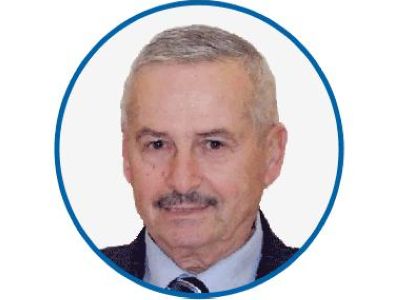
While I was searching for him in Beirut, his words preceded his camera, which had come to define his identity. The colleague Nabil Ismail, with his lens, pursued political movements and paused at appearances by state fig
Translated by Alqyas from Al-Jarida — Original source
While I was searching for him in Beirut, his words preceded his camera, which had come to define his identity. The colleague Nabil Ismail, with his lens, pursued political movements and paused at appearances by state figures, as if he were that neutral voice that takes you, through his camera, into worlds he created himself, drawing on the expertise he gained from his daily presence, the agility of his movements, and an eye that never missed its mark.
My eyes fell upon a “literary piece” he had penned with his pen before he picked up his camera. I felt as though he were speaking on behalf of a broad public opinion awaiting the promised state. It read as follows:
“From the balcony of the entrance to the Presidential Palace, Prime Minister Nawaf Salam paused for a moment, raised his hand in greeting, and sent a smile that my camera captured. The shot seemed to me to be more than a fleeting greeting between a head of government and a lens that follows him, documenting day after day the Lebanese political landscape. It was as if the man, from that balcony, was once again looking out over Beirut, a city he had loved for a long time, back when he was not in power but a student searching for it among books.
Today, my friend Dr. Nader Sarraj brought me back to Paris in 1979, when he and Nawaf Salam were classmates at the Sorbonne University. Sarraj recounted that Salam was passionate about studying, reading, and searching among the shelves of old libraries. During one of his cultural excursions, he found a historical book on Beirut dialects, published in 1911. Dr. Nader continued: ‘He bought it and gifted it to me, inscribing an encouraging message that looked forward to his academic future: “Congratulations in advance on your thesis,” thereby encouraging me to write about Beirut.’
Nearly five decades have passed since that Parisian story, and more than a century since the book on Beirut dialects. The city has changed considerably; positions, roles, and faces have shifted, but something from that story remains in place: the relationship with Beirut.
The student who once searched for Beirut among the pages of old books in Paris now stands as head of government on the balcony of the Presidential Palace, looking out over the city from its heart—a city that history has endowed with open doors to science, law, culture, freedom, and hospitality.
When he raised his hand, smiling toward my camera, it seemed to me that I was not merely filming a head of government greeting a lens, but rather documenting the intersection of two eras in a single image: the student of yesterday who spent his Parisian nights searching for Beirut’s cultural heritage, and the head of government of today who looks out over it from the balcony of the Presidential Palace.
A city he once searched for among books, he now reads its days, faces, and transformations from the window of power. And my camera was privileged to preserve that moment in the memory of the political image.”
