Washington restricts Tehran's transfers and pursues commanders of the Revolutionary Guard
The day after launching the “Operation Economic Outcast,” which carried a final warning to Tehran’s commercial partners to join efforts to isolate the regime and render it an outcast, Washington expanded its comprehensiv
Translated by Qiyas from الجريدة — Original source
The day after launching the “Operation Economic Outcast,” which carried a final warning to Tehran’s commercial partners to join efforts to isolate the regime and render it an outcast, Washington expanded its comprehensive sanctions campaign against the Iranian regime, focusing on five main pillars: oil, gold, aviation, maritime shipping, and technological digital assets. It also offered a $10 million reward for information leading to the identification of five senior commanders of the Islamic Revolutionary Guard Corps (IRGC), including Commander Ahmad Vahidi, Chief of Staff Ali Abdollahi, and Intelligence Chief Majed Khamenei.
The administration of President Donald Trump increased sanctions on the extensive network of Iranian oil trader Hossein Shamkhani, targeting his Wilbridge Group, a commodities trading company with headquarters in Singapore, the United Arab Emirates, and Switzerland. Meanwhile, new measures, as part of efforts to intensify economic pressure on Tehran, targeted individuals in the United States who send money to their family members residing in Iran.
The U.S. Treasury Department suspended a long-standing mechanism that had allowed non-commercial personal financial transfers to and from Iran through intermediaries in third countries.
Amid expectations that Treasury Secretary Scott Bessent’s designation of 60 entities linked to Iran on the blacklist marked the beginning of a slow campaign that could ultimately exclude the regime’s foreign supporters from the U.S. financial system, Trump accused Iran today of killing its own citizens without protests and at unprecedented levels.
Trump wrote on his platform, Truth Social: “The crumbling Islamic Republic does not pay the salaries of a large portion of its army, while simultaneously killing protesters—even when they are not protesting—at unprecedented levels. This is a humanitarian crisis with massive dimensions that must stop immediately.”
As talk of overthrowing the hardline regime resurfaced on the eve of the sixth month of war, Trump stated that “the humanitarian crisis in Iran must be stopped immediately.” He noted that “Iran is on the verge of collapse and unable to pay the salaries of broad sectors of its army.”
Amid Iranian hints of resorting to military escalation in response to suffocating economic pressures and a naval blockade, U.S. Secretary of Defense Pete Hegseth affirmed that the White House “does not rule out under any circumstances the use of military strikes anywhere in the Strait of Hormuz or across Iran,” adding that Tehran cannot withstand the imposed economic pressures.
On the other side, long queues formed at gas stations amid a fuel shortage and temporary station closures, despite Iranian authorities’ insistence that the fuel supply chain remains generally stable.
As the Iranian currency continued its decline, with the U.S. dollar reaching 205,000 tomans today, Fada Hossein Maleki, a member of the parliamentary National Security Commission, warned that the repercussions of economic war are more dangerous than military attacks.
Despite the Iranian regime’s insistence on defying U.S. pressures, Mohsen Rezaei, Secretary of the Supreme National Security Council, stated, “The countries of the region will decide their own future, and America will have no place in the region’s future.”
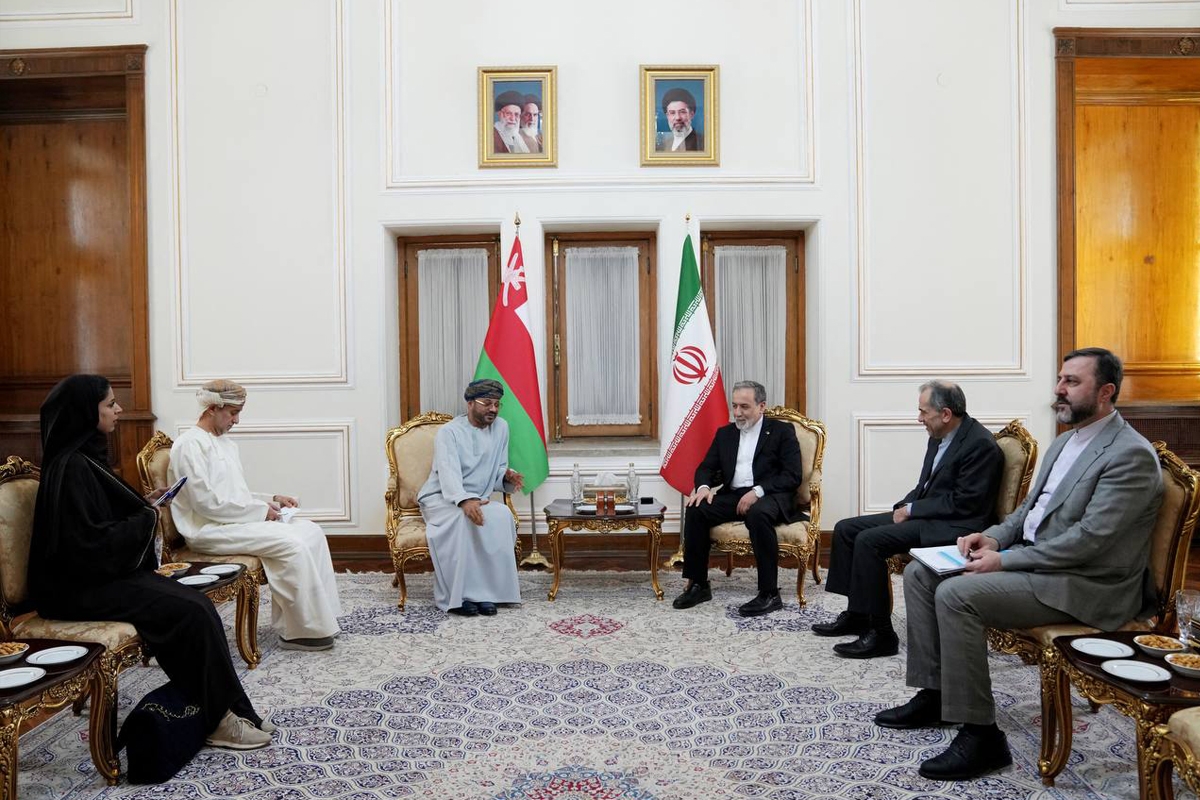
Amid ongoing regional efforts to contain the crisis, Omani Foreign Minister Badr Al Busaidi held talks in Tehran with his Iranian counterpart, Abbas Araghchi, focusing on discussing a transitional framework for establishing a joint temporary shipping corridor and clearing mines from the Strait of Hormuz until a permanent navigation agreement is reached with the Gulf-coastal states. This coincided with statements from Pakistani Interior Minister Mohsin Naqvi, who said that “significant progress” had been made in talks with Iranian leadership, following his visit to Iran accompanied by Army Chief Asim Munir.
Naqvi said that meetings with Iranian officials discussed “reviving Islamabad’s memorandum of understanding to resolve the conflict,” adding that “talks with Iran focus on tensions in the Middle East and a path toward peace.”
Meanwhile, Israeli Prime Minister Benjamin Netanyahu, who accused Iran of attempting to assassinate one of his sons, congratulated the US President and Treasury Secretary on imposing new sanctions on the Iranian regime. Writing on the X platform, he said, “You are rightly demanding that this brutal dictatorial regime and those who help sustain its aggression pay a heavy price.”
On the other hand, China, seen as a key indicator of the Trump administration’s resolve to carry out an economic strangulation campaign against the Islamic Republic, warned that new US economic sanctions “will only increase tensions,” and stated that China’s cooperation with Iran under international law should not be obstructed.
A spokesperson for the Chinese Foreign Ministry emphasized that Beijing, which accounts for about 90% of Iranian oil exports and remains one of the most important sources of economic support for the regime, would take all necessary measures to firmly protect its rights and interests.
On the ground, Reuters reported that cargo ship traffic through Hormuz had dropped to its lowest level in over three months, while a British agency reported that an oil tanker was hit by an unidentified projectile and disabled off the coast of Shinas in the Sultanate of Oman.
