Oil Falls Amid Anticipation of U.S. Sanctions on Iran
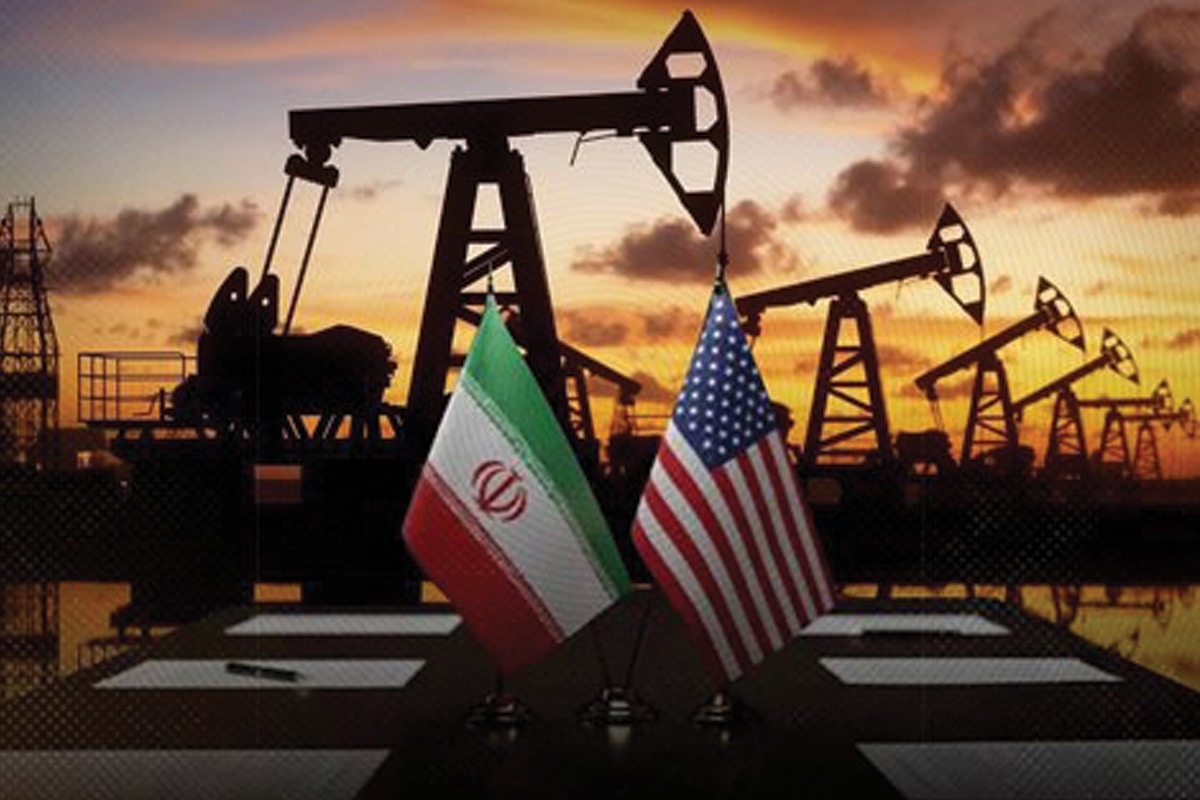
Oil prices fell by more than a dollar a barrel this morning as investors moved to take profits following recent gains, while awaiting details of new U.S. sanctions expected to be imposed on Iran, which could exacerbate s
Translated by Qiyas from الجريدة — Original source
Oil prices fell by more than a dollar a barrel this morning as investors moved to take profits following recent gains, while awaiting details of new U.S. sanctions expected to be imposed on Iran, which could exacerbate supply disruptions from the Middle East.
Brent crude futures dropped $1.55, or 1.64 percent, to $92.84 a barrel, while U.S. West Texas Intermediate (WTI) crude fell $2.04, or 2.34 percent, to $85.02 a barrel. Both benchmarks posted gains for a second consecutive week last week, rising by more than 5 percent, as talks between the United States and Iran reached an impasse, restricting oil shipments through the Strait of Hormuz, which previously carried one-fifth of global supplies before the war.
Analysts at Saxo Bank said in a note that oil prices declined after a two-week rally, as investors awaited the U.S. plan to economically isolate Iran. U.S. Treasury Secretary Scott Bessent had threatened to impose the “harshest sanctions ever” on Iran.
U.S. President Donald Trump also vowed to sanction Tehran’s commercial partners, while Iran condemned U.S. plans to announce new sanctions, even as Iranian President Masoud Pezeshkian called for a diplomatic solution.
Sources familiar with the Middle East crude oil market said SOMO offered to load Basra Medium and Basra Heavy crude for September from the Basra Oil Terminal or via single-point mooring and associated facilities.
Similarly, QatarEnergy offered to load Shahin and Qatar Marine and Onshore crudes for September and October on a free-on-board basis at loading ports in Qatar, according to the same sources. The offers are valid until August 25.
Fatih Birol, Executive Director of the International Energy Agency (IEA), told Reuters today that the agency is not currently discussing withdrawing a second tranche from strategic oil reserves.
Birol added that the agency is closely monitoring markets and that 80 percent of strategic reserves remain intact after 400 million barrels were drawn down last March.
Patrick Pouyanné, CEO of French oil major TotalEnergies, said today at an energy conference in Norway that the company will invest in expanding the Fujairah oil export pipeline in the UAE and will continue investing in the Middle East despite the war with Iran.
Pouyanné had previously highlighted the importance of financing alternative pipelines to transport oil from the Middle East, amid paralysis in the Strait of Hormuz since the outbreak of the U.S.-Israeli war with Iran.
The strait previously saw one-fifth of global oil supplies pass through it before the war. Speaking at the conference, Pouyanné said, “We are likely today the largest trader of oil coming from Iraq or Qatar... and we certainly need to allocate a certain amount of capital to invest in an alternative route.”
He added, “We will become partners in the pipeline extending from Baghdad to Syria, but I will also invest in Abu Dhabi to double the capacity of the Fujairah pipeline.” The current Abu Dhabi pipeline, also known as the Habshan-Fujairah pipeline, can transport up to 1.8 million barrels per day.
Its significance has become clear as the UAE seeks to increase exports from the Gulf of Oman coast, located just outside the Strait of Hormuz, with hopes of doubling export capacity by next year.
Under the agreement, Equinor will supply Germany with more than 30 terawatt-hours of natural gas annually starting in 2027, Uniper announced in Dusseldorf today.
The gas is scheduled to reach Germany via existing pipelines, and the agreement has a duration of 15 years. According to Uniper, the deal was signed today in the Norwegian city of Stavanger. Company CEO Michael Lewis said in a statement: “Through this agreement, we are strengthening long-term gas supplies to Germany, while at the same time deepening our cooperation with Equinor.”
Thirty terawatt-hours is a significant volume, as Germany’s total natural gas consumption last year amounted to 864 terawatt-hours in terms of energy content, according to the Federal Network Agency.
Uniper is one of Europe’s largest wholesale gas trading companies, supplying gas to local utilities, large industrial customers, and power plant operators, among others.
The Norwegian state owns 67% of Equinor, while Uniper is almost entirely owned by the German state. Germany is required to reduce its stake again to a maximum of 25% plus one share by the end of 2028.
Norway is currently Germany’s largest supplier of natural gas. Last year, approximately 44% of the natural gas supplied to Germany arrived via pipelines from the Scandinavian country.
Norwegian natural gas also reaches Germany in the form of liquefied natural gas (LNG) via ships and through German LNG terminals. According to the German Energy Industry Association (BDEW), Norway’s share of all LNG shipments arriving directly in Germany stood at 4.1% through the end of July this year. The United States remains the largest supplier of LNG in 2026, with a share of 87.6%, compared to 94.3% in the full year of 2025.
The Italian government has extended a tax cut on diesel fuel until Wednesday, as Prime Minister Giorgia Meloni faces the fallout from rising oil prices driven by the war in the Middle East.
The Finance and Energy ministries extended the tax cut by one day until Wednesday, under a decree signed last Thursday, according to a document seen by Bloomberg News. In July, the government reduced the price of diesel at fuel stations by 0.17 euros ($0.20) per liter, and extended the measure on August 4 until the following Tuesday.
Meloni is facing political pressure to protect consumers from rising fuel prices as she prepares for general elections expected to be held next year. Government data released on Sunday showed that diesel and gasoline prices on Italy’s highway network reached 2.203 euros and 2.087 euros per liter, respectively.
Over the weekend, the opposition called for greater assistance and a tax on the windfall profits of energy companies. Elly Schlein, leader of the Democratic Party, said, “Temporary measures are no longer sufficient,” calling for “immediate support measures” for the most affected households and businesses. She added, “A tax on the excess profits of energy companies could significantly contribute to financing these measures.”
