Lebanon: Israel Prepares for Post-'Ali al-Tahir' Battles
Lebanese President Joseph Aoun returned from his Italian visit, where he met with Prime Minister Giorgia Meloni and discussed with her the role Italy could play within the verification mechanism. To date, estimates sugge
Translated by Qiyas from الجريدة — Original source
Lebanese President Joseph Aoun returned from his Italian visit, where he met with Prime Minister Giorgia Meloni and discussed with her the role Italy could play within the verification mechanism.
To date, estimates suggest that Italy is the candidate country to lead the verification mechanism for weapons withdrawal in the south. According to sources following developments for Al-Jarida, Army Commander Rodolphe Haykal will visit Italy in the coming days, as part of completing Aoun’s visit and its outcomes, and to explore operational cooperation with the Italian army.
This comes amid a lack of progress in setting a new date for negotiations between Lebanon and Israel, amid a complete Israeli rejection of any withdrawal from any new experimental zone, as well as a refusal to enter negotiations before the completion of the “Ali al-Tahir” hills operation.
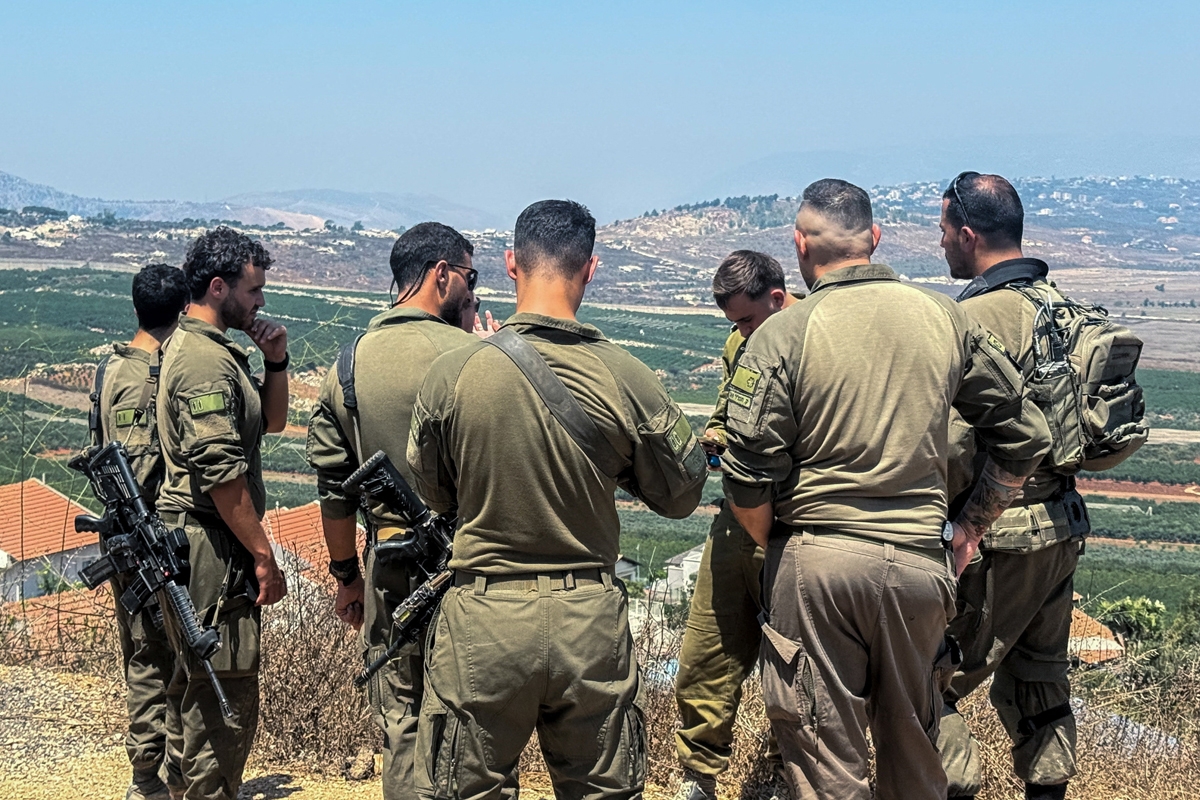
All of this is unfolding amid an escalation and intensification of Israeli military operations in the south. Israeli forces are moving along multiple axes, particularly in the western sector, where they continue military operations in Mansouri to expand the Yellow Line. This is also evident in the central sector, where Israel seeks to annex new towns to the Yellow Line, as well as the continuous escalation in “Ali al-Tahir,” paving the way for its incursion and control through intensified airstrikes, demolition operations, and artillery shelling.
What Netanyahu seeks to convince the Americans of is the execution of the “Ali al-Tahir” operation and subsequent actions, not limiting himself to it alone, due to what he calls the elimination of any threats posed by Hezbollah facilities to Israel.
It has become clear that after “Ali al-Tahir,” Israel is focusing on Mount Rihaneh, the Apple Region, and the Western Bekaa, as there are significant military installations, according to Israelis, which they want to enter and destroy. This area is located at an altitude of 1,200 meters. The movement of Israeli forces toward it from the Khardali direction toward Nabatieh would be very difficult, as Hezbollah would be able to detect their movements.
Therefore, there is concern that Israel might resort to executing the operation by flanking from the Western Bekaa, via Mount Hermon and along the Lebanese-Syrian border.
There is also fear that Israel might surprise Hezbollah and the Lebanese with such a battle while they are preoccupied with Israeli movements in “Ali al-Tahir.”
This comes against the backdrop of the United States classifying Hezbollah as part of Iran’s Islamic Revolutionary Guard Corps and owned by it, and thus not treating it as a Lebanese political party.
This is what Israel wants to exploit to tighten the military noose around Hezbollah, alongside the political and financial squeeze imposed by the United States through the measures it takes, the sanctions it imposes, and the conditions it dictates to the Lebanese state or any other country that Washington believes Hezbollah could benefit from militarily, financially, or socially. All of this falls within the broader war with Iran, which has entered a new phase of economic strangulation.
Here, Israeli efforts led personally by Israeli Prime Minister Benjamin Netanyahu emerge, aiming to convince the Americans that, given the tight siege on Iran and the reluctance to renew war against it, he wants Washington to give him the green light to escalate operations in Lebanon. He argues that pressuring and striking Hezbollah hard will affect Iran and put pressure on it, prompting it to make concessions.
