Khartoum Thirsty, a Barrel of Water Costs 4,000 Pounds
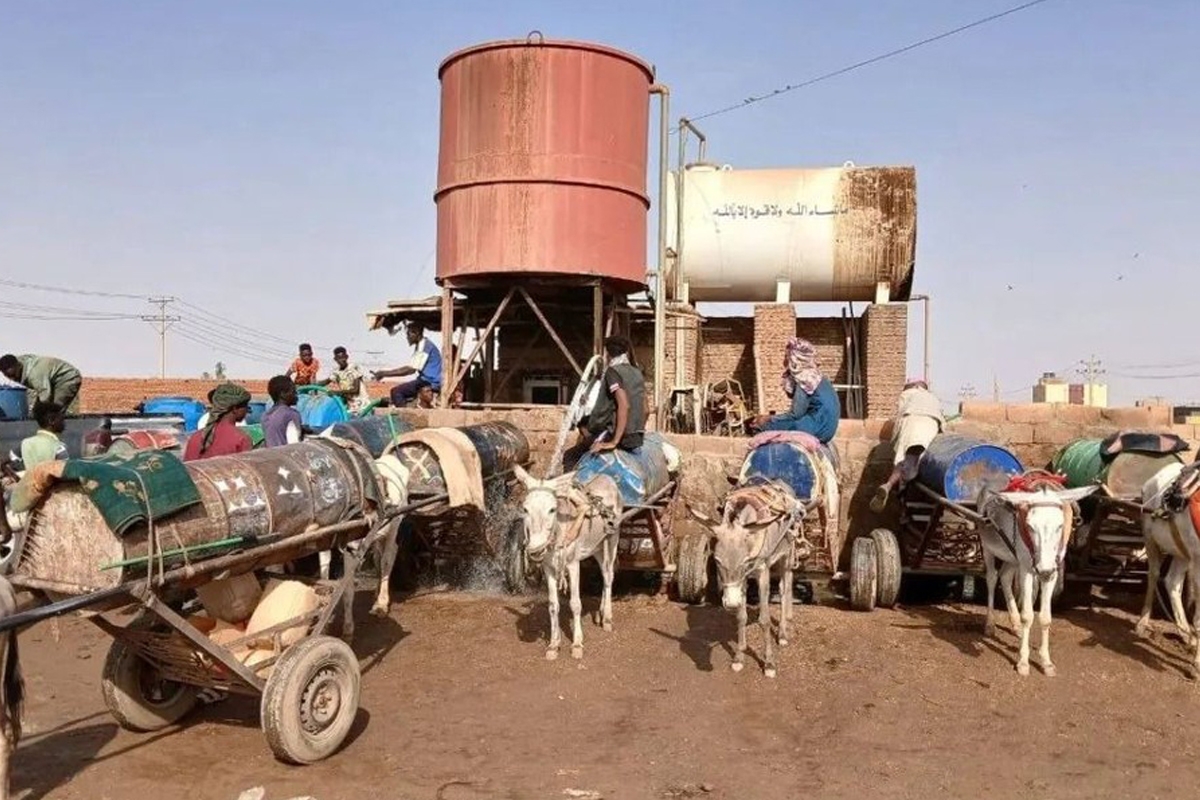
The humanitarian and living conditions in the Sudanese capital, Khartoum, have deteriorated, as the city faces a severe shortage of drinking water supplies, with the price of a water barrel reaching approximately 4,000 Sudanese pounds.
A member of the emergency committee in Gireif Sharq, in eastern Khartoum, warned of a worsening water crisis in the East Nile locality of the capital, amid continued power outages and the reliance of large neighborhoods on shallow wells and unsafe water sources. There are growing fears of waterborne diseases spreading during the autumn season.
Sudanese radio station “Dunbuka” reported today that, according to a statement by an emergency committee member cited by The Associated Press, several neighborhoods in East Nile, including Gireif Sharq and Al-Huda district, still primarily rely on shallow wells within the neighborhoods, as internal networks remain unconnected to the main water sources from the Bahri and Al-Miqran treatment plants.
He explained that prolonged power outages have disrupted the operation of wells, forcing residents and community efforts to rely on solar energy to power some of them. However, he noted that water reaches areas closer to the wells more reliably, while distant neighborhoods suffer from weak or prolonged interruptions in supply.
He added that many residents are forced to buy water transported by Karo carts or travel long distances to obtain it from other neighborhoods, pointing out that the price of a barrel of water delivered by Karo has reached about 4,000 Sudanese pounds.
In the Um Duwan area, he noted that the water problem differs in terms of quality, as most available wells contain salty water unfit for drinking. Residents rely on a limited source of potable water in one neighborhood, forcing people in other areas to buy or transport water.
He warned that the lack of regular testing of water sources increases health risks, particularly with the emergence of water-related illnesses such as cholera and diarrhea.
