The School Library Supports Curricula and Enhances Self-Directed Learning
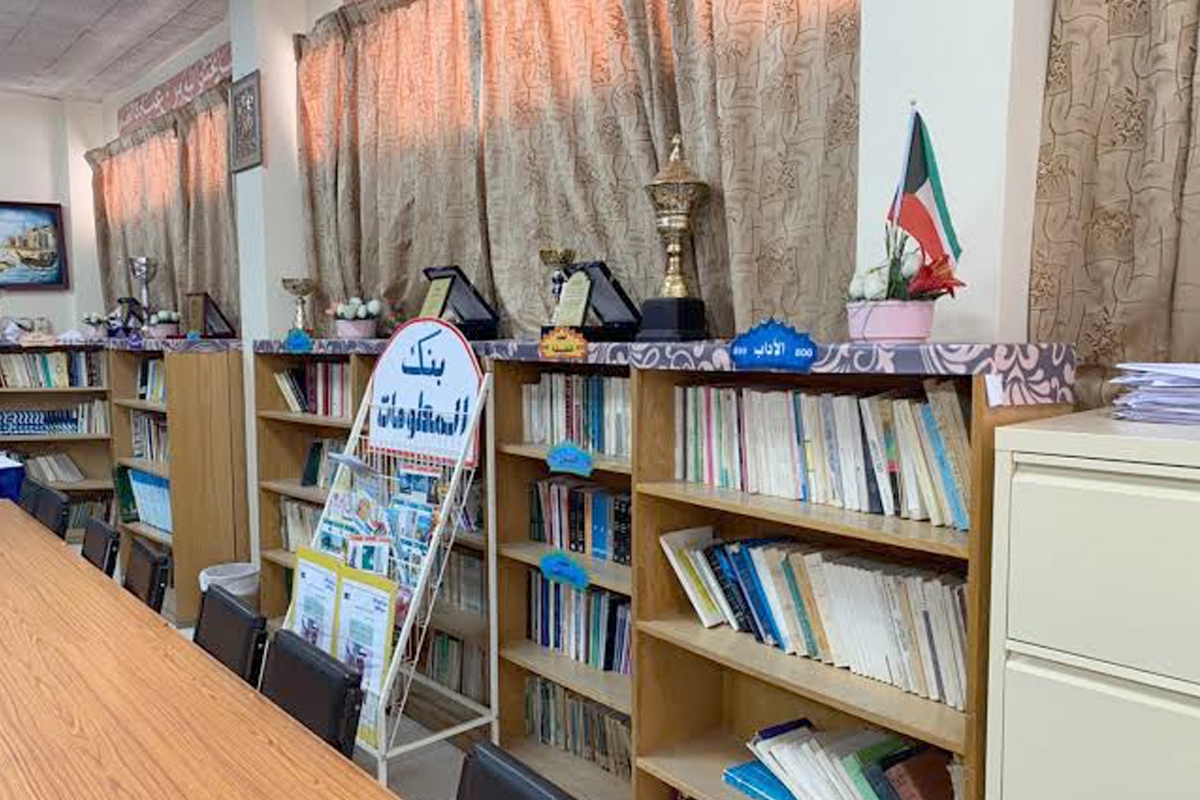
The Ministry of Education continues to emphasize the role of school libraries within the educational system, recognizing their pivotal importance in modern education. School libraries have evolved from mere book repositories into modern learning resources that directly contribute to enhancing educational outcomes and developing students’ skills. They are tasked with supporting curricula, fostering self-directed learning, providing enrichment materials, and offering references and encyclopedias that supplement and reinforce what students learn in classrooms.
The Ministry considers the school library a mandatory educational facility and an integral part of the structural and pedagogical framework of any government school. There are approximately one thousand libraries in government schools. Relevant departments within the Ministry are working to equip them with necessary requirements as part of preparations for the new academic year, ensuring they are ready before the start of the school term. The objectives of school libraries include supporting the educational system by encouraging scientific research, training students in inquiry skills, gathering information from diverse sources, and composing school research papers. They also enable students to seek knowledge independently, build lifelong learning habits, develop linguistic and cultural skills, instill a reading habit, and promote a culture of free reading through guided reading activities.
Contemporary libraries also provide access to databases, e-books, and digital repositories affiliated with the Ministry of Education. They contribute to information literacy by teaching students how to evaluate information sources, distinguish between real and fake news, and respect intellectual property rights.
Furthermore, school libraries support individual differences and cater to diverse interests by offering books suitable for various reading levels and interests. This helps nurture gifted students and develop the abilities of struggling learners alike. They also support learners with special needs by providing specialized learning resources, such as Braille books and audio-visual media, to facilitate their integration with peers.
The school library serves as a suitable educational environment for activities and social interaction, hosting cultural exhibitions, seminars, book discussion sessions, and school radio programs. It develops communication skills and provides a quiet, interactive environment that allows students to work in small groups, thereby fostering teamwork and constructive dialogue.
The Ministry of Education has focused on integrating technology into school libraries by providing internet-connected computers to facilitate information search, inference, and analysis. An electronic linkage has been established for the electronic inventory system to ensure Ministry oversight of each school’s library. Each government school has been assigned a unique username and password to access the electronic inventory system and the modern digital repository. This system, which connects all schools to a massive database, enables library management to accurately and automatically track and inventory the number of books and resources available in each school.
The Ministry of Education is also concerned with the quality of books available in school libraries. The approval process for these books is subject to strict oversight by relevant departments within the Library Administration. A specialized committee is responsible for examining, approving, and endorsing books after a series of procedures, inspections, and reviews to ensure that age-appropriate books are provided for students at various educational stages.
Regarding school library staff, the total number of school librarians working in public schools is approximately 1,200, distributed at a rate of five to six librarians per school, depending on student enrollment and educational level.
