"Capital Markets": ETFs Enhance the Market's Regulatory and Operational Framework
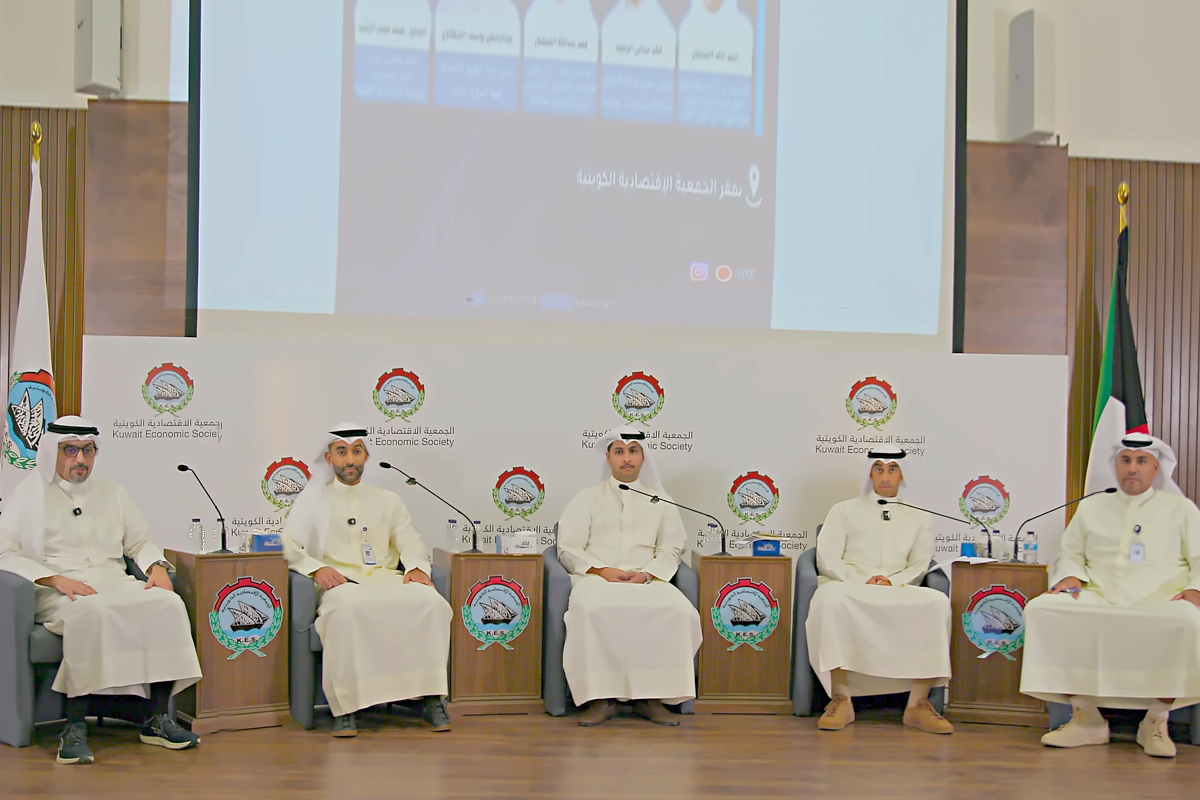
The Kuwait Economic Association, under the patronage of Warba Bank, organized a specialized economic seminar titled “Exchange-Traded Funds (ETFs): From the Regulatory Framework to Testing Liquidity, Governance, and Investor Protection.” The event featured representatives from the Capital Markets Authority, the Kuwait Clearing Company, Kuwait Financial Centre (KAFIC), and National Investments Company, and was attended by a select group of experts, investors, representatives of capital market institutions, and media outlets.
The Association emphasized that the issuance of the regulatory framework represents a fundamental step in opening the door to this product, but it does not mark the end of the journey. Its actual economic value is realized when licensed private sector institutions are able to convert it into funds and investment products that can be launched and traded, possessing liquidity, efficiency, and governance, while meeting investors’ needs.
Abdulrahman Yousef Al-Filakaawi, Director of the Market Regulation Department at the Capital Markets Authority, discussed the Authority’s role in transforming ETFs into a product that can be established, listed, and traded, in light of Decision No. (80) of 2026. He clarified that the timing of the framework’s issuance followed stages of developing the market system and its operational infrastructure, as well as enhancing the readiness of participating parties.
Ahmed Faisal Al-Khalid, Director of the Collective Investment Systems Regulation Department at the Authority, outlined the fund establishment procedures, which are conducted electronically through the Authority’s online portal. He noted that the listing application is submitted to the stock exchange after the establishment process is completed with the Authority. He also explained the difference between a market maker and an authorized participant according to their respective roles, and the possibility of combining these roles provided that regulatory requirements are met, including the management of conflicts of interest.
Al-Khalid stated that these funds enhance the asset management industry and expand the tools available to local investors, as they offer investors diversification through a single tradable instrument with real-time pricing and high transparency, while remaining subject to market and liquidity risks.
He affirmed that the Authority supports all companies during the establishment process, starting from providing awareness campaigns through various channels, including this seminar, and ending with the submission and approval of the establishment request by the Authority.
Ahmed Khaled Al-Shalhan, First Vice President – Middle East and North Africa Equity Department at KAFIC, highlighted the advantages of ETFs as an investment tool that allows investors to access a diverse range of securities or asset classes through a single investment vehicle. This facilitates portfolio management and achieves a higher level of diversification at a relatively low cost.
He pointed out that these funds provide greater flexibility for specialized investors in allocating their assets, while offering non-specialized investors a diversified portfolio without the need to select and manage each asset individually. They also provide access to multiple markets and investment categories, including Gulf and global markets, as well as debt instruments, bonds, and sukuk.
Al-Rashid noted that ETFs are among the most important investment products capable of changing investors’ perception of financial markets, shifting them from a means of speculation to an important savings vehicle, similar to experiences in global markets.
He emphasized that ETF units are listed and traded on the stock exchange during trading sessions at market prices, unlike traditional funds, where subscription and redemption operations are typically conducted through the fund manager according to specific schedules and valuation prices. He also discussed the various roles of the parties involved in the ETF ecosystem.
