Vote to select the next UN Secretary-General yields no result
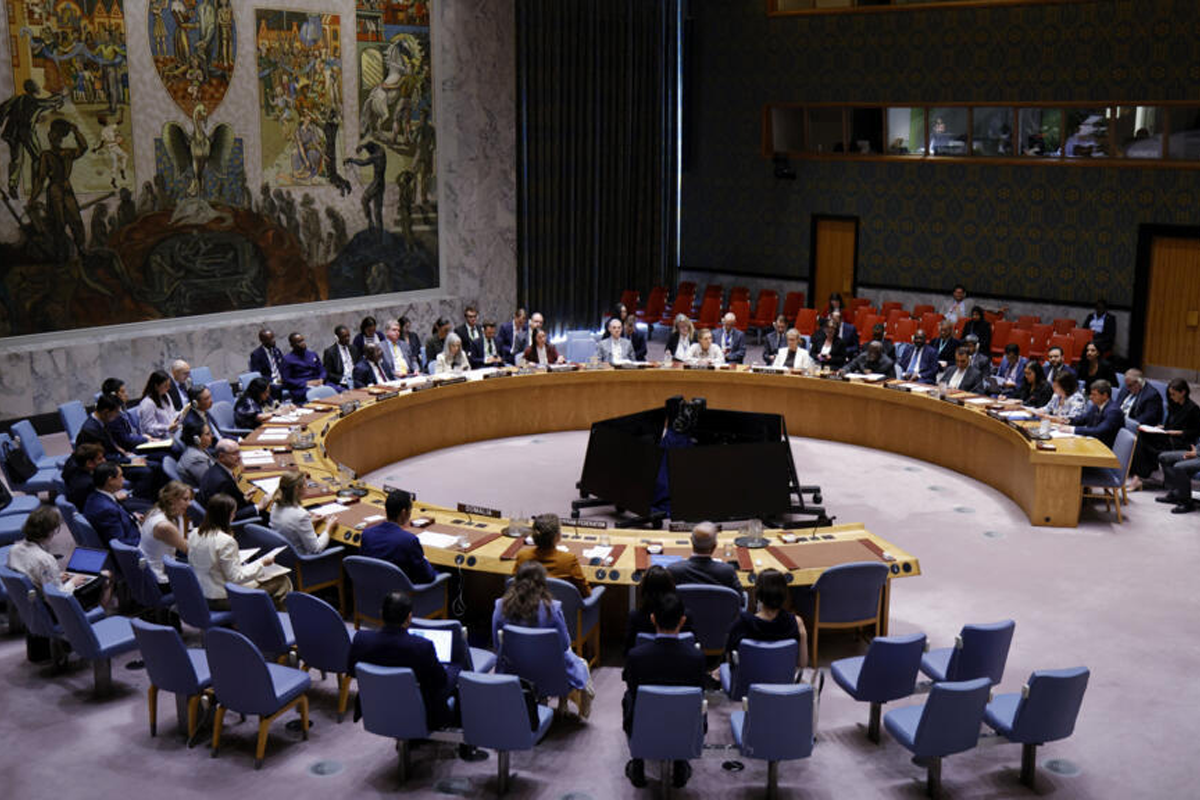
The UN Security Council held a second round of “advisory voting” on Friday to select the next UN Secretary-General, amid deep divisions within the organization. No information was released regarding the results of this f
Translated by Qiyas from الجريدة — Original source
The UN Security Council held a second round of “advisory voting” on Friday to select the next UN Secretary-General, amid deep divisions within the organization. No information was released regarding the results of this formal opinion poll.
So far, three men and five women are competing to succeed the 77-year-old Portuguese Antonio Guterres, whose second five-year term ends on December 31, 2026.
At the end of an initial voting round held on July 30, former Vice President of Costa Rica and head of the UN Conference on Trade and Development (UNCTAD), 70-year-old Rebecca Greenspan, received the highest number of supportive votes.
The 15 Council members, meeting in a closed session, assess each candidate by choosing one of the following options: “encourage,” “do not encourage,” or “no opinion.” The identity of the member casting their vote remains confidential.
This vote comes as the UN faces one of the most difficult periods in its history, confronting a decline in multilateral action, ongoing divisions within the Security Council, and massive financial difficulties.
Under pressure from US President Donald Trump, who consistently questions the organization’s role and funding mechanisms, the UN is struggling to influence many major conflicts, while budget cuts threaten its humanitarian operations and peacekeeping efforts.
Although a candidate needs the support of nine of the 15 Security Council member states, they must avoid a veto from any of the five major powers—the United States, Russia, China, France, and the United Kingdom—which are deeply divided amid current international conditions.
Overcoming this hurdle would allow the candidate’s name to be referred to the General Assembly, which comprises all UN member states, for final approval.
Traditionally, the position rotates among geographic regions. Based on this convention, the next Secretary-General is expected to come from Latin America.
Greenspan led in the first round, particularly ahead of former Foreign Minister of Guyana, Caroline Rodrigues-Burke (52), and Rafael Grossi, the 65-year-old Argentine Director General of the International Atomic Energy Agency (IAEA).
Other candidates include Chile’s Michelle Bachelet (74), Ecuador’s Maria Fernanda Espinosa (61), Uganda’s Olara Otunnu (75), Senegal’s Macky Sall (64), and the Ecuadorian diplomat of Lebanese origin, Yvonne Abdul Baqi (75).
Although Grossi is the most well-known, analysts believe no candidate has a clear advantage in a race that could last for months.
Diplomats are reluctant to predict the outcome of the contest due to the influence of the five permanent members of the Security Council, especially since these countries have not yet declared their preferences.
Even Vassily Nebenzia, Russia’s permanent representative to the UN, indicated to the press on Thursday that new candidates might emerge for the position.
UN General Assembly President Annalena Baerbock called for a more transparent process in selecting candidates, drawing sharp criticism from some permanent members of the Security Council.
The United States and Russia, which rarely agree on the reference candidate for the position, considered that Baerbock overstepped her authority by calling for the General Assembly’s discussions with candidates to be reviewed.
