What is the “Twist Operation” invoked by Binst’s move to lower bond yields?
The Trump administration’s sudden move to increase purchases of long-term Treasury bonds has drawn comparisons with the “Operation Twist” strategy executed by the Federal Reserve, which was last used in 2011 to lower bond yields.
At that time, even after the Fed cut short-term interest rates to help the economy recover from the Great Recession, long-term Treasury yields remained stubbornly high, effectively counteracting the central bank’s efforts by keeping the cost of all types of borrowing elevated.
Today, the economy is in a much stronger position. However, a sustained wave of selling in the bond market since the start of the U.S. military campaign against Iran has pushed long-term Treasury yields to their highest levels since 2007. This has alarmed officials, as it has raised the government’s borrowing costs and pressured Americans through higher interest bills, just ahead of the November congressional elections.
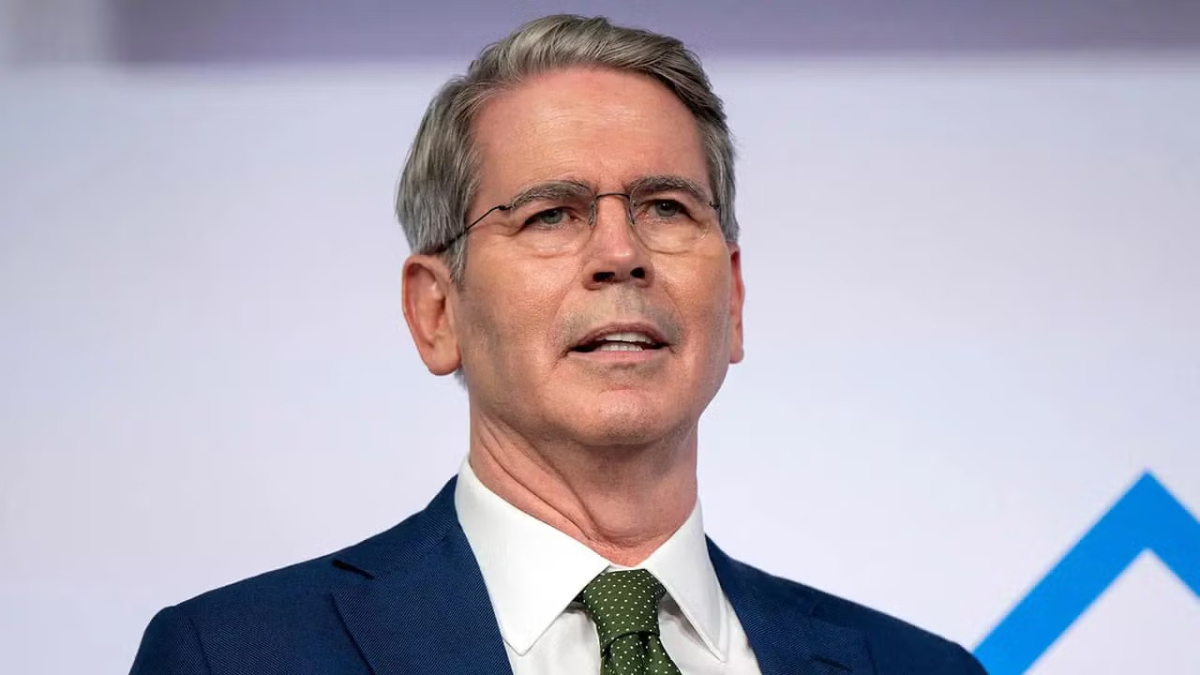
U.S. Treasury Secretary Scott Bessent intervened on Wednesday to try to reverse market sentiment, declaring that his department would at least double its purchases of bonds maturing in 10 to 30 years. Bessent had previously viewed the 10-year yield as a benchmark for the administration’s success.
The move achieved its intended effect, at least temporarily, pushing 30-year yields down by as much as 10 basis points to 5.18% before the decline narrowed. The 10-year yield fell by 5 basis points to 4.66%.
Strategists at Deutsche Bank saw echoes of the Fed’s post-recession strategy in this move. George Saravelos, a strategist at Deutsche Bank, wrote in a note: “Operation Twist is here.” He described the approach as effectively a form of “financial repression.”
Bessent had already shifted toward covering a larger share of the annual deficit, which approaches $2 trillion, through sales of short-term Treasury bills, thereby easing some pressure on long-term yields.
Recent directives from the Treasury have fueled speculation that he may accelerate this shift by directly reducing the volume of certain bond sales. His decision to support the yen was also seen as a move to prevent Japanese authorities from selling Treasury bonds to obtain the dollars they need—a scenario that could have worsened the selling wave by raising the prospect of further sales from the United States’ largest foreign creditor.
Federal housing officials have also intervened in the mortgage-backed securities market in an attempt to lower interest rates there, but they have not prevented the continued upward trend.
There has been no single factor behind the steady rise in Treasury yields over the past few months. Concerns over the continuously growing national debt, inflation running above target, and a wave of corporate bond sales to fund artificial intelligence investments have all played a role.
Uncertainty surrounding Kevin Warsh has also been a factor. President Donald Trump appointed him chairman of the Federal Reserve in May, after Warsh repeatedly criticized his predecessor for not cutting interest rates more aggressively, raising concerns about the continued independence of the central bank.
In 2011, the Fed was already trying to stimulate the economy rather than worry about inflation, which is currently the dominant concern.
But the US recovery was faltering, the European debt crisis was raging, and the central bank’s benchmark interest rate was already close to zero. So the Federal Reserve sold short-term Treasury bills and used the proceeds to buy longer-dated debt, in a move aimed at lowering the cost of long-term borrowing.
This was not the first time. The same approach was used in 1961. At that time, the Kennedy administration wanted to support a weak economy by reducing long-term borrowing costs without cutting short-term interest rates, which risked accelerating the outflow of gold, since the dollar’s value was pegged to the metal. The operation was named after a dance that was sweeping the country at the time.
Krishna Guha and Marco Casiraghi, economists at Evercore, described the Treasury’s move as a “very small twist,” warning that it could backfire if its limited capacity fails to produce a lasting impact. They wrote, “The operation hardly changes anything in terms of fundamental factors.”
