Iraq: Green light for al-Zaidi from the Presidency Quartet and the Framework to disarm factions and restore state authority
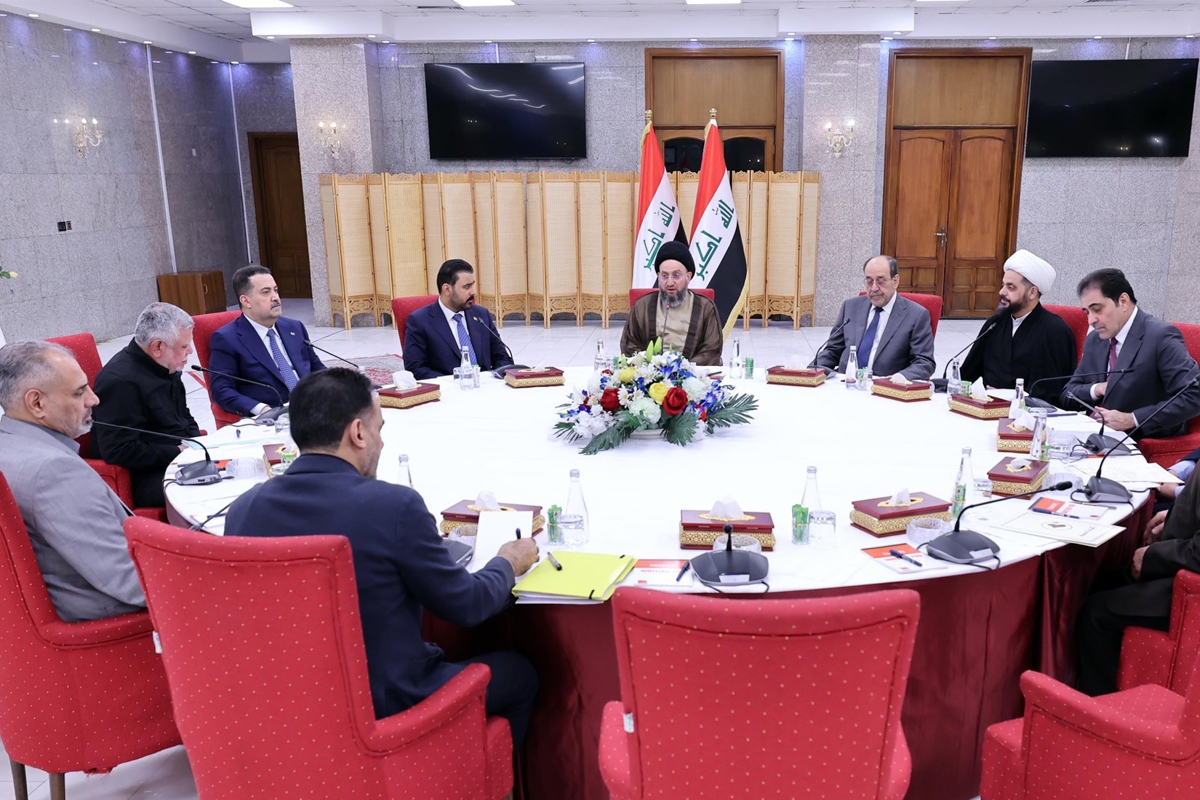
As armed factions intensified their efforts to disrupt Al-Sudani’s initiatives and imposed onerous conditions before entering into any agreement on handing over their weapons, the four Iraqi presidencies—comprising Presi
Translated by Qiyas from الجريدة — Original source
As armed factions intensified their efforts to disrupt Al-Sudani’s initiatives and imposed onerous conditions before entering into any agreement on handing over their weapons, the four Iraqi presidencies—comprising President Nizar al-Ahmed, Al-Sudani, Speaker of the House of Representatives Haibat al-Halbousi, and Chairman of the Supreme Judicial Council Faiz al-Zidan—reaffirmed that monopolizing weapons in the hands of the state is fundamental to consolidating state authority and the rule of law, while continuing the fight against corruption and protecting public funds.
In the same vein, the Coordinating Framework, during a meeting attended by Al-Sudani on the same day, emphasized that monopolizing weapons is a “national demand” that must be achieved through dialogue and understanding, coinciding with the conclusion of the international coalition’s mandate. It condemned the Iranian attack targeting the office of Kurdistan Regional Government Prime Minister Masrour Barzani and the residence of the head of the Kurdistan Regional Security and Intelligence Agency.
Meanwhile, former Prime Minister Nouri al-Maliki announced that the committee tasked with monopolizing weapons is close to commencing its work in coordination with the government, stressing the necessity of addressing the file through dialogue and understanding, and affirming that the state and its constitutional institutions are the ultimate reference for security and military matters.
In a parallel development, Al-Sudani’s government began scrutinizing information circulated by local media regarding a plot to target Supreme Judicial Council Chairman Faiz al-Zidan with drones, linking the threats to the files on weapon monopolization and anti-corruption efforts. Government spokesperson Haider al-Abadi stated that the information is “under scrutiny,” reaffirming that weapon monopolization is a sovereign Iraqi issue.
Following Barzani’s accusations against Tehran of targeting his office and his demand for Baghdad to take a firm stance against its continuous attacks, Iranian Foreign Minister Abbas Araghchi ruled out any launches of attacks from Iran on Erbil, warning the Kurds against “deceptive flags aimed at sowing discord among neighbors.”
Just days after a similar visit by Qasem Soleimani’s successor, Ismail Qaani, commander of the Quds Force, who urged Iranian-backed Iraqi factions not to hand over their weapons to the state under any circumstances, Qalibaf, who led negotiations to end the war with the United States, began a two-day visit to Baghdad accompanied by a high-level delegation to discuss regional developments, enhance strategic cooperation, and explore joint solutions to contribute to stability and security in the Middle East.
Meanwhile, Saudi Foreign Minister Prince Faisal bin Farhan discussed with his Iraqi counterpart Fuad Hussein, in a phone call, ways to develop bilateral relations and enhance consultation and coordination on regional issues and matters of common interest, according to the Saudi Ministry of Foreign Affairs.
