Public Works Approves Rainwater Tanks for Managing Heavy Precipitation
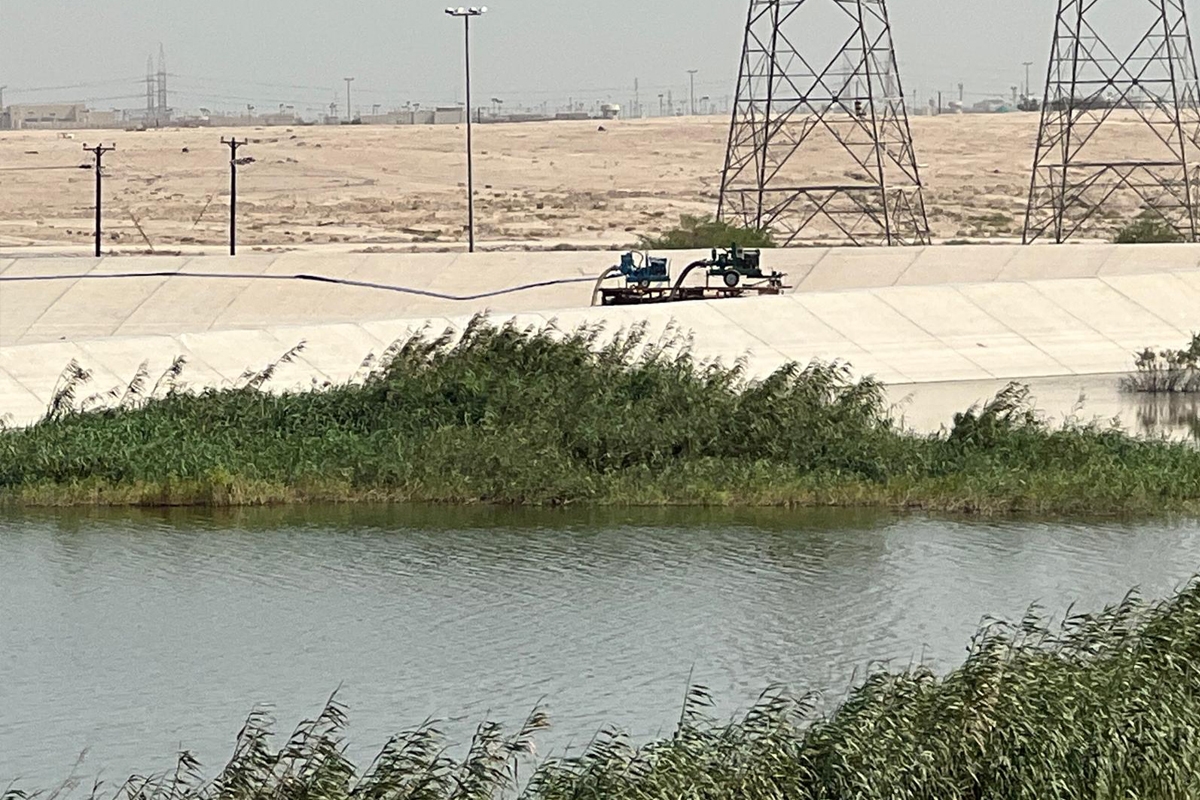
Amid climate change and heavy rainfall in Kuwait in recent years, many streets and areas have been flooded during years astronomers have termed “destructive years.” In response, the Ministry of Public Works has construct
Translated by Qiyas from الجريدة — Original source
Amid climate change and heavy rainfall in Kuwait in recent years, many streets and areas have been flooded during years astronomers have termed “destructive years.” In response, the Ministry of Public Works has constructed numerous rainwater storage tanks as a key engineering solution to eliminate water accumulation at various sites and main roads, preventing flooding.
Rainwater storage tanks represent one of the most critical components of the infrastructure system relied upon by the Ministry of Public Works in residential areas and main roads during rainy seasons, alongside enhancing drainage network efficiency and protecting vital facilities from floods.
During rainy seasons, the country experiences heavy rainfall, high sea tides, and increased volumes of water flowing into manholes over short periods. This has prompted the Ministry of Public Works to adopt a strategy focused on building storage tanks and basins to collect rainwater and connect them to advanced drainage networks. The aim is to accommodate large volumes of water before discharging it into the sea, or redirecting it through dedicated networks in case of high sea tides.
Al-Jarida visited one such tank filled with fresh rainwater at the intersection of Kabd Road and the 7th Ring Road, an intersection that has seen flooding of the 7th Ring Road and traffic disruptions in recent years.
The rainwater drainage system, overseen by the Ministry of Public Works, relies on several core components as a primary line of defense during years of heavy rainfall. These include manholes, drainage chambers, main pipelines, storage tanks, retention basins, pumping stations, and mobile pumps utilized in emergency situations.
The tanks built by the Ministry play a pivotal role in receiving and storing water flowing from residential areas and roads. This integrated system of “drainage chambers, pipelines, pumps, and tanks” alleviates pressure on the networks, reducing the likelihood of road flooding or water seepage into residential areas and various facilities during heavy rainfall.
Among the most prominent projects announced by the Ministry of Public Works is the rainwater drainage project in southern Kuwait, covering several cities and residential areas. The ministry emphasized that one of the project’s key objectives is to prevent rainwater accumulation in residential areas and preserve the quality of rainwater transported through independent drainage networks.
The emphasis on constructing rainwater storage tanks coincides with the urban expansion witnessed in the country in recent years, particularly in new cities that require integrated infrastructure capable of coping with diverse climatic conditions.
The Ministry of Public Works is designing independent rainwater drainage networks that do not interfere with sewage networks, thereby mitigating environmental problems and maintaining the efficiency of various networks during emergencies and heavy rainfall. The ministry also aims to prevent water from reaching low-lying areas and reduce potential damage to roads and public and private property.
The Ministry relies on rainwater storage tanks as a fundamental engineering solution for managing such waters, within the framework of infrastructure projects in the sanitary engineering sector. These projects are implemented by the ministry through governmental coordination among various state entities with relevant expertise.
The Ministry of Municipalities and Infrastructure (“Ashghal”) continues to carry out routine maintenance works on stormwater networks, including the cleaning of drainage channels and discharge chambers, alongside the development of e-services related to reporting stormwater-related issues and the upgrading of pumps used for water lifting and drainage, in accordance with a comprehensive plan aimed at enhancing the efficiency of the stormwater drainage network and strengthening its readiness throughout the year.
